Bloody Sunday
Synopsis
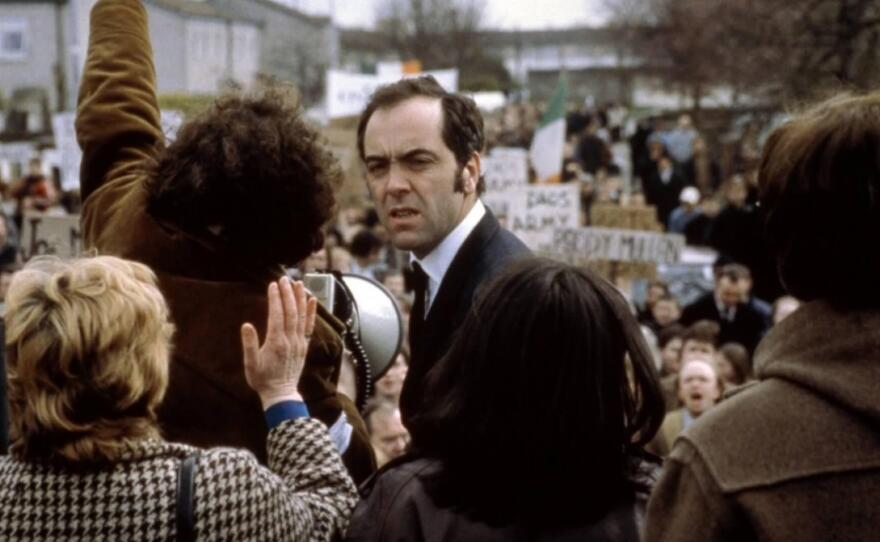
This movie, shot in a documentary style, is based on Don Mullan's politically influential book Eyewitness Bloody Sunday. The events of the day are seen primarily through the eyes of Ivan Cooper, a member of the Parliament of Northern Ireland representing the Social Democratic and Labour Party (SDLP). He was one of the organizers of the Northern Ireland Civil Rights Association (NICRA) march in Derry on 30 January 1972. The march ended when British Army paratroopers fired on the demonstrators, hitting 26 people, killing thirteen of them instantly and wounding another person who died months later.
The march was organized to protest internment and to fight for equality in civil rights for Catholics. Since the partition of Ireland, the Catholics of the North suffered discrimination in a Protestant-dominated land. In response to the planned march, the British army banned all parades and marches throughout Northern Ireland. While Cooper is adamant that the planned march is peaceful and will be held, Major General Ford of the British Army insists that the law is the law and must be respected.
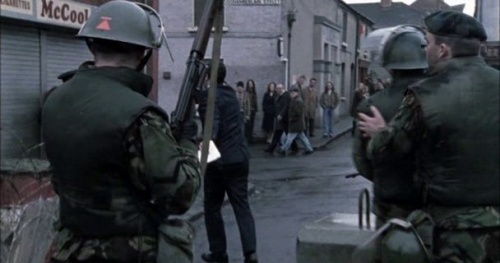
The day starts with approximately 1,500 British troops, in full combat and riot gear, occupying the streets of Derry.
We are introduced to Gerry Donaghy, an ordinary Irishman leading an ordinary life. He's a member of the SDLP, and goes to join the march.
The British commanders order their troops to make as many arrests as possible, authorizing them to use deadly force and "shoot plenty of rounds" if the Irish start any violence. Their objective is to arrest at least 200 to 300 of the Derry "hooligans," and they are given explicit instructions to pick up key members of SDLP during the march. The whole of Bogside is encircled by the various units of the British Army, with the Paras designated to brak through the walls and catch the marchers if they try to flee.
Ivan is worried about the huge military presence but decides to proceed with the march, in order to keep the Irish civil rights movement alive. He wants a peaceful march, especially because it includes women and children, and warns the IRA to keep away from the event.
The Brits deploy themselves in a pincer formation, in order to catch the marchers between two companies. A number of snipers are placed on rooftops all over the city, to look for IRA members and shoot them on sight in case they try to attack the British forces. The army also has the British media on standby to present their side of the story.
The Derry police chief contacts Ford and says that he has spoken to the march organizers, who want to avoid a confrontation. Ford simply ignores him; a junior officer explains that 43 British troops have lost their lives in operations in Northern Ireland, and now Britain has had enough. The police chief then warns Cooper that the British are insistent on quelling this march, and that Ivan should think about canceling.
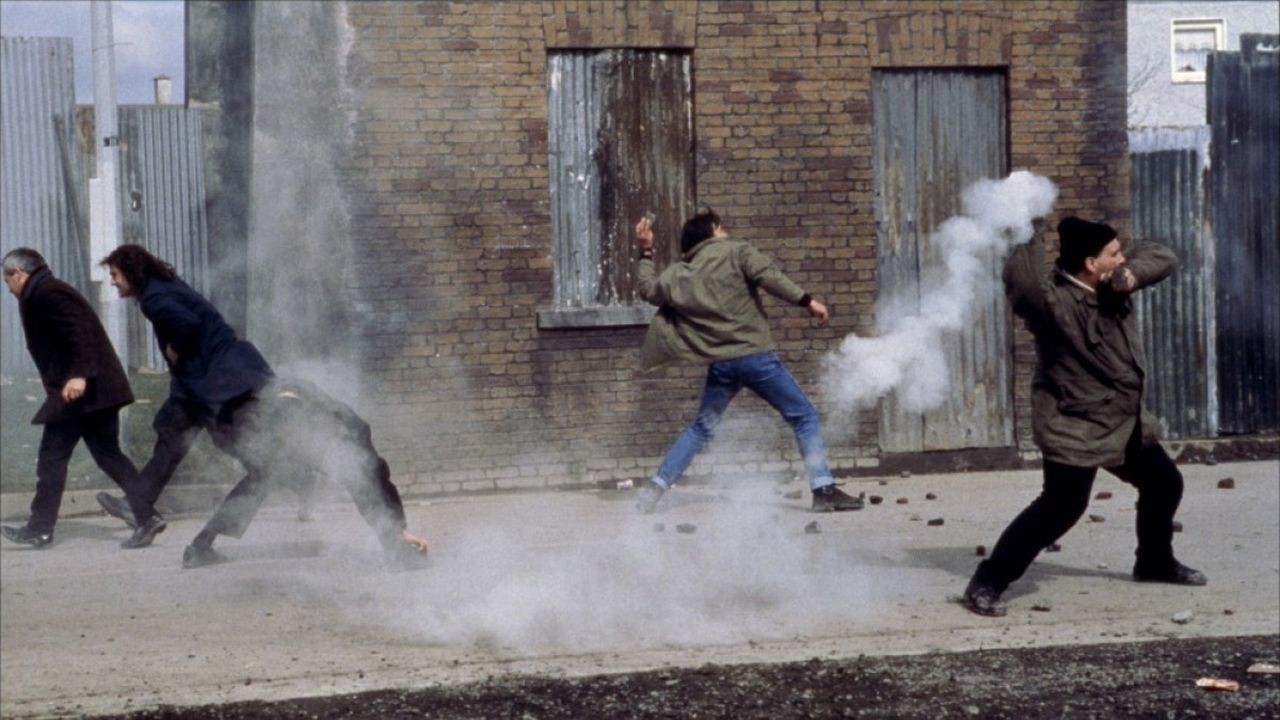
The marchers, including Gerry, gather at the starting point. After a brief speech from Ivan, they start marching to the City Centre. There are thousands of people in the crowd, and their progress is closely followed by the British army. To avoid a confrontation, Ivan decides to change the path of the marcch, but one faction of young marchers breaks away into the road which leads to the strongest British checkpoints. Cooper goes after this group and tries to turn them back, but he fails, and soon the marchers are face to face with the British army. Despite Ivan's efforts the breakaway faction starts throwing stones at the British armoered personnel carriers; the British respond with escalating force: first water cannons, then rubber bullets, CS gas, and finally, live rounds.
Ivan goes back to the main march and addresses the gathering on how non-violence is the only way for them to achieve their independence from the British union. The Paras start their pincer attack to arrest the protesters, but the breakaway faction rejoins the main group and brings the entire British force down onto the marchers.
The Paras open fire on the marchers, and their live rounds kill more people. Gerry and several of his friends are injured. The British ignore orders to cease fire and continue to fire at the fleeing marchers, firing even on the injured as they try to crawl away as well as their woild-be rescuers who are trying to drag them to safety.
After the chaos calms down, the British military commanders look for a way to justify the expenditure of so much ordinance on civilians, especially in front of their own media. So they instruct the troops to search for weapons, which they do not find.
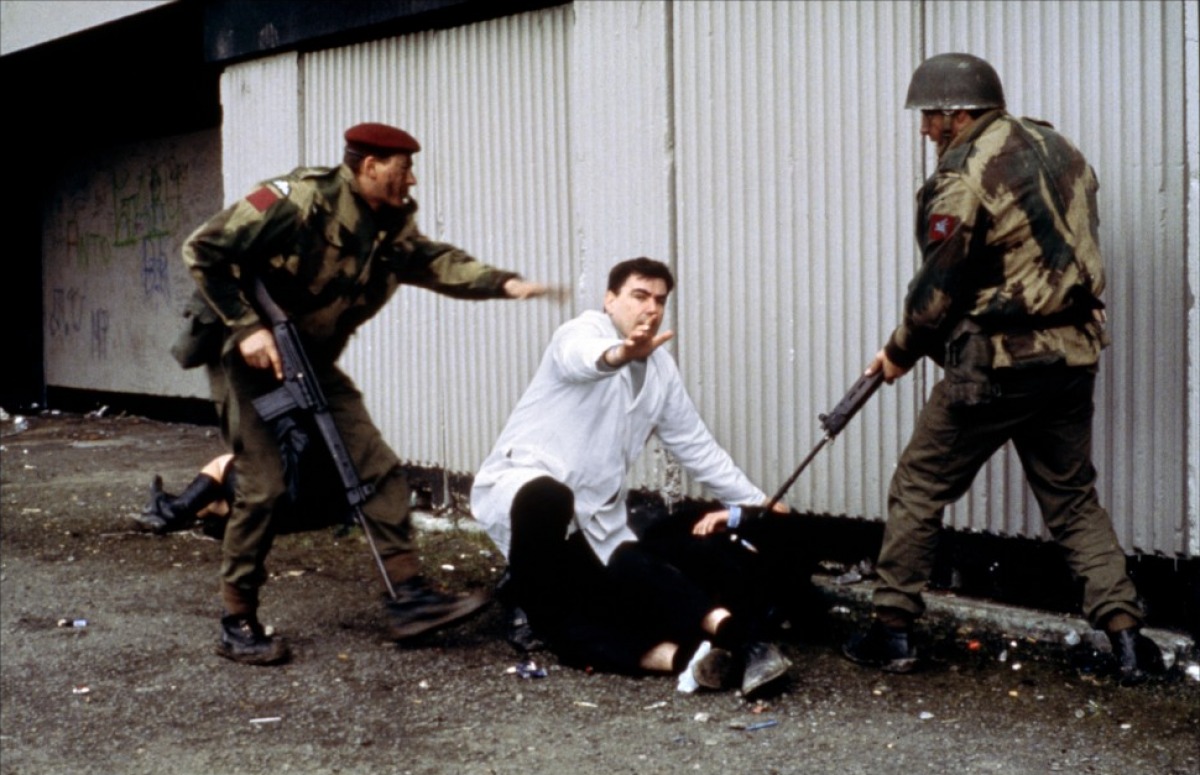
Ford claims that his troops were fired on first, and returned fire only in self-defense.He admits that none of his soldiers were hit. Some friends try to take Gerry to the hospital, but they are stopped by an army roadblock and not allowed to proceed. Gerry dies in their car. Cooper manages to reach the hospital and sees that it is full of injured people lying in the halls. There are 13 dead and 14 injured. British soldiers plant a nail bomb on Gerry's body in an attempt to prove that they were attacked, then allow the media to film his corpse.
Ivan issues a statement saying that the British army has not only destroyed the civil rights movement, but they've given the IRA the biggest victory it will ever have. He warns them that they will now reap the consequences of their actions that day.
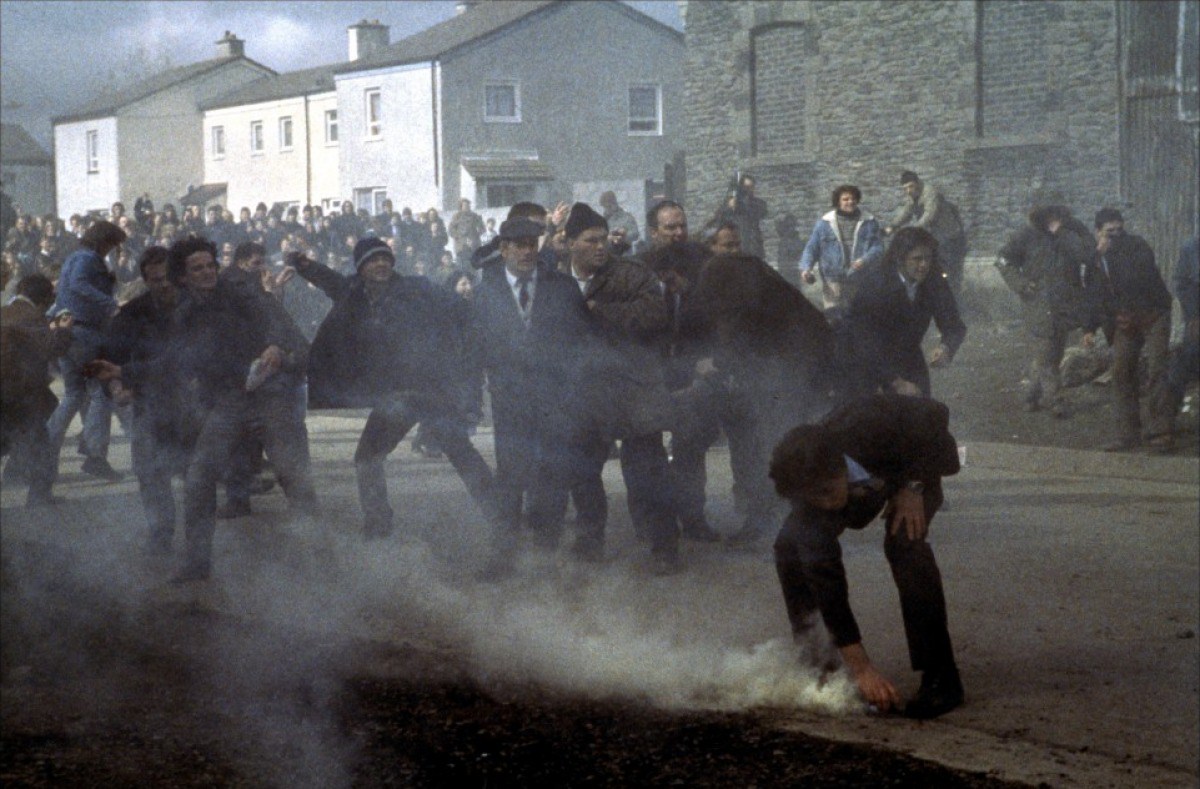
Marchers throwing rocks |
DirectorPaul Greengrass WriterPaul Greengrass StarsJames Nesbitt, Tim Pigott-Smith, Nicholas Farrell, Gerard McSorley Awards23 nominations, 19 wins. Among them: |
Background
Greengrass's documentary style of shooting, combined with his fidelity to his source material, make it difficult to separate the film from the actual events that occured in the Bogside that day.
More than the other films we've watched, this one requires a scorecard to remember all the players.
| Bloody Sunday - The Major Players | ||
| Character | Actor | Role |
| Ivan Cooper | James Nesbitt | 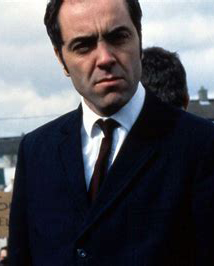 He's the central figure of the film, as the camera follows him more than any other character. Other characters are defined by their relationships to him, most especially Frances, who certainly contributes to his motivation to campaign for Catholic civil rights. She's a Catholic, and he is Protestant; were their relationship to become public, she would be subject to reprisals from the Catholic community and the IRA. |
| Gerry Donaghy | Declan Duddy | 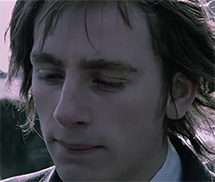 Greengrass alows us to see his plans for the future, and his commitment to stay out of the fighting during the march. But he's shot, and dies in the back of a car at a British checkpoint. British soldiers plant a nail bomb on him, because they have been unsuccessful in finding any evidence of weapons used by the marchers. |
| Major General Ford | Tim Pigott-Smith | 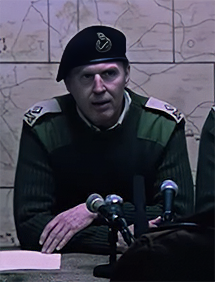 In a secret memo to his superior, dated three weeks before Bloody Sunday, Ford said he was "coming to the conclusion that the minimum force necessary to achieve a restoration of law and order is to shoot selected ringleaders amongst the DYH [Derry Young Hooligans], after clear warnings have been issued." |
| Brigadier Patrick MacLellan | Nicholas Farrell | 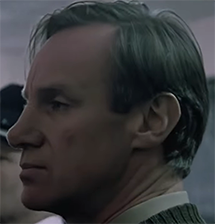 MacLellan admitted to the Saville Inquiry into Bloody Sunday that he may have erred in sending the Parachute Regiment into the Bogside at the wrong moment for the limited arrest operation he had in mind and that he was unaware of the specific details of how the operation was to be carried out. The inquiry determined that MacLellan could not he held responsible for the 1 Para commander, Lieutenant Colonel Wilford, disobeying his orders. |
| Lieutenant Colonel Derek Wilford | Simon Mann | 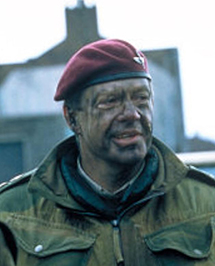 However, the Saville Inquiry determined that Wilford had expressly disobeyed an order from MacLellan, who had prohibited Wilford from sending troops into the Bogside. But they also found that MacLellan was not to blame for the shootings. Saville suggested Wilford "wanted to demonstrate the way to deal with rioters in Derry was not for soldiers to shelter behind barricades like (as he put it) 'Aunt Sallies' while being stoned, as he perceived the local troops had been doing, but instead to go aggressively after rioters, as he and his soldiers had been doing in Belfast." |
| Chief Supt. Lagan | Gerard McSorley | 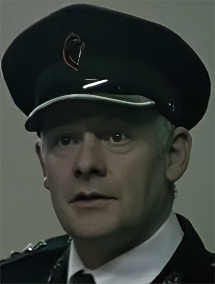 He worked hard to gain and keep the trust of the Catholic community as police commander in the city, but as a result was viewed sceptically at the time of the march by senior British army officers and some officers under his own command. He proposed that the marchers of January 1972 be allowed through to their planned destination of Guildhall Square, and in the following years stuck to his belief that violence on the day could have been "relatively contained" if the Civil Rights march had been allowed to proceed on that basis. |
Parallels and Oppositions
The broad elements in this film are true to the events of the day, but Greengrass' editing and ordering of them, as well as the more intimate details, are what separates this film from newsreel footage. We could say that this film proceeds through its parallel presentations that are sometimes in alignment, and sometimes in opposition.
| Parallel Elements | ||
| On One Hand . . . | On The Other Hand . . . | |
& ≠ |
||
| The opening NICRA conference is a jumble of voices, with manyh people heard from. We see that Ivan Cooper is the one in charge, but that power is shared amongst several groups. He has to ask for help, sometimes begging his allies for it. Cooper reiterates several times that this is to be a peaceful march. The music weaving through this half of the cold open is gospel song, "We Shall Overcome," which is associated primarily with the US civil rights movement. The closing NICRA news conference is somber. Ivan states that the British have killed civil rights in Northern Ireland and given the IRA the biggest victory it will ever have. The final shots of the movie prove him correct, as a line of teens stand ready to pledge themselves to the IRA and be issued weapons. |
The opening British Army news conference is quiet, with only one voice speaking, Major General Ford. He claims that he is only present as an observer; Brigadier MacLellan is running the operation. But it's obvious that nothing is going to happen today without his approval. He emphasizes that the army is prepared for violence and will counter it with violence of their own. The music that underlies this half of the cold open is a traditional military cadence. There are no instruments or voices, just the snare drum (it could be the British Kingston Cadence). The closing military news conference has Major General Ford justifying the actions of his troops and facing questions about their use of lethal force. He seems to already be setting up his own level of deniability, using phrases like, "it is my understanding," and "to the best of my knowledge." His use of the singular pronoun "I" distances him from his soldiers, and is in stark contrast to his opening news conference, where he presents the British plan with the plural pronoun, "we." |
|
| The focus on Gerry Donaghy and his complicated home life foregrounds the idea that the marchers' lives are rooted in their families. Our initial view of Cooper is with his family as well. His familiarity with the family members of those waiting for him in his office and those who will march expands that sense of family beyond those individual groups and demonstrates the sense of community among the marching groups. In the hospital we see the family members of the victims waiting for news then collapsing or crying or shouting. |
The military men are just that, members of the military and all men. We don't see their home lives; we see their work lives. In the field, Greengrass focuses primarily on the Signalman, who is on the verge of being ostracized by his "family," the other members of his squad. His questioning of deployment and tactics, and his insistence that he did not see any targets to fire on, show that if the Paras are a family, he's certainly the black sheep. At the post-action inquiry, each Para enters the room alone and gives his statement apart from the others. |
|
| We know everybody's name on this side. We even know the names of people just walking by the march, as Cooper says hello and usually has a quip or two to share with them. We know the other leaders of the march, the names of most of Gerry's friends, his family members, the priest, and many others in the various groups that come together for the march. |
While first names are sometimes used in quieter moments (such as in the Command Center), in the field these soldiers are anonymous. They're referred to by their rank or their function (e.g., "Sigs"). Even in the credits they're called "Para E," "Para F," or "Soldier 027." The identifying letters for the Paras are from their statements made to the Widgery Tribunal. |
|
| Cooper spends a great deal of time trying to build consensus among the leaders of the march. He listens to all of them, and is able to arrive at a compromise when their initial route is blocked by the army. |
When Major General Ford is introduced to the Chief Superintendant Lagan, head of the Royal Ulster Constabulary in Derry, Ford doesn't listen to his advice then walks away from him with the dismissive line, "Always good to hear from the locals." |
|
| The IRA volunteers (notice how they're all teens) and the IRA officer are on the side of the marchers, but they're ready to bring violence to a march focusing on non-violent protest. |
Both Brigadier MacLellan and Chief Supt. Lagan are opposed to the British army's plans for violence. They can't disobey orders, so they have to watch in shock and disbelief as the events unfold. |
|
Interesting People
Making a film based on actual historical events can cause some problems with consistency, when the people do not act later in life as they were portrayed in the film. Other, however, go on to perform as film viewers would expect them to. Here are a couple of them.
Art Imitates Life Imitates Art
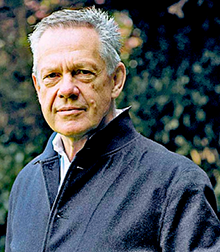
The man who played Lieutenant-Colonel Derek Wilford, Simon Mann, was a former member of the SAS (the British Special Air Service, a group equivalent to the US Navy Seals or Air Force Operators). He eventually became a mercenary, and was involved the failed 2004 Equatorial Guinea coup d'état attempt, also known as the Wonga Coup. The mercenaries were funded by British financiers who were to receive preferential oil rights in the country if the president were killed and an opposition leader took his place. But the financiers and mercenaries were arrested in Zimbabwe before they could carry out the plot. Mann was found guilty of attempting to buy arms for an alleged coup plot and sentenced to seven years’ imprisonment.
This would have been a blip on the radar and immediately sunk out of peoples' awareness, except that Sir Mark Thatcher, son of former British Prime Minister Margaret Thatcher, was arrested and pleaded guilty (under a plea bargain) to negligently supplying financial assistance for the plot.
In 2008 Mann was deported to Equatorial Guinea and incarcerated in there in Black Beach Prison, one of Africa's most notorious prisons and often viewed as synonymous with brutality. Two months later, Channel 4 in the UK broadcast an interview with Mann in which he named British political figures, including Ministers, alleged to have given tacit approval to the coup plot.
Later that year Mann was tried on new charges in Equatorial Guinea and sentenced to 34 years in prison. But, after serving about 16 months, he was given "a complete pardon on humanitarian grounds" by the President of Equitorial Guinea. He returned to England and lived there until his death in 2025.
"I'm just sorry I didn't get him by the throat"
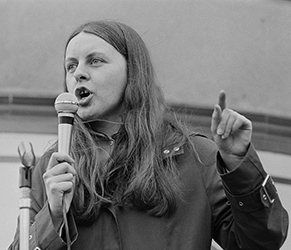
One of the leaders of the NICRA march was Bernadette Devlin. She's the one who keeps insisting on going through with the march, with variations on this line: "I will not back down."
Although the film doesn't show it, she, like Cooper, was a Member of Parliament for Ulster. She was 21 when she was elected in 1969, becoming the youngest woman ever (at that time) to serve as a British MP. For the majority of the time that she was in this position she advocated for a 32-county socialist Irish republic to replace the two states on the island of Ireland.
Unlike Cooper, she fought on the side of the residents in the Battle of the Bogside in August of 1969. She was convicted of incitement to riot in December 1969, and served six months imprisonment.
Almost immediately after the Battle of the Bogside, she toured the US for a series of speaking engagements. This trip got a lot of attention from the media, because she met with members of the Black Panther Party in Watts to offer her support, then made appearances on Meet the Press and The Tonight Show Starring Johnny Carson. At most of her events she made parallels between the struggle in the US by African Americans seeking civil rights and Catholics in Northern Ireland, sometimes to the embarrassment of her audience.
During an event in Philadelphia, she had to goad an African American singer to sing "We Shall Overcome" to the Irish-American audience, many of whom refused to stand for the song. In Detroit, she refused to take the stage until African Americans, who were barred from the event, were allowed in. In New York, Mayor John Lindsay presented her with the key to the city of New York. But she was so frustrated by the conservative Irish-American community there that she sent Eamonn McCann—also an organizer of the NICRA march—to present the key on her behalf to a representative from the Harlem chapter of the Black Panther Party.
On the day after Bloody Sunday she was in the House of Commons, but was not allowed to speak about the event, even though it was the practice that any MP who had witnessed an incident that was under discussion would be allowed to speak about it. When the Home Secretary (equivalent to the US Secretary of State) stated that the 1 Paras had fired in self-defense, she ran from her seat on the opposite side of the house and slapped him in the face. When a reporter asked if she was going to apologize, she retorted with the title line above.
The Events Behind the Film: The Bogside Massacre
In response to escalating levels of violence across Northern Ireland, in August 1971 Great Britain introduced indefinite detention without trial, or, as they called it, internment. On 30 January 1972 in the Bogside area of Derry—one of the few neighborhoods where Catholics could live in that city—the Northern Ireland Civil Rights Association (NICRA) organized a protest march against this Internment Act. |
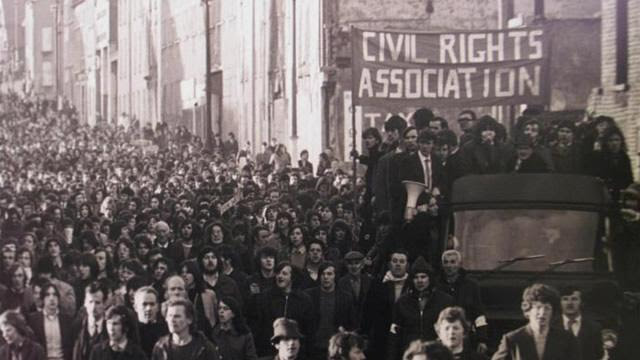
The crowd marching |
With around 1,500 British soldiers occupying Derry that day, the members of the 1st Battalion, Parachute Regiment (the "Paras" — roughly 300 of them were involved in the massacre) shot 26 unarmed civilians during the protest march. This was the same regiment who had shot and killed nine civilians in Belfast just five months earlier. That incident became known as the "Ballymurphy Massacre." Several of the Derry marchers responded to their presence by throwing rocks. Fourteen people died: thirteen were killed outright, while the death of another man four months later was attributed to his injuries. |
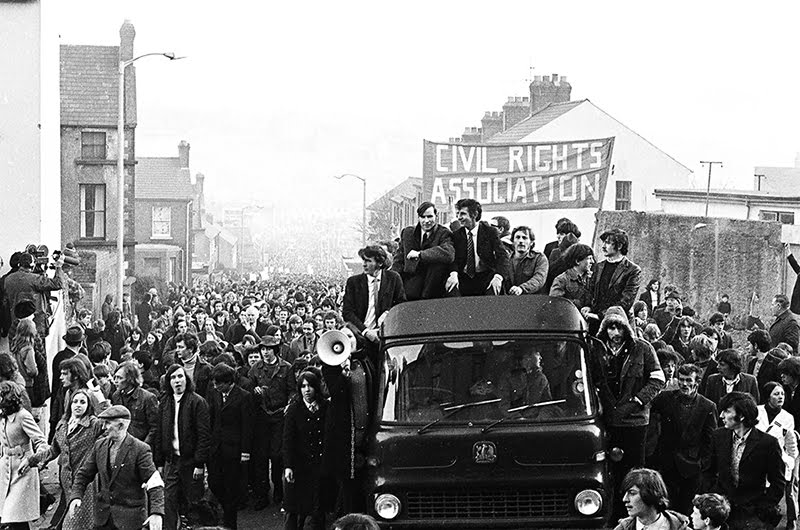
The marchers on Westland Street |
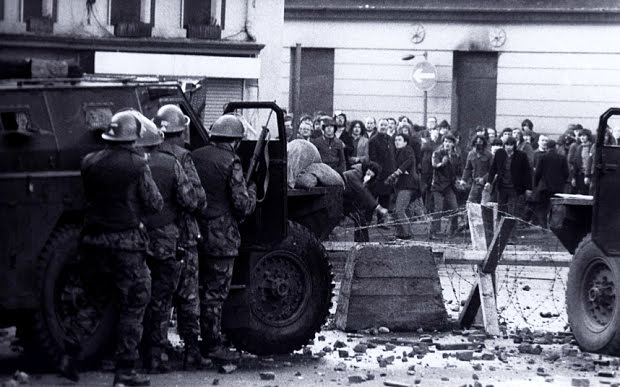
Paras taking cover from rocks behind their Saracens (armored personnel carriers) |
Many of the victims were shot while fleeing from the soldiers; some were shot while trying to help the wounded. Other protesters were injured by rubber bullets or batons, and two were run down by army vehicles. |
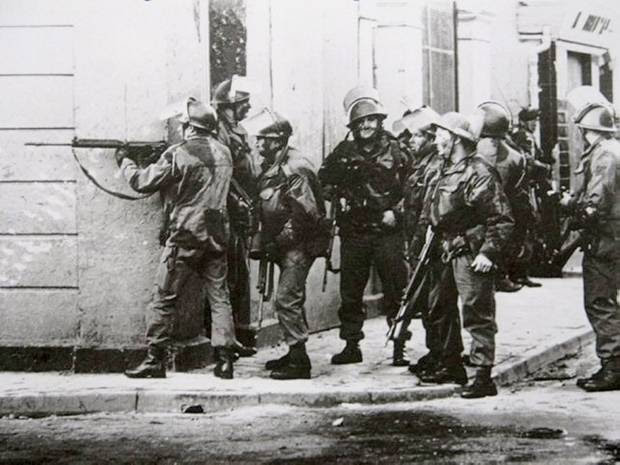
Paras firing into the crowd |
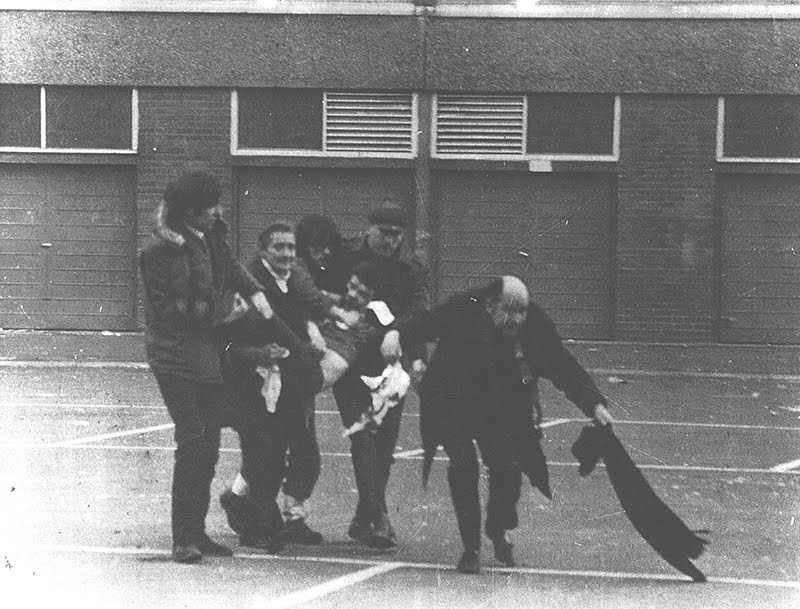
A priest, Father Daly, tries to remove an injured man while under fire |
The British Army labelled the victims "gunmen and bombers." They claimed their soldiers had met a "fusillade of fire," but no soldier or vehicle had been hit, and no bullet casings were found. |
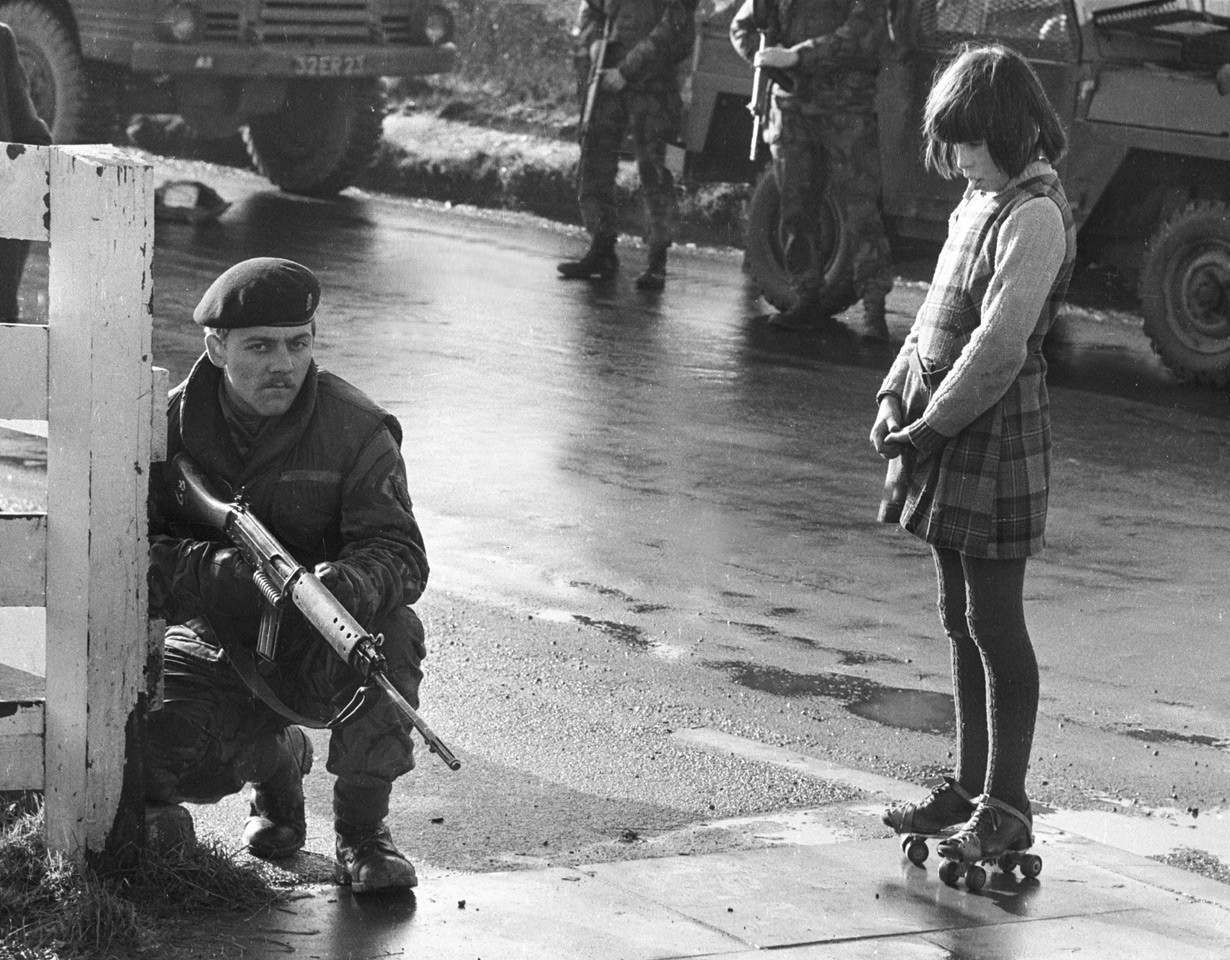
A young girl stands next to a Para who is covering the street |
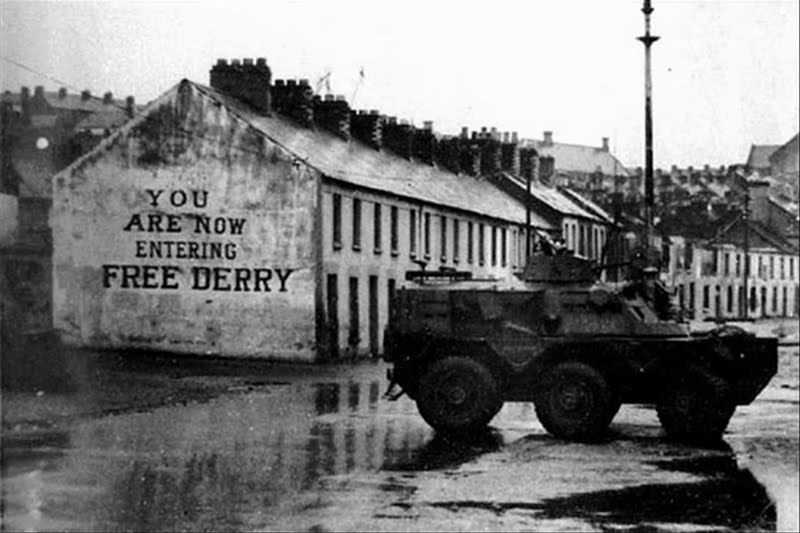
A common funeral was held for the thirteen victims the following week. |
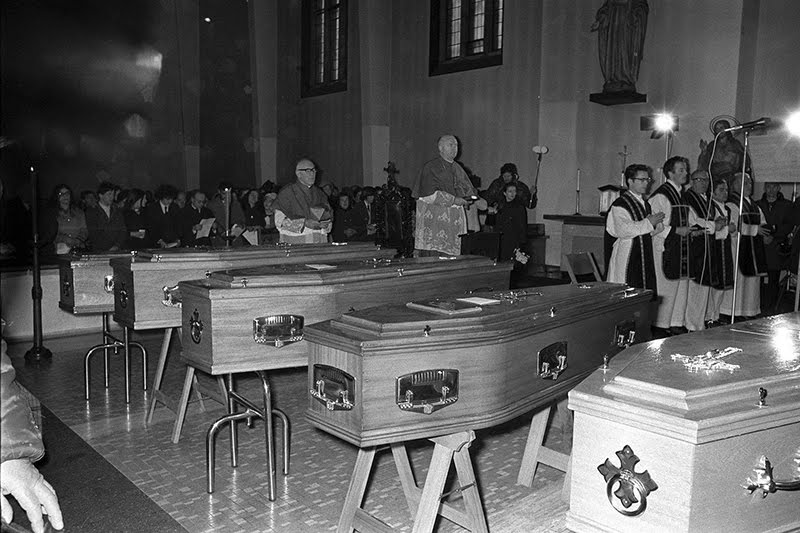
The coffins inside the church |
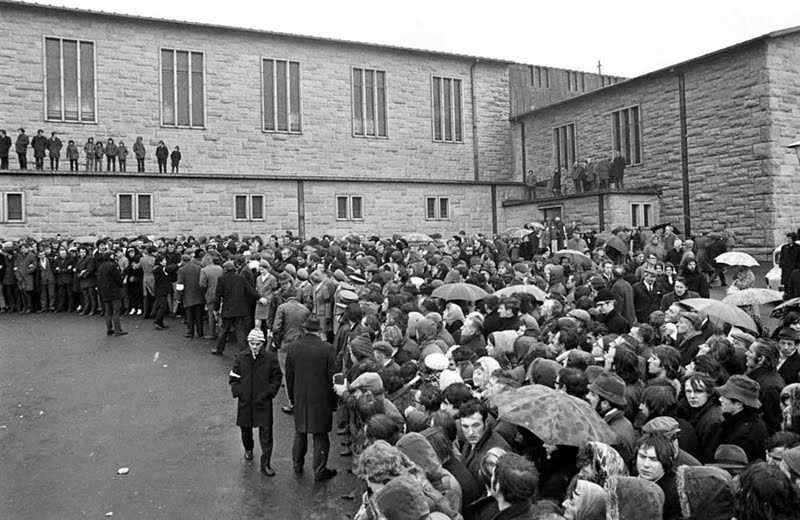
Thousands waiting outside the church |
Six months after Bloody Sunday, Colonel Derek Wilford, the Commanding Officer of the Paras in Derry, was knighted by the Queen. |
The official British investigation into the incident, the Widgery Tribunal, exonerated the British Army and placed the blame for the tragedy on NICRA for organizing the march. |
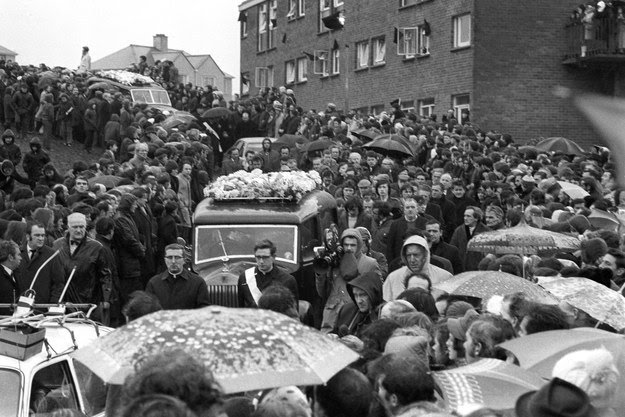
The funeral procession through the Bogside |
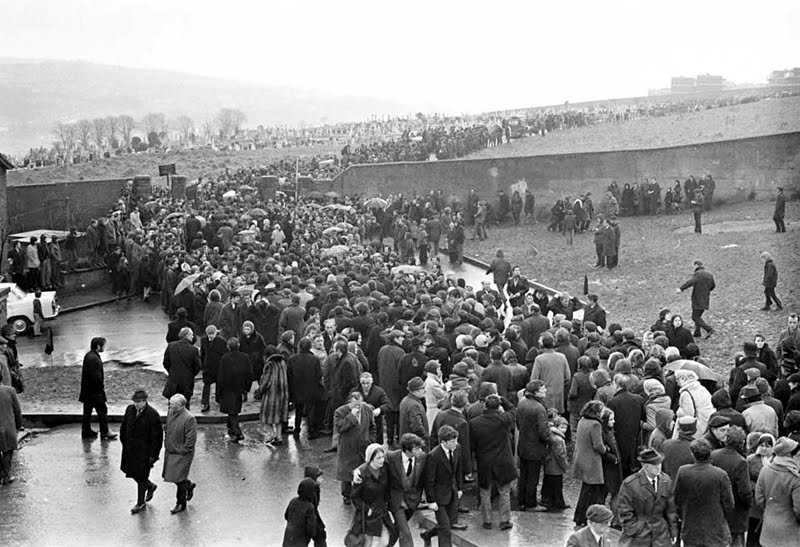
Entering the cemetery |
It claimed there was a "strong suspicion" that some of those killed "had been firing weapons or handling bombs," a judgment that ran contrary to all available evidence. All knew this was a whitewash. In 1973, the Coroner who examined the bodies of the victims, Hubert O'Neill, called the killings "sheer, unadulterated murder." |
It was not until 1998 that the British government, after decades of pressure from families of the victims, survivors of the incident, and the Irish government, conducted another investigation, the Saville Inquiry. It took the Saville Inquiry twelve years to complete its investigation. Its report, released in 2010, revealed that:
David Cameron, the British Prime Minister summarized it thus: "what happened on Bloody Sunday was both unjustified and unjustifiable." |
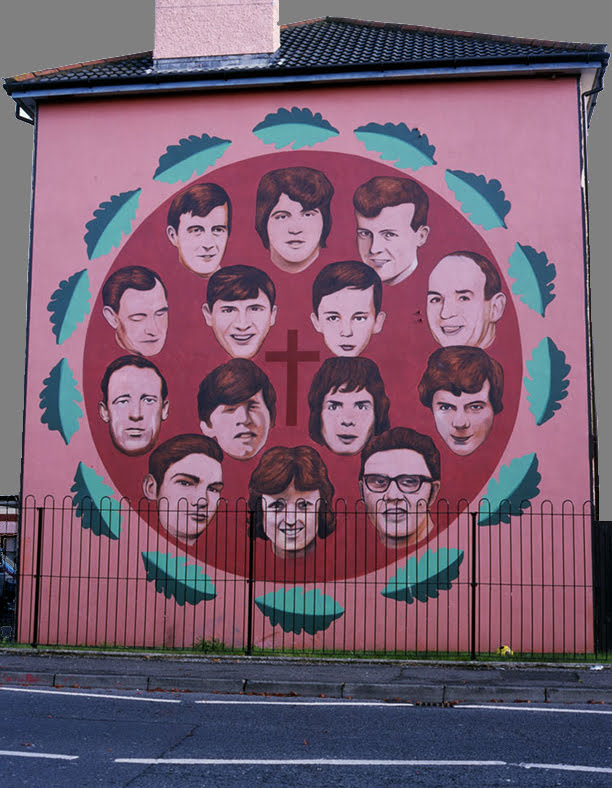
A Bogside mural commemorating the dead |
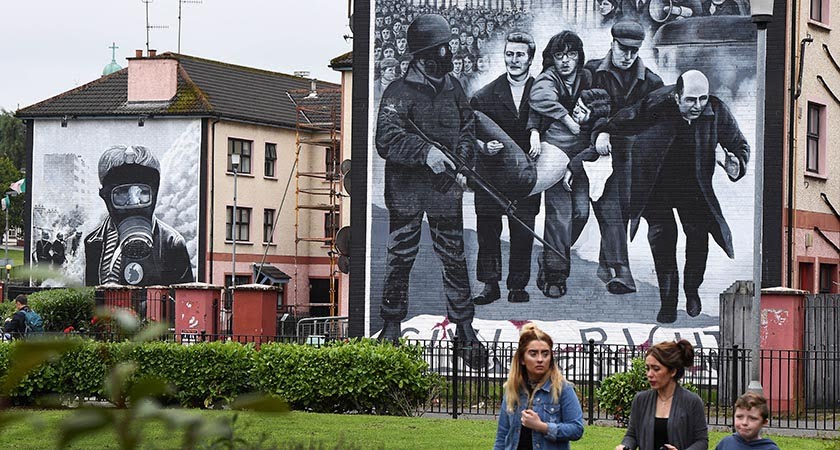
The North Remembers — more Bogside murals |
Although it may have been both unjustified and unjustifiable, no one has yet been held accountable for those 14 murders. As of 2026, only one person has ever been arrested in connection with the Bogside Massacre. A former Lance Corporal (the lowest rank of non-commissioned officer) in the Paras was taken into custody in November of 2015. He was released within 24 hours, and was not charged with any crime. |