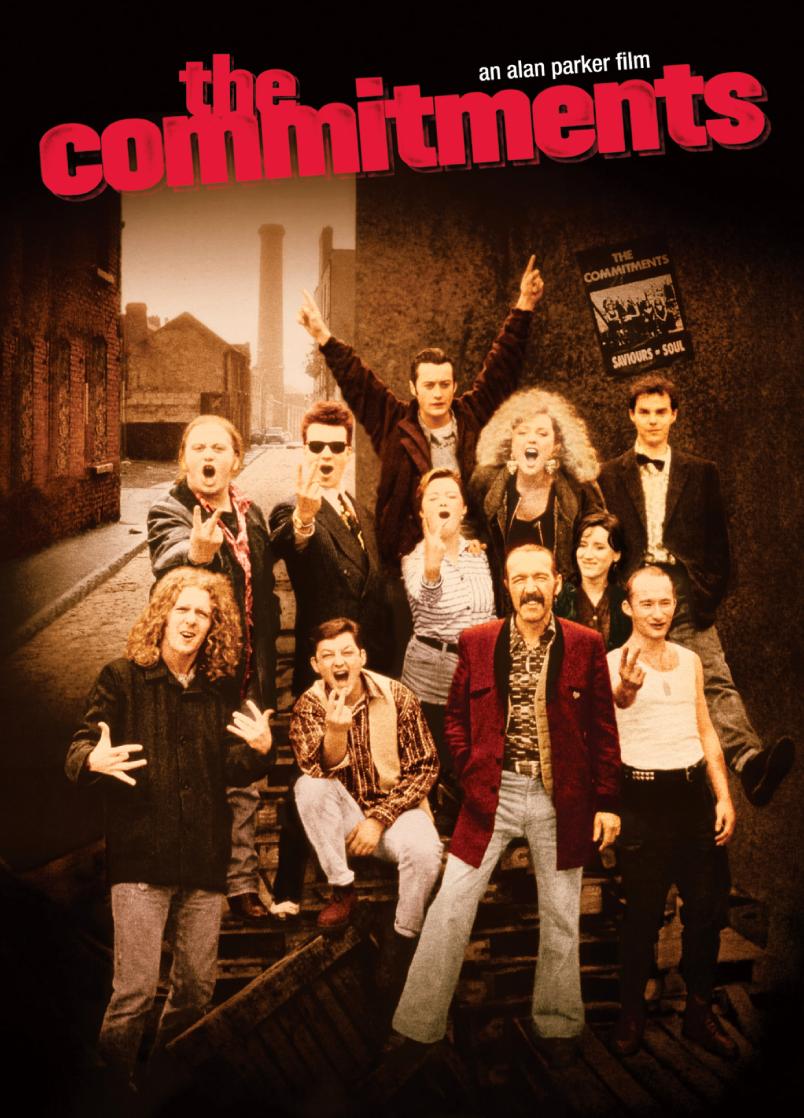
The Commitments
Synopsis
Jimmy Rabbitte, a music industry "enterpreneur", graduates from selling bootleg cassettes, VHS tapes, and t-shirts to managing a band when he assembles a soul band in the tradition of Wilson Pickett, Otis Redding, and Aretha Franklin. The group is made up of young white musicians from working class Dublin. With the help of Joey "The Lips" Fagan, a veteran trumpet player who has played around the world with famous musicians, they whip the band into shape. But just as the group comes together musically, their personal lives and egos get in the way, and it all comes crashing down around them.
Director
Alan Parker
Writer
Roddy Doyle, Dick Clements, and Ian La Frenais, based on the novel by Roddy Doyle
Stars
Robert Arkin, Michael Aherne, Angeline Ball
Awards and Reviews
Winner, Best Film, BAFTA Awards
Winner, Best Direction, BAFTA Awards
Winner, Best Editing, BAFTA Awards
Winner, Best Screenplay - Adapted, BAFTA Awards
Winner, Best Soundtrack, Brit Awards
Nominee, Best Film Editing, Academy Awards
Nominee, Best Motion Picture, Golden Globes
Nominee, Best Foreign Film, Australian Film Institute
A 90% score on Rotten Tomotoes
Background
Dublin: The City as Character
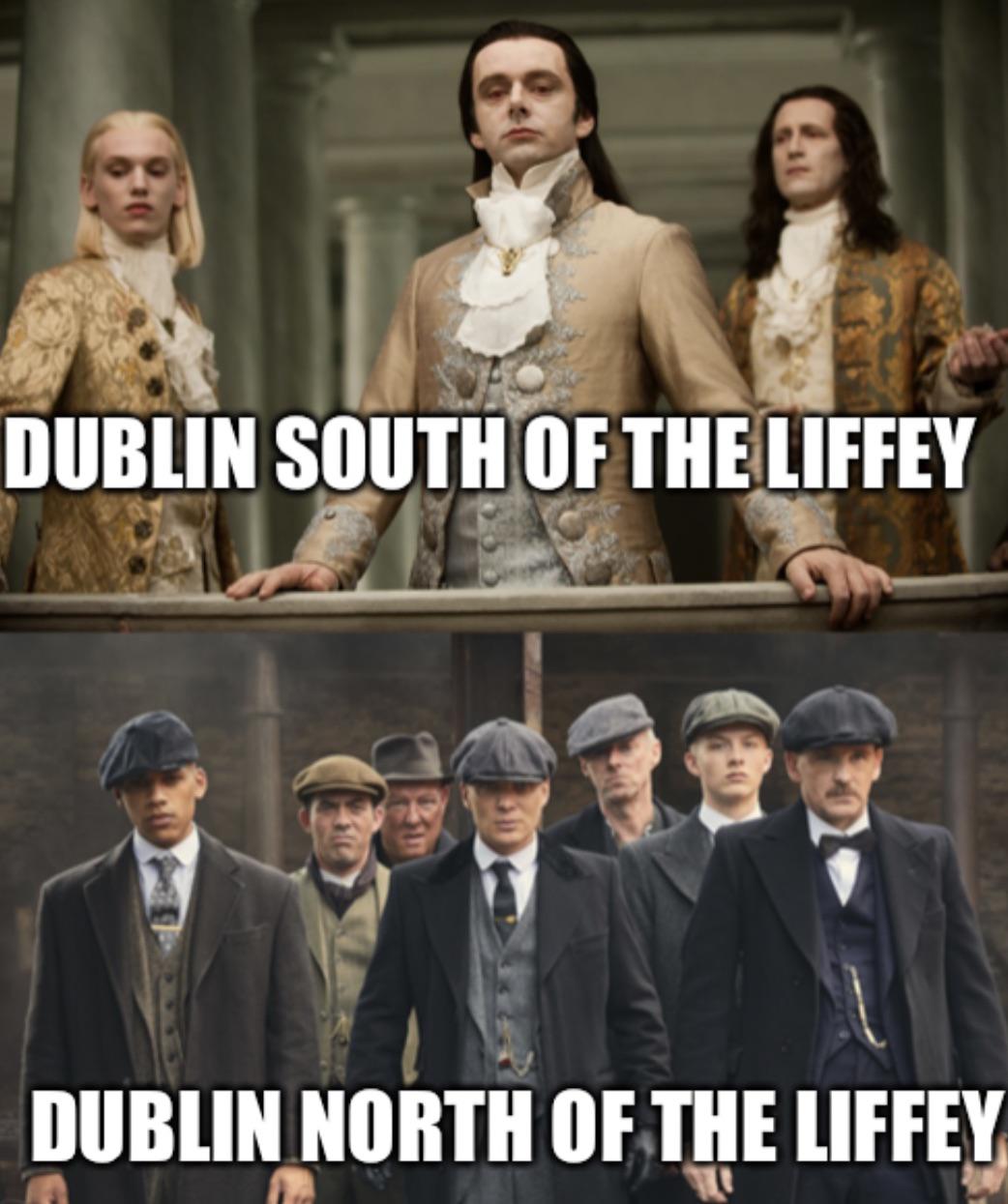
Every scene in the film was shot on location in Dublin, except for the interiors of the Rabbitte household.
As the capital city, and the largest city in Ireland, Dublin plays an importasnt role in the life of the country. But it's also a problematic place. As Jimmy tells the group on the train, "Do ya not get it, lads? The Irish are the Blacks of Europe. And Dubliners are the Blacks of Ireland. And the Northside Dubliners are the Blacks of Dublin."
Long before Dublin was the seat of governmental power for Eire, it was the seat of English power in its closest and longest-held colony. Generations of Irish people grew up resenting how Dublin defined their lives. Dublin was home to the Irish puppet governments that could do nothing without the approval of the British Parliament, and it garrisoned the military men who allowed England to enforce its edicts throughout the island.
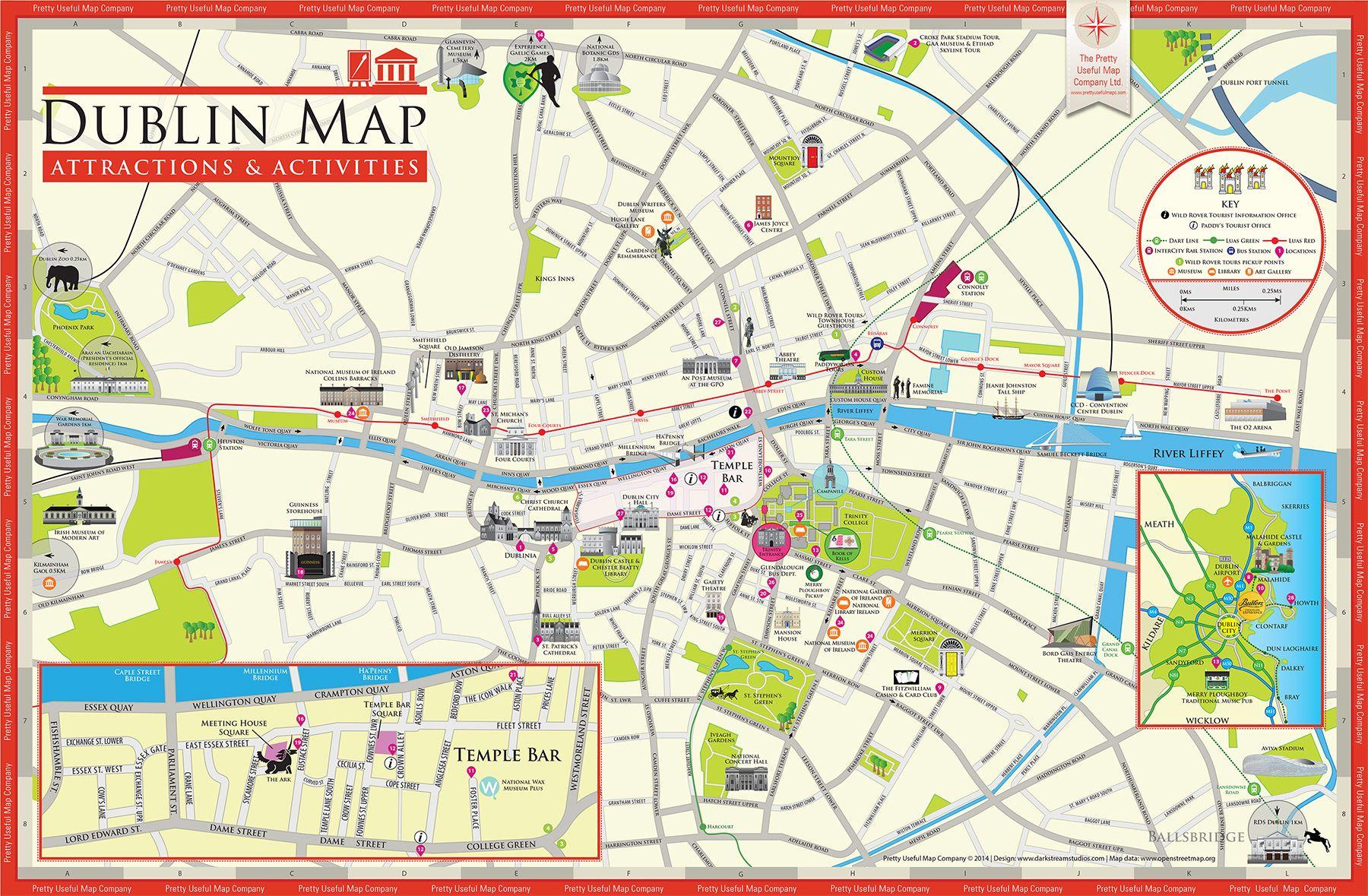
But even within Dublin, there are discrepancies between neighborhoods. The River Liffey splits the city in two. Throughout its history, the wealthy have always lived on one side of the river, while the less wealthy occupied the other side. During the 18th and early 19th centuries, the Protestant Ascendancy lived in what was known as Georgian Dublin, on the Northside. But all that changed in the 19th and 20th centuries, as the Northside transformed from the ultimate Dublin address into multi-family tenements for the city’s poor. According to The National Archives of Ireland, by 1911, Dublin had some of the worst housing conditions for the urban poor of any city in the United Kingdom, with some 835 people living in just 15 houses.
Attempts to address this imbalance began in the 1930s and continued until the 1980s. Council Housing Projects relocated people from these slums into housing estates and apartments on the outskirts of the city. But after the relocation, little was done to further help support the population; they were relocated, but not supplied with any resources at their new relocation sites. This led to mass unemployment, isolation, and difficulties with criminal activity.
Essentially whole communities from Dublin’s inner city were transplanted to the middle of nowhere with no schools, facilities, public transportation, etc. Add in the grim aesthetics, poor maintenance, and a massive heroin epidemic that swept through the area in the 1980s, and all Dublin did was move the terrible living conditions inside the city to the outskirts.
There are other indicators of this economic divide: the levels of homelessness are significantly higher in the North of Dublin. North Dublin is often associated with higher levels of anti-social activity, crime, and addiction issues. However, when these issues are discussed, it is rarely alongside the historically significant events that led to the Northside being economically deprived. This economic deprivation led to high unemployment and lack of opportunities, resulting in the increase of the social issues of crime, addiction, and homelessness. These issues are often stated as the reasoning behind the Northside's lack of economic development, instead of being discussed as a ramification of the initial economic divide.
This division has become an ingrained cultural differentiation and a common source of stereotyping and antagonism of varying degrees. Many Dubliners who grew up in the city attach intense significance to whether they are a "Northsider" or a "Southsider" as part of their identity, as each label has distinct connotations. The north is stereotyped as being rough and rundown, the south as ostentatious and spoiled. These conventional images are so commonplace that they play a significant part in Irish comedy, literature and entertainment.
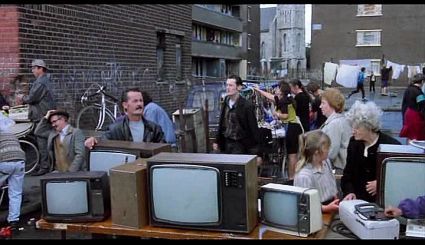
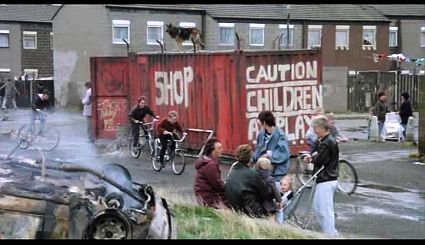
Dirty Old Dublin
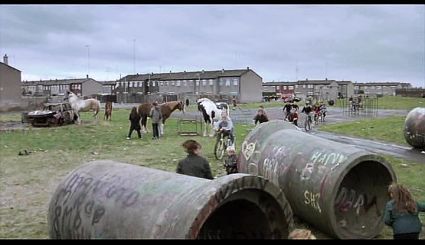
The film captures a Dublin that looks like a bomb site. When Parker told a location scout he wanted “urban decay,” he was assured he wouldn’t lack choices.
Parker didn't shy away from showing Dublin at its worst. Even O’Connell Street, once the heart of Dublin’s city center and a vibrant hub of activity, has seen noticeable neglect and signs of urban decay in recent years.This iconic thoroughfare, known for its historic monuments and central location, is now marred by a range of issues including vacant and derelict buildings, and deteriorating facades.
Most Dubliners tend to remember the late 1980s predominantly as an era of poverty and urban decay. The population of the innr city was cut almost in half as the Council Housing Projects came online. And between 1961 and 1991 as unemployment skyrocketed, facilities closed, and buildings were left to decay.
As the map below shows, most of the green space and culturally significant spots in the city are on the south side of the Liffey.
Post-film Discussion
Alan Parker's Concerns
In almost Alan Parker's films, insular ethnic groups come to know the lives of other, often equally inwardly focused groups, and in meeting, find themselves deeply changed. Sometimes, that change is an enrichment, but just as often it is an impoverishment. The ways in which groups meet cultural challenges is the source of the suspense of much of Parker's work. In Mississippi Burning (1989), whites in rural Mississippi resent the intrusion of FBI agents, who are themselves the products of a narrowly defined culture. In the process, the whites become either agitated and more harshly racist, or reluctantly moved to reconsider their own ideas of race. They emerge from the confrontation enlightened or murderous, but now forever conscious of another world. In Come See The Paradise (1990), the lives of the second-generation Japanese immigrants in California are shattered by forced deportation and imprisonment during WWII. Parker looks closely at their customs and traditions, but he focuses more on the reactions of the whites around them. These whites are, variously, uplifted or traumatized by their meeting with the internees, but we know at the fade out that they will never be the same people they were.
The Commitments presents the unlikely collision of working class Dubliners and African American soul musicians. , and Parker makes the meeting of cultures literally sing in a witty, sentimental, and ultimately soulful movie. But this meeting of cultures is implied, rather than actual. A portion of the film is built around whether soul music legend Wilson Pickett will appear at a Commitments gig, turning it into a kind of royal command performance. But mostly, we feel rather than see the profound empathy between the Irish heart and American soul music. Dublin's grimy Northside blooms with their commitment to their music, and its community, initially skeptical, comes together as the Commitments become "their" band, a source of pride in a place where pride is hard to come by.
The Barrytown Trilogy
The film is based on Roddy Doyle's novel of the same name. Doyle also wrote two other novels in this cycle known as the "Barrytown Trilogy." Both The Snapper and The Van follow Mr. Rabbitte (Jimmy's dad, played by Colm Meaney in all three films) and his family. They have the same comic energy as this novel and movie, because Doyle knew well how to mine that vein.
Musicians First
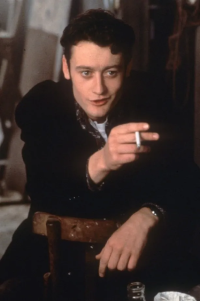
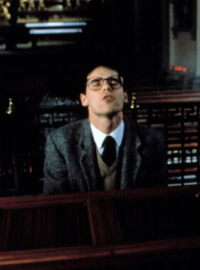
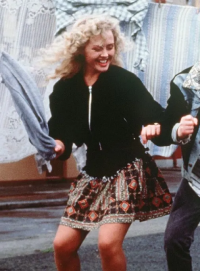
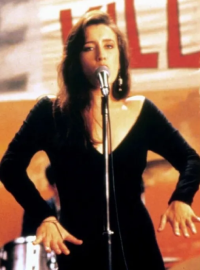
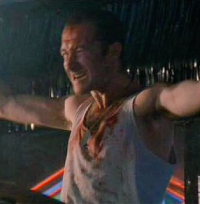
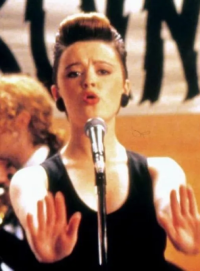
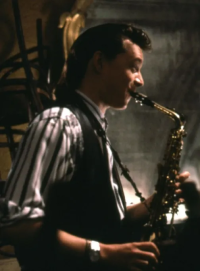
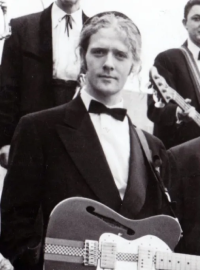
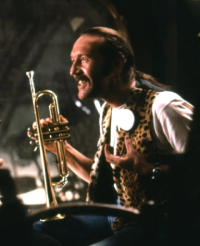
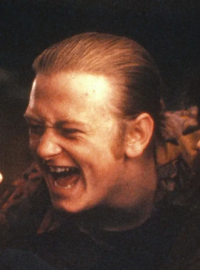
Each cast member was selected on their musicianship first. Parker auditioned working Dublin musicians, then worked with them for months on their acting. The results were, to be fair, a bit uneven. Johnny Murphy (Joey The Lips) and Bronagh Gallagher (Bernie) were the only ones in the group who had no music experience before making the film.
Meet the Band
| Character | Actor | Fast Facts | Still |
 |
|||
 |
|||
 |
|||
 |
|||
 |
|||
 |
|||
 |
|||
 |
|||
 |
|||
 |
Waning Catholicism
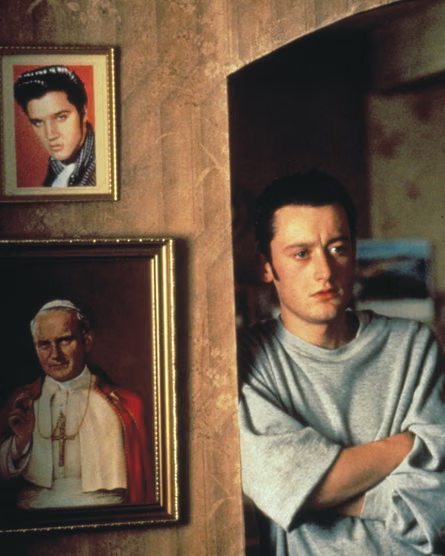
There one other background issue that Parker includes but doesn't highlight. The interior scenes in the Rabbitte's household feature some very Catholic iconography. But there are some subtle changes that point to the reality of the loss of moral and social influence once weilded by the Catholic church. We've addressed some reasons for that in Keegan's Small Things Like These, but this movie provides some subtle reminders of that decline.
The image to the right here is a perfect example. That's Pope John Paul II on the bottom there. Middle-Class Irish Catholic families, for generations, displayed pictures of the current pope prominently in their houses. After 1960, the pope was also accompanied by a picture of John F. Kennedy, the first Irish Catholic president of the US. And there was a hierarchy to these images: the pope was usually above JFK, or at best, they were side by side. But the pope was never relegated to an inferior position below the president.
However, in the Rabbitte household, JFK has beeen replaced by Elvis Presley, an Assemblies of God Evangelical Christian. You'd be hard-pressed to find another Christian denomination that is less like Roman Catholicism. And the pope plays second fiddle to the singer. Of course, the choice of Elvis is driven by Mr. Rabbitte's love for the man, but in this single image Parker privileges the secular world over the religious, and signals that popular culture has become more important than the Catholic church in Ireland.
Technique
Making Music Build
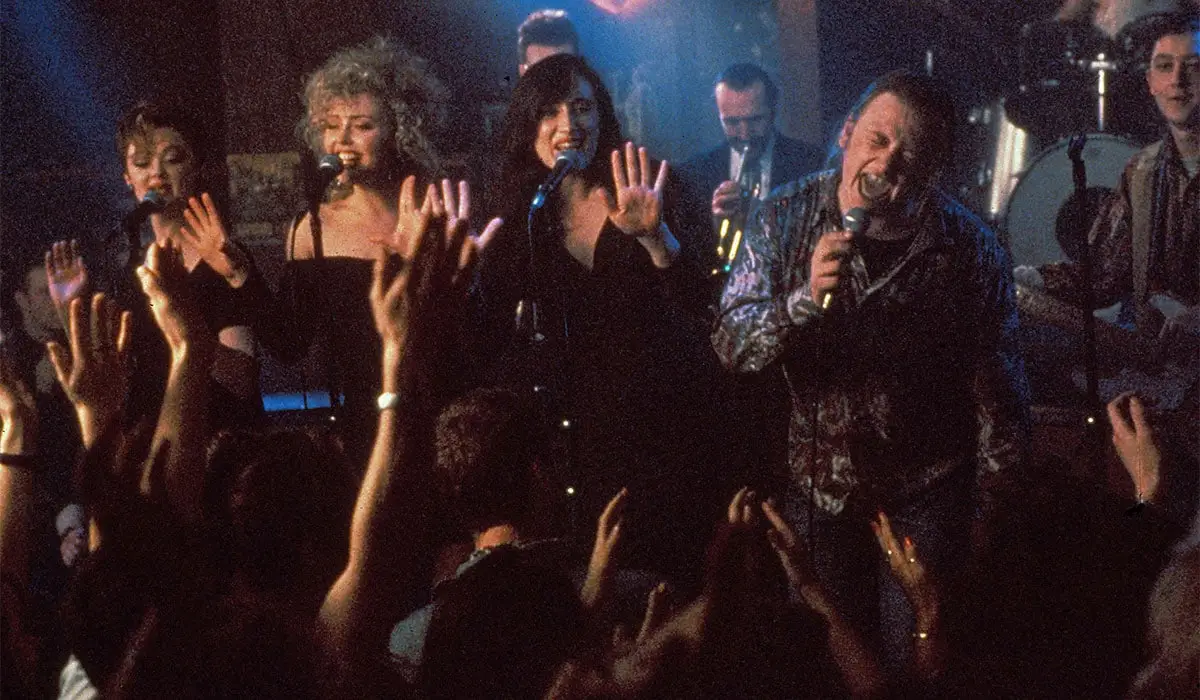
It's difficult to make a musical performance exciting on film. When a group performs, they're mostly statis, tied to their microphones and stage equipment. But a good director like Parker knows how to add energy to those musical scenes. He creates a slow burn during the scenes where the band is performing. As the band gets better and better, we get fewer and fewer wide shots, and the time spent on each shot gets shorter and shorter. In what is probably their best song, "Try A Little Tenderness," Parker starts with slow shots, usually about four or five seconds each. Then, as the music builds, the shots get tighter, and the cuts are put in time with the music. Overhead crowd reaction shots are mixed in with close-ups on the musicians' faces and their instruments.
Some quotations to think about
Jimmy: Soul is the music people understand. Sure it's basic and it's simple. But it's something else 'cause, 'cause, 'cause it's honest, that's it. Its honest. There's no fuckin' bullshit. It sticks its neck out and says it straight from the heart. Sure there's a lot of different music you can get off on but soul is more than that. It takes you somewhere else. It grabs you by the balls and lifts you above the shite.
Dean: You don't think, eh, well, like maybe we're a little white - for that kind o' thing?
Unemployment Official: Mr. Rabbitte, you've been collecting unemployment benefit for two years. Are you trying to tell me you can't get a job?
Jimmy: We're a third world country - what can you do?
Photographer: Look, do ya not think it better to have the band on Butt Bridge with the Customs House in the background?
Jimmy: I'm not after a bleedin' postcard! I'm after urban decay.
Joey: You're missin' the point. The success of the band was irrelevant — you raised their expectations of life, you lifted their horizons. Sure we could have been famous and made albums and stuff, but that would have been predictable. This way it's poetry.