ENGL 3110 ZZ: Intro to Literary Studies — Syllabus
Course Information
ENGL 3110 ZZ — Intro to Literary Studies
CRN: 14120
2:30 pm - 3:45 pm MW
Newton Building 1111
Vocabulary and approaches of modern literary criticism, reading and interpretation of literary texts, and the tools of literary research and writing.
- January 9: Classes begin
- January 9-12: Drop-Add period
- January 16: MLK Holiday - no classes
- March 6: Last day to drop with a "W"
- March 13-18: Spring Break
- May 1: Last day of classes
- May 4: Final Exam

Learning Outcomes are the knowledge or skills you should gain (and be able to demonstrate) by the end of a particular course.
Career Readiness Competencies are core competencies developed by the National Association of Colleges and Employers (NACE). They address eight areas where employers agree that your abilities and skills signify your readiness to begin and/or extend your career. Below are the skills you'll have the opportunity to practice in this course.
Upon successful completion of this course, you should be able to:
- Recognize and analyze literary elements in a text.
- Situate and interpret texts in their historical, cultural, and literary contexts.
- Create well-developed and organized essays with clear and precise prose, presenting sustained arguments.
Since this is the introductory course to the English major, you're not expected to have mastered all these outcomes by the end of this course. These learning outcomes are introduced here, and reinforced in every other course you'll take in the major. You'll demonstrate how completely you have learned to handle these outcomes when you take your Senior Seminar, your capstone course in the major.
| Self-Development |
|
| Communication |
|
| Critical Thinking |
|
| Equity and Inclusion |
|
| Leadership |
|
| Professionalism |
|
| Teamwork |
|
| Technology |
|
These career readiness skills will serve you well no matter what your next steps after graduation might be. Find out more about them on this page of the NACE site.
You won't need to purchase any books for this class. Everything you need will be in the Course Materials section in Folio.
All of the material provided for you will be in in the portable document format (pdf). If you're comfortable with reading material in an electronic format, that will work well for the books available. But there are several reference items (all in the English Major's Cheat Sheet series) that you'll need to print out.
Course Structure
This course will introduce you to the fundamentals of studying literature. So we'll be covering matters like:
- the theme-form-context matrix for understanding what you're reading;
- genre-specific matters;
- figures of speech;
- prosody and scansion;
- historical periods in British and American literature; and
- literary criticism and theory.
But all of this information is useless if it remains locked in your head. So we will focus on the iterative process of writing, where you write, revise, proofread, workshop, revise again, then submit your papers.
Think of this course as consisting of three parallel tracks:
- Reading closely
- Understanding the elements of literary study and research
- Improving your writing
The first track is your most fundamental skill: understanding the words that pass in front of your eyes.
The second track is about what you do with those words: how you think about them, the techniques we use in this field, and the language we use to describe our findings.
The third track is about how you communicate the fruit of your work: practicing the processes that will allow you to write clearly, concisely, and persuasively.
There are two anthologies of primary texts for you in Folio. They will be the raw material you'll investigate for your papers in this class.
One of the secondary texts in Folio will be our guide for the semester. We'll walk through that text, do a number of exercises in it, and use it as a reference tool.
We'll use the material in the English Major's Cheat Sheet series to address background knowledge you'll need to know further on in your academic career.
You'll write a number of short papers for this class, all of which are tied to the course learning outcomes. We'll begin with some simple paraphrases and explications, then move on to deeper explorations. You'll conclude the semester with a fairly short paper where you'll incorporate the views of other scholars into your own interpretation of a text.
Of course, you'll need to acknowledge where you got your information from, in the documentation format that we use in our field (MLA 9). We'll work on that during the semester as well.
As we get into more complicated writing, we'll also practice some peer review, because it's always better to have more than one set of eyes take a look at your work before you turn it in for evaluation.
Your simpler papers will be turned in as a hard copy, and I'll mark them up and return them to you. But as the semester progresses, you'll submit your papers via a dropbox in Folio, where they'll go through TurnItIn to check for academic integrity. See below for how I'll mark your papers.
We'll have two exams, one halfway through the course and one at the end of the course. These will contain some recognition questions (can you identify something like personification?), some practical questions (can you scan a stanza of a poem?), some short answer questions (can you figure out why a particular piece of writing might be from a particular period?, and an essay question.
Course Expectations
The "Carnegie Unit" is how universities define credit hours and categorize the amount of work students do for each credit hour. Each credit requires fifteen "contact hours" which are essentially the hours you spend in class during the semester. And each contact hour requires two hours of outside work, or time devoted to the class that doesn't happen in the class. This is a three-credit course, with 45 contact hours. Those 45 contact hours necessitate at least 90 hours of out-of-class work on your part. That's at least 135 hours committed for each three-credit class that you take.
If you're not a self-starter, or you have problems with deadlines, or you just don't think you can commit to this level of work, you should probably look for another section of this class.
I expect that you will conduct yourself within the guidelines of the Honor System. All academic work should be completed with the high level of honesty and integrity that this University demands.
I do not tolerate academic dishonesty. Beyond the moral implications, I find it insulting. All instances of plagiarism will be reported to the Office of Student Conduct. Any instance will result in an F in the course and possibly further sanctions. Plagiarism is presenting someone else's work as your own without giving them credit. Someone else is defined as anyone other than you: another student, a friend, relative, a source on the Internet, articles or books. And work is defined as ideas as well as language. So taking someone else's ideas and putting them in your own words—or using someone else's words to express your ideas—is plagiarism. And, in the case of friends and family, it doesn't matter if they give you permission.
A note about group work: I encourage you to read and discuss these texts together outside of class. It is, in fact, the core of our endeavor, to hone our own ideas on these texts through discussions with others. You should also discuss your writing with your classmates, as hearing a number of ideas will help you create and polish your own. However, this does not mean that you should write your papers as a group. While discussion is obviously a group activity, writing is a solitary one, and should be treated as such. Any attempt to subvert this would be an instance of academic dishonesty.
The University has a more extensive definition of Academic Dishonesty (from the Student Conduct Code):
CHEATING
- submitting material that is not yours as part of your course performance;
- using information or devices that are not allowed by the faculty;
- obtaining and/or using unauthorized materials;
- fabricating information, research, and/or results;
- violating procedures prescribed to protect the integrity of an assignment, test, or other evaluation;
- collaborating with others on assignments without the faculty's consent;
- cooperating with and/or helping another student to cheat;
- demonstrating any other forms of dishonest behavior.
PLAGIARISM
- directly quoting the words of others without using quotation marks or indented format to identify them;
- using sources of information (published or unpublished) without identifying them;
- paraphrasing materials or ideas without identifying the source;
- Self-plagiarism: re-submitting work previously submitted without explicit approval from the instructor;
- unacknowledged use of materials prepared by another person or agency engaged in the selling of term papers or other academic material.
Should you wish to pursue a case of academic dishonesty through the Office of Student Conduct, I will speak at your hearing and send a copy of this syllabus along with the documents in question to the Hearing Officer, so a plea of ignorance or non-malicious intent on your part will not be valid.
I'm sure you're aware of the effectiveness of current plagiarism checkers like TurnItIn. When you submit a paper in this class, Folio automatically sends that paper to TurnItIn for an originality check. TurnItIn compares your work to the material in its database, which currently contains over 54 million student papers. It marks the parts of your text that are similar to the material in that database, and then produces a report that both you and I can view. The most recent study on its effectiveness claims that it has reduced plagiarism in papers submitted to institutions of higher education by at least 39%. It's not perfect, but it's an invisible tool that tells me how original your work is before I even consider marking it.
You may have heard of ChatGPT and GPT-3.5, a new technology developed by OpenAI research laboratory, which uses artificial intelligence (AI) to enable natural-language conversations. And you may have heard that it can produce college-level essays that are both well-constructed and original. But have you seen GLTR, the Giant Language model Testing Room? It's a tool developed by researchers from the MIT-IBM Watson AI lab and the Harvard Natural-Language Processing Group. Basically, it's TurnItIn on steroids, but for AI-generated text. It is currently 98.65% accurate in identifying text written by AI, and literally getting more accurate every day.
I'll be using GLTR this semester to check your papers. If it returns a positive score for the work you submitted, I'll treat it as I would any other instance of academic dishonesty.
Course Schedule
| DATE | CLASS ACTIVITY | DUE |
|---|---|---|
1/9 |
Introduction to the Course |
|
1/11 |
Habib, Literary Studies: A Norton Guide — chapters 1-4 |
|
1/16 |
MLK DAY - NO CLASS |
|
1/18 |
Habib, Literary Studies: A Norton Guide — chapters 5-7 |
|
1/23 |
Habib, Literary Studies: A Norton Guide — chapters 8-10 |
Paraphrase paper 1 |
1/25 |
Habib, Literary Studies: A Norton Guide — chapters 11-12 |
|
1/30 |
Habib, Literary Studies: A Norton Guide — chapters 13-14 |
|
2/1 |
Habib, Literary Studies: A Norton Guide — chapters 15-16 |
Paraphrase paper 2 |
2/6 |
Habib, Literary Studies: A Norton Guide — chapter 17 |
|
2/8 |
Habib, Literary Studies: A Norton Guide — chapters 18-19 |
|
2/13 |
Habib, Literary Studies: A Norton Guide — chapter 20 |
|
2/15 |
Writing essay exams |
|
2/20 |
EXAM 1 |
|
2/22 |
In-class: Peer Review practice |
|
2/27 |
In-class: Close Reading Paper Peer Review |
Close Reading Paper 1 draft 1 |
3/1 |
Campus-specific research, part 1 |
Close Reading Paper 1 |
3/6 |
Campus-specific research, part 2 |
|
3/8 |
How to read an academic article, part 1 |
Research Paper proposal |
3/20 |
How to read an academic article, part 2 |
|
3/22 |
In-class: Close Reading Paper Peer Review |
Close Reading Paper 2 draft 1 |
3/27 |
Writing a Research Paper |
Close Reading Paper 2 |
3/29 |
Documentation |
|
4/3 |
Selected readings (TBA) |
|
4/5 |
Selected readings (TBA) |
Research Paper Annotated Bibliography |
4/10 |
Selected readings (TBA) |
|
4/12 |
Selected readings (TBA) |
|
4/17 |
Research Paper troubleshooting |
|
4/19 |
In-class: Researched Paper Peer Review |
Researched Paper draft 1 |
4/24 |
In-class: Researched Paper Peer Review |
Researched Paper draft 2 |
4/26 |
Exam 2 prep |
Researched Paper |
5/3 |
3:00 EXAM 2 |
Instructor

I'm Dr. Joe Pellegrino, an Associate Professor in the Literature department. I teach lots of different classes. My specialties are Irish literature and postcolonial literature, so I end up doing classes that don't fit into the standard Brit Lit/American Lit model: Irish lit, African lit, etc. For instance, this semester I'm also teaching an introductory course for English majors and a seminar on T.S. Eliot for graduate students. Basically, if other people in my department can teach it, I don't teach it.
It seems like I went to school forever, and went to lots of different schools: Duquesne University, St, Louis University, Mannes College of Music, The New England Conservatory, and UNC-Chapel Hill, which is where I got my PhD. I've also taught at a lot of schools: Duquesne, UNC, Eastern Kentucky University, University of South Carolina-Upstate, Greenville Tech, Converse College, and here at Georgia Southern. I've got some experience in online education; I was a University Director for the (short-lived) Kentucky Commonwealth Virtual University, and have taught online classes for over 20 years now.
Professionally, I also edit an international journal, The International Journal for the Scholarship of Teaching and Learning. I'm interested in a number of fields, but most of my publications are either on Irish studies, postcolonial lit, or teaching.
I have only one item on my bucket list: to see the Northern Lights. One day I'll get there, but in the meantime I'm raising two daughters, making heirloom furniture (pretty much a middle-aged guy cliché), keeping up with new technology, wishing I could spend more time doing music, and trying to keep my head above water.
- Email: jpellegrino@georgiasouthern.edu
- Phone: 912.478.5853
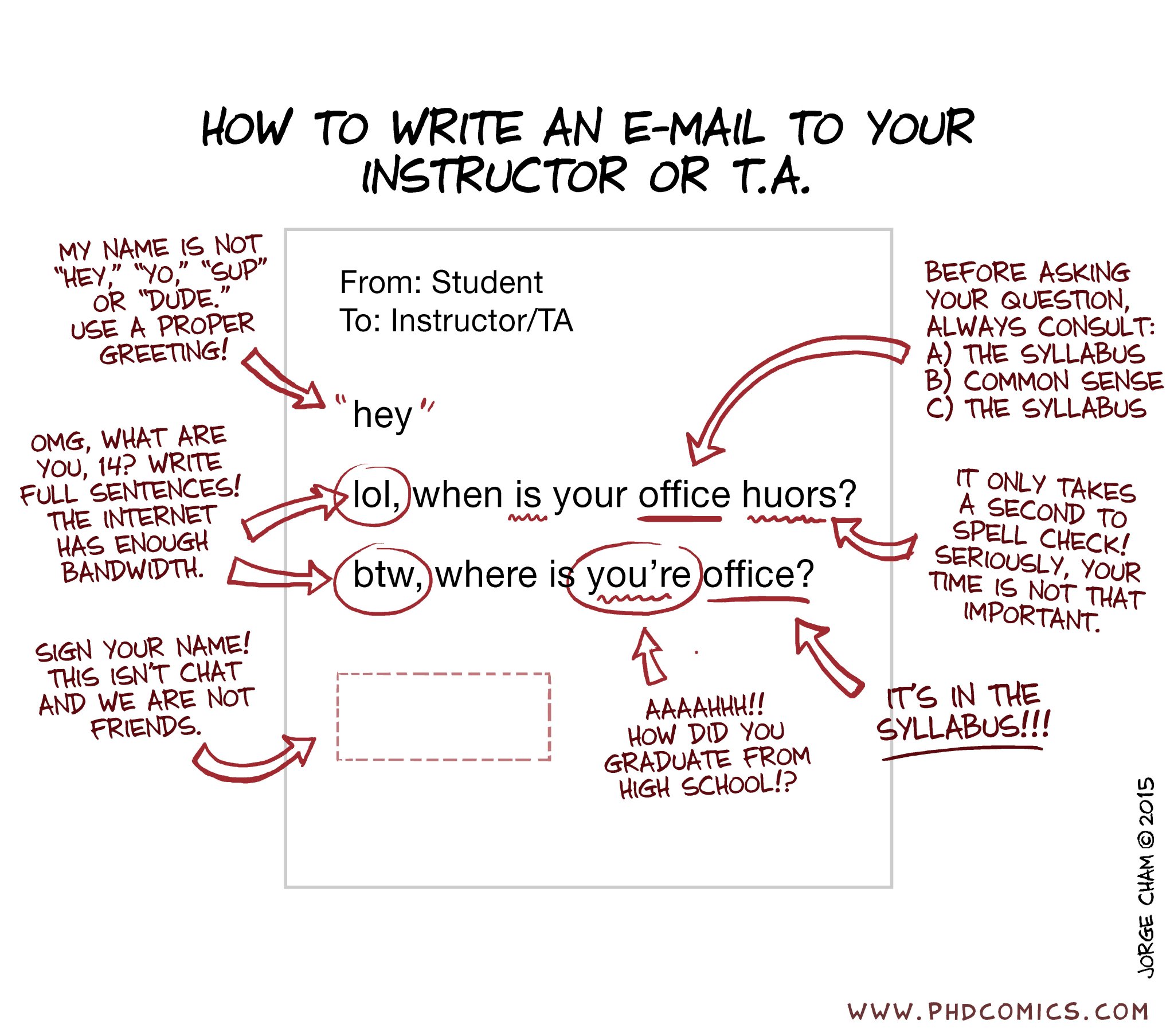
Please don't hesitate to post to me if you have a question about any of the readings, especially if you're struggling to figure them out. But please think twice about posting questions where the answer is in this syllabus. If you do, I have two options for a reply: I can copy and paste material from the syllabus or schedule just for you, but that's redundant, since you already have access to the material. Or I can reply with something like "check the syllabus" or "check the schedule," which you should already know to do. Since neither of those are satisfactory, if you ask a question that is already answered in the syllabus or in the schedule, I won't be replying at all. So if you don't hear back from me, you should know that the answer to your question is in this document.
CLASS POLICIES
If you need additional work on the surface features of your writing, I'll let you know. Basically, if I can't understand what you're trying to say in your first paper, then you'll have to work at writing more clearly. I'll ask you to schedule sessions at the Writing Center in order to be more successful on your next paper.
The reason professors make students write papers is not because we love to mark them up, or because we somehow enjoy this. I'm willing to bet that every professor you ask would say that marking and grading papers is the worst part of their job. I know it is for me. The only thing that makes it bearable is hoping that I'll be able to engage with your ideas, or see the texts we're covering through your eyes. But if I have to stop after every sentence to figure out what you're trying to say, I'm most certainly not thinking about your ideas.
So do yourself a favor: give yourself enough time to do a good job on these papers. Remember that writing clearly takes far more time than you think it does, because you have to consider your argument from a reader's perspective, not your perspective.
I realize that the grand academic dance of submitting your work, having it evaluated, then responding to that evaluation (either through improving your work in your next paper, or by coming to see me in my office) is essentially a negotiation between us. You want to demonstrate your abilities with X amount of work, an amount that you think deserves a certain grade. You submit your work without knowing how others will see it, and only become aware of their perceptions when your work is returned to you with my comments. But this puts you at a disadvantage, because you're making your first move in this negotiation blindly.
So in the spirit of openness, let me try to level the playing field by giving you a few tips:
- This is academic writing, where clarity and concision are essential. If your work isn't clear, if every sentence doesn't hang together, you're losing the negotiation. What you have written may make sense to you, but it needs to make sense to your readers as well.
- At the post-secondary level, your work isn't evaluated in terms of the amount of work you put into it. Just like any other skill, the amount of effort necessary to master academic writing varies from person to person. I am sure that it would take me far more effort than most of you to get back to playing football. But even if I did ten times the work you did, when we both showed up on the field we'd be evaluated on our skills, not on the time it took us to gain them.
- If you pay attention to what the prompt is asking you to write about, and keep that in mind as you think about your paper, you're making a good start.
- if you look at the rubric, especially the distinctions between the levels of performance in content and form, you should get a good idea of how successful your paper will be.
- If you're wondering if your "X amount of work" is enough, it isn't.
- And one last personal comment:
Before we had things like TurnItIn and other automatic checkers on academic integrity, I was the guy other faculty members went to to track down cases of suspected plagiarism. When Google was just getting off the ground, I was a beta tester for them (one of 25 in the country). I've also been teaching English for over 40 years now. So if you're thinking that you've changed enough of that material that you've copied and pasted to make it look like your own work, think again. If writing and evaluating papers is a negotiation, then presenting someone else's work as your own is a gamble, and you're betting your academic career that you can get away with it. I've just told you what I bring to the table, so if you really think you can get away with it, my only advice is to do it as early as possible, so you can spare yourself the work for the rest of semester, because you'll already be gone from this class.
All electronically-submitted assignments will be placed in the appropriate dropbox section or discussion forum of the Learning Management System (Folio).
I DO NOT ACCEPT LATE ASSIGNMENTS. NO EXCEPTIONS, NO EXCUSES. A late assignment is any work that is not turned in during the class period in which it is due. This means that you must anticipate any problems that will occur. In other words, a computer / printer / drive / car / arm being broken at the last minute is not an excuse. To avoid last-minute catastrophes (which always occur), DO NOT WAIT UNTIL THE LAST MINUTE TO DO YOUR WORK.
I'm a strong advocate for those who are differently abled, so of course I want to be in compliance with the Americans with Disabilities Act (ADA). I'll honor any request for reasonable accommodations made by those with disabilities or demonstrating appropriate need for learning environment adjustments. However, I can only make those accommodations if they're accompanied by an accommodation letter from the Student Accessibility Resource Center (SARC) before academic accommodations can be implemented.
If you don't have that letter from the SARC, I can't offer you any accommodations for the class.
For additional information, please call the SARC office at (912) 478-1566 on the Statesboro campus, or at (912) 344-2572 on the Armstrong and Liberty campuses.
The University Undergraduate Catalog states unequivocally: “Students are expected to attend all classes.” Attendance in this class is not optional. Attending class means that you are present and attentive for the whole class period and that you are prepared for the day’s lesson. If you miss a class, regardless of the excuse, it will be counted as an absence (unless you are missing for a University-sanctioned reason). You do not want me in the position of deciding whose excuse is valid and whose isn’t, so I don’t need any documentation for your absences. If you’re within the limit it is not necessary, and after the limit it will not matter.
But life gets complicated. So you'll have a free pass to miss almost 15% of our classes. I certainly don't encourage you to do so, but I'll give you two weeks of absences (that's four classes) before you begin to negatively affect your grade for the class. If you are absent more than four times, regardless of the excuse, your final grade will be lowered by 2.5% for every subsequent absence. If you have to miss more than your allotted absences, there is obviously something going on in your life which does not allow you to pursue this degree wholeheartedly, so you should consider withdrawal. Keep this in mind when using your absences—that’s ALL you will be allowed. I do not accept ANY excuse after that.
By now you recognize that arriving on time for class is, at its core, a sign of respect for your classmates and your professor. Tardiness, therefore, is a statement saying that your time is more important than anyone else’s. I will strike a blow for the group by counting every instance of tardiness as 1/3 of an absence. So, if you’re doing the math, you can be tardy several times without any consequences, save the collective disdain for your actions. And yes, your tardiness works in conjunction with your absences, so a combination of the two will push you toward the negative consequences outlined above.
Writing Prompts
These first two papers are very simple. For each of them, you'll choose a poem from the Vendler anthology, and, in no more than 400 words, rewrite the poem in prose. It's a paraphrase, so you have to use your own words; you can't quote from the poem, and you can't use the work of others (either other scholars or some online rando). In a nutshell, you're telling your readers WHAT the poem is saying. You don't have to say what the theme is, or who the characters are, or who the author is; you just have to understand the poem well enough to write it out in prose.
These short first papers are a gauge of your comprehension and writing skills. If you don't know a word or a turn of phrase that's in the poem you're writing on, look it up. Don't just skip over it and hope for the best, because that word or phrase may be the intellectual or emotional lynchpin for the poem, or the meaning of the poem itself may hinge on that particular passage.
You should write this in the third person, so you're not going to assume the voice of the speaker in the poem. For instance, here are the first four lines of Shakespeare's Sonnet 73:
That time of year thou mayst in me behold
When yellow leaves, or none, or few, do hang
Upon those boughs which shake against the cold,
Bare ruin'd choirs, where late the sweet birds sang.
Instead of saying "You can see that I'm getting older; I'm in the autumn or the winter of my life. Those seasons are when the leaves on the trees have either turned or fallen, and the tree limbs are bare."
Say something like this: "The speaker of the poem tells the reader that they can see how the speaker is getting older. The poem begins with seasonal imagery, presenting trees with little or no leaves that shake in the wind, as if they are shivering from the cold. That natural image leads into another image of something less natural: the ruins of a church or monastery. The monks, who used to sing in choir, have all abandoned the place, just as the birds have left the barren landscape."
You'll be evaluated on the clarity and correctness of your writing, the depth of your understanding of the poem, and your thoroughness in addressing the poem. I'll be using the pertinent pieces of the rubric below when I look at your paper, so you should probably familiarize yourself with it. Please don't make the mistake of thinking you can submit something you dashed off in an hour or two. If you do, you will be sorely disappointed in your grade
Close readings are our bread and butter; although they themselves are a form of analysis, they serve as a foundation for any other analysis or application of a critical lens. Doing one correctly, and expressing your thoughts with clarity, will do more than anything else to guarantee your success as an English major. Or, to put it negatively, if you can't do a close reading and articulate that reading well, then you'll be at a serious disadvantage when you come to more advanced arguments.
When you close read, you observe facts and details about the text. You may focus on a particular passage, or on the text as a whole. Your aim may be to notice all striking features of the text, including rhetorical features, structural elements, cultural references; or, your aim may be to notice only selected features of the text—for instance, oppositions and correspondences, or particular historical references. Either way, making these observations constitutes the first step in the process of close reading.
The second step is interpreting your observations. What we’re basically talking about here is inductive reasoning: moving from the observation of particular facts and details to a conclusion, or interpretation, based on those observations. And, as with inductive reasoning, close reading requires careful gathering of data (your observations) and careful thinking about what these data add up to.
Close Reading has three primary objectives:
- It encourages you to be a better and more careful reader.
- It asks you to employ the tools you've seen us use in class, and probably have employed yourself: analysis of the speaker, diction, figurative language, sound, and genre, to name just a few.
- It engages you in the act of synthesis. Even as you divide the passage or poem into its composite elements, you will want to discuss how those elements come together to form a whole.
What’s in a Close Reading Essay?
- A thesis that is an assertion about the meaning and function of the text. It must be something you can argue for and prove in your essay.
- Evidence from the text. What specific words or phrases led you to have the ideas you express? Quote them.
- Analysis of that evidence. If the work were self-evident you could just turn in the book or image as your proof. Literally thousands of people have had thousands of different ideas about the words or details you mention. Explain how you arrived at your ideas.
Again, you'll get two bites of this apple, and you'll also have some help from your peers (we'll do an in-class peer review session for each of these papers). For each assignment, you'll choose either a poem from the Vendler anthology or a story from 40 Storiesand produce a close reading of it that falls somewhere between 750 and 1,000 words. In the case of a longer narrative poem, you can choose just a section of it — but the section you're addressing must be at least 20 lines long.
Review the material we've covered in class about how to do a close reading. Pay special attention to Vendler's example on Keats' "On First Looking into Chapman's Homer." You don't have to address every single point that she does in her reading, but you should be familiar enough with all of them to know which ones are important for what you want to say, and which ones won't add much to your analysis.
Throughout the semester you’ll be working on a researched paper of 1500-2,000 words (+ or – 10%) on a poem, a group of poems, or a short story of your choosing (but not one we've covered in class or one you've written on previously). In this paper you will present a reading of the text you have chosen through a particular critical lens. You may take any critical approach you deem appropriate. You may not choose any of the texts in anthologies that we have covered in class.
Expectations:
- You’ll situate and interpret the text you’ve chosen in its historical and cultural context.
- You’ll apply one of the critical approaches we have covered to the text.
- You’ll address the literary structures in the text. Elements of development (plot, setting, narrative structure, characters, mood, theme, etc.) are all fair game for your analysis (not for your summary). Techniques which further this development (metaphor, simile, alliteration, hyperbole, allegory, etc.) should also be noted, but should not be shown as ends in themselves.
- If necessary, you’ll make and explain the connections between the text you’re working on and other works of literature.
- Your writing will be clear and precise in its arrangement, unity, coherence, vocabulary, grammar and usage, punctuation, spelling, and use of the conventions (MLA 9 formatting of the paper and the Works Cited).
- Your writing will be pitched for an academic audience, as demonstrated in your register and tone.
- You’ll critically engage the ideas of other scholars, and synthesize the results of your research into your own writing.
- You’ll use and document at least four sources, not including the text itself.
Introduction
Powerful works of literature invoke and support multiple readings. In other words, we can all read the same story or poem (or watch the same movie or listen to the same song) and come up with different, even conflicting, interpretations about what the work means. Who we are reflects how we read texts.
Your number one task in this paper is to make your reader read the text in question exactly the way you do. That is, you need to teach your reader how to read, how to see the text through your eyes. There are many metaphors that we use for this. Some have spoken in legal terms, where you marshal evidence in support of your case. Some have talked about logic, with major and minor premises and an irrefutable conclusion. But I like to talk about inevitability. You need to make your conclusion inevitable. Readers, if they buy your first premise, must, inexorably, be led to your conclusion. You do this by offering evidence: from the text itself, from other texts (other critics, historical documents, cultural artifacts, etc.), from analogies, from examples, from critical thinking.
Beginnings: Thesis
When applying theories to literature, remember, as always, that it is your thesis that matters. Theory is a framework…it is what you do with it that is the core of any literary analysis. Many pieces of literary criticism do not even mention what critical or theoretical approach is used. The approach is inherent in the argument the author makes. This is a good benchmark to help you assess the appropriateness of your argument given the theory you are tasked to explore.
Readings: Begin with understanding what you’re reading
Literary criticism involves close reading of a literary work, regardless of whether you are arguing about a particular interpretation, comparing stories or poems, or using a theory to interpret literature. Do not summarize the story. The purpose of your paper is not to inform readers about what goes on in the text, but to argue a particular interpretation of that text. So any plot summaries will not only be out of place, but will negatively affect your grade for the paper. You only need to cite parts of the work that support or relate to your argument (and follow MLA 9 formatting guidelines as you do so).
Argument v. Assertion
Refer to the “Writing as an English Major” handout for a reminder of the difference between these two. You’re writing an argument, which means your points need to be supported.
Proposal
Your paper proposal will present a working thesis statement, a rough outline of your argument, and a list of potential works to be cited or consulted.
Draft
A draft is a written document, at least 85% complete. It is not a collection of notes or summaries of what you’ve read. There are no bullet points, no notes to yourself, no reminders. It’s an attempt to actually write something for an academic audience, not remind yourself to do so.
Don’t put it off
The calendar above stretches through the whole semester. That means that you’ll have to decide quickly on both the work you are addressing and the theoretical stance you want to take toward it. I’ve incentivized your staying on task by building assessment points into the process above, so don’t miss them.
Do you like it? Is it your favorite? Does it give you goosebumps? —— I don’t care.
Saying that you like a work is not the same as writing a paper about it, but it can be a good place to start. Analyze your attraction for the piece and try to jot down answers to basic questions like these:
- What do I like about this piece?
- Why do these things appeal to me?
- What makes them different enough from the surrounding material that they stand out in my mind?
- Where does that difference come from?
- How is it achieved?
Pitch for the Reader
Literary criticism can seem daunting. But sometimes when you find yourself confused by a work, a basic analysis by a noted scholar can clear things up immensely. I can recommend some sources, but you can also find sources on your own. Anything calling itself an “Introduction” or “Overview” of an author or work is probably a good bet. Remember to take notes.
I’m giving it away!
Talking to me about choosing your topic, doing your research, outlining, writing your draft, editing, proofreading, etc., can be helpful, but only if you handle it correctly. I won’t give you specific instructions about choosing a topic, or assign one for you; choosing a topic is part of the learning process. However, I might be more familiar with this literature than you are (both the primary and the secondary literature), so perhaps I can point you in new directions. Instead of looking for specific answers, go looking for advice.
Marking & Rubrics
When I mark your papers, here's my process: I read your papers at least three times. The first time, I just go through them looking for your argument and if you addressed the prompt in your essay. In my next reading, I apply the following Minimum Standards Rubric, which comes from the Technical College system in South Carolina. This rubric is applied to papers from students at two-year schools, and it defines the minimum acceptable standards there. Once I've applied the Minimum Standards Rubric, I then read through your paper again, asking the questions here and evaluating it with the Essay Rubric below. This reading is where I mark your paper.
| Minimum Standards Rubric (from Greenville Technical College) | |
|---|---|
The following errors are serious, and therefore warrant special consideration as your papers are being graded: |
|
These errors in grammar and usage are unacceptable in college-level academic writing:
Any paper having a combination of four or more of these serious errors will automatically receive a failing grade (F). |
|
Any paper having six or more different misspelled words will automatically receive a failing grade (F). (Misspellings include mistakes with the use of the apostrophe.) |
|
A combination of the above-mentioned serious errors and misspellings, even though not sufficient to fail a paper, will lower the grade substantially. |
|
A paper can fail for other reasons as well, such as weak content, poor organization, confused sentence structure, not addressing the assignment requirements, or plagiarism. |
|
Your papers for this class will be evaluated with the appropriate elements of this rubric:
|
SLO |
4 |
3 |
2 |
1 |
|
1. Recognize and analyze the literary elements in a text. |
||||
|
|
Uses and applies literary terms & elements (such as plot, characters, setting, tone, style, point of view, narrative technique, structure, theme, etc.) accurately and clearly, contributing to a richer understanding of the text(s). |
Accurately addresses textual literary terms & elements (such as plot, characters, setting, tone, style, point of view, narrative technique, structure, theme, etc.). Their use does not add to an understanding of the text(s). |
Addresses textual literary terms & elements (plot, characters, setting, tone, style, point of view, narrative technique, structure, theme, etc.), with some lapses or omissions. |
Does not use literary terms & elements, or does not use them accurately. |
|
2. Situate and interpret texts in their historical, cultural, and literary contexts. |
||||
|
|
Presents the text(s) as representative of its culture, historical moment, cultural milieu, or literary period. Identifies and explains aspects of the text(s) which reflect or shape the dimensions of the culture in which it was created. |
Attempts to interpret the text(s) in relation to a particular historical moment, cultural milieu, or literary period. May not identify all aspects of the text(s) that justify such a reading. |
Attempts to make a point about history, society, or a literary period using the text(s) as evidence. Does not identify aspects of the text(s) that justify such a reading. |
Does not present the text(s) in relation to a historical moment, cultural milieu, or literary period. |
|
3a. Create a well-developed and organized paper with clear and precise prose, presenting a sustained argument that uses discipline-specific vocabulary and analytic techniques. |
||||
|
Thesis / Position |
Thesis is focused; intent is obvious. Positions are insightful and clear. |
Thesis is general; intent is evident. Positions are sound and understandable. |
Thesis is general or vague. Positions are sound and understandable. |
Thesis may be absent or intent is unclear. Lacks a position on topics. |
|
Structure |
Overall structure complements and completes content. |
Overall structure is appropriate for the content. |
Overall structure is generally adequate for the content. |
Overall unity and coherence are flawed. |
|
Style |
Demonstrates overall sophisticated prose, syntax, and clarity. |
Demonstrates moderate strength in terms of prose, syntax, and clarity. |
Demonstrates acceptable if inconsistent, facility in terms of prose, syntax, and clarity. |
Demonstrates unsophisticated prose, syntax, and clarity |
|
Grammar / Errors |
Grammatical structures are well-chosen. No errors detract from meaning. |
Grammatical structures carry the meaning forward, although readers notice occasional error(s). |
Grammatical structures detract from the meaning. |
Grammar errors are so obtrusive that readers are seriously distracted. |
|
3b. Create a well-developed and organized paper with clear and precise prose, presenting a sustained argument that applies and/or incorporates appropriate literary criticism and/or theory. |
||||
|
Critical lens |
Demonstrates mastery of the literary perspective applied. |
Demonstrates a solid understanding of the literary perspective applied. |
Demonstrates some understanding of the literary perspective applied. |
Demonstrates little understanding of the literary perspective applied. |
|
Relevance of sources |
Sources are thoroughly examined, explained, and clearly relevant to the argument. |
Synthesizes or explains material from secondary sources, with occasional lapses. |
Most material from secondary sources is not synthesized or explained. |
Almost all material from secondary sources is insufficiently synthesized or explained. |
|
Attribution of sources |
Sources are clearly attributed with accurate documentation. |
Sources are attributed, but some documentation may be inaccurate. |
Some sources are not attributed, or their documentation is inaccurate. |
Most sources are either not attributed or their documentation is inaccurate. |
|
Essays plagiarized or not written on the essay assignment will receive a score of zero |
||||
For each sentence in your paper, I ask the following questions:
- What are you saying? At a basic level, I’m trying to decode the meaning of each sentence. If I cannot understand what you’re trying to say, everything that follows is problematic. If your sentence is confused, convoluted, or contradictory, you make it difficult, or even impossible, for me to answer this basic question.
- Is what you’re saying accurate? Does this sentence demonstrate that you understand the text or the critic you’re addressing? For instance, if you’re summarizing someone else’s argument, I need to assess if you’re being true to the original author's intent. In your response, I’m assessing your evidence and examples.
- Is what you’re saying well-expressed grammatically and mechanically? This assumes that your grammar and mechanics aren’t so bad that I’ve been stymied back up at Question #1.
- Does the writing have appropriate flow, in that each idea links up with the one previously and the one to follow in a way that meets audience needs, attitudes, and knowledge?
If I can answer all four of these questions positively for every sentence, you’re doing well. But when the answer is no, complications ensue. If I can’t understand what you’re saying, I have no way to engage with your ideas, and so I have additional questions.
- Do you not understand the original text you’re addressing?
- Do you understand the original text, but your writing leaves a gap between that understanding and what is written on the page?
When I return your papers to you, they'll have marks on them, but almost no comments. Only in very rare cases, where errors aren’t immediately obvious, will I write a short comment. For the most part, your errors or issues are underlined and marked with a letter representing one of four categories:
| MARK | EXPLANATION |
|---|---|
| A = ARGUMENT | These are errors or issues with the points you’re trying to make. They could be inconsistencies, the use of quotations that don’t do what you need them to do, fundamental contradictions in your macro structure, or a number of other things concerning how you’re moving your argument forward. |
| C = CLARITY | Usually sentence-level matters where you either need to be more clear and specific, explain yourself better, or resolve a contradiction. |
| F = FORMAT | You should use MLA 9 formatting for your paper. You'll follow it to set up how your paper looks on the page (your header, your margins, your page numbering) and how you handle things like titles of works, using quotations in your text, and creating a Works Cited page. You have The English Major’s MLA 9 Formatting Cheat Sheet available to you in Folio. “I used an online citation generator” is one of the most damning criticisms of your own abilities you can offer. If I suggested you weren’t capable of looking up and following a simple set of discipline-specific rules, you would be offended. So why would you admit that about yourself, especially since I'm telling you here that they are all, to varying degrees, inaccurate? |
| M = MECHANICS | Errors in sentence construction, usage, punctuation, spelling, etc. In general, there’s a reason why English has at least 64 different prepositions: they all mean something different. Oh, and burn your thesauruses. Using an elevated word that you think you might know the meaning of works doubly against you: it could be the wrong word for the situation, and it’s not the clear and concise word, which is what you want. Brackets [. . .] usually indicate errors with sentence construction. |
But wait! There's good news . . .
You'll have a chance to revise each paper for a higher score. No matter the grade marked on your original submission, you can revise it for an additional 10 points (that's a full letter grade).
If you'd like to do that, you'll have one week after I return your papers to do the following:
- In a separate document, explain what the error is for each underlined area of your paper. (The A, C, F, or M will be your initial guide to figuring this out.)
- Revise your paper, correcting EVERY error.
- Submit a) your original document (the one that is marked), b) the document you produced explaining the errors, and c) your revision, to the same dropbox where you submitted your initial attempt.
Evaluation
| Paraphrase Paper 1 | 7.5% |
| Paraphrase Paper 2 | 7.5% |
| Close Reading Paper 1 | 12.5% |
| Close Reading Paper 2 | 15% |
| Research Paper
Proposal: 10%
Annotated Bibliography: 10% Draft 1: 15% Draft 2: 15% Final Version: 50% |
25% |
| Peer Reviews (4 @ 2.5%) | 10% |
| Exam 1 | 10% |
| Exam 2 | 12.5% |
| TOTAL | 100% |