
COURSE INFORMATION
ENGL 6634A T.S. Eliot
CRN: 82708
Fall 2024
M 5:30-8:15
Newton 1114
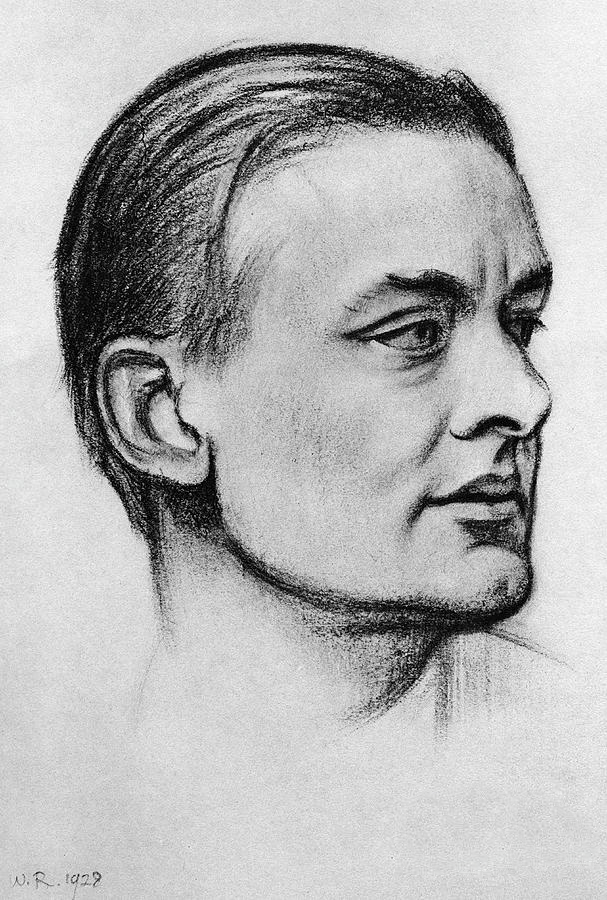
The University Catalog describes this course as "An intensive study of the life (lives) and works of one to three major authors. May be repeated for credit."
What we'll be doing
What we'll be doing this semester is taking a detailed look at the poetic works of T.S. Eliot. The key word in the Catalog description is intensive. This is a graduate seminar, the highest level of course that the program offers. It's not a survey, or a mid-level study. So there's no room in it for rehashing background information you should have under your belt when you walk in the door.
What we won't be doing
In 15 weeks we will, to be honest, barely scratch the surface of Eliot's poetry and the critical tradition that is devoted to it. So there are some major cuts we'll have to make. We won't be addressing any of the plays. And that's a shame, because, while he wasn't as great a playwright as he was a poet, he was able to write so well that people flocked to see his verse dramas. A play like Murder in the Cathedral, which would be more at home in a 17th-century dockside playhouse, packed them in for months at the Mercury Theatre, one of the most illustrious theaters in London. His The Cocktail Party even won the Tony for Best Play when it travelled to Broadway in 1950.
And then there are his essays and criticism. We'll dip our toes into this pool, because you'll be reporting on some of his essays, but his criticism has had as lasting an effect on literature as his poetry.
These are some of the fragments you should have already shored against your ruin. The first three are absolute; if you can't hold your own in a conversation about these things, you have some immediate work to do:. The next three are in the "nice but not necessary" category. I'd be very impressed if you could speak to them, but they're not the real focus of the seminar.- A general understanding of Modernism as a movement, and Eliot's place in it.
- A 30,000-foot view of the arc of Eliot's poetic career, from "Prufrock" to The Waste Land to the religious poems, to the Four Quartets
- Some broad grasp of the important people and places in his life: his Unitarian ancestors, Harvard, George Santayana, Emily Hale, the Sorbonne, Jean Verdenal, London, Lloyd's Bank, Vivienne Haigh Wood, Ezra Pound, Faber, The Criterion, his conversion, Valerie Fletcher, etc.
- His best criticism, essays like "Hamlet (and His Problems)", "The Function of Criticism (at the Present Time)", "Tradition and the Individual Talent", "The Metaphysical Poets", and "Lancelot Andrewes."
- Any of the plays, especially Murder in the Cathedral, The Cocktail Party, or The Family Reunion.
- Any of his go-to sources for allusions, especially John of the Cross, Julian of Norwich, Dante, Shakespeare, Milton,
- August 14: Classes begin
- August 14-19: Drop-Add period
- August 19: Our first class
- September 2: Labor Day Holiday, no classes
- October 10: Last day to drop with a "W"
- November 25-30: Thanksgiving Holiday
- December 4: Last day of classes. This is a Monday make-up day; we will have class that evening.
- December 9: Scheduled Final Exam Period - class held PRN
(I realize that you're graduate students, so the following section is unnecessary, and maybe even insulting. But including a statement addressing how what you'll learn in this course will add to your career readiness is a new requirement for all syllabi at the University,
Learning Outcomes are the knowledge or skills you should gain (and be able to demonstrate) by the end of a particular course.
Career Readiness Competencies are core competencies developed by the National Association of Colleges and Employers (NACE). They address eight areas where employers agree that your abilities and skills signify your readiness to begin and/or extend your career. Below are the skills you'll have the opportunity to practice in this course.
Upon successful completion of this course, you should be able to:
- Analyze and explicate the underlying structures, thematic concerns, and devices employed by Eliot in his poetry
- Situate and interpret Eliot's poetry in its historical, cultural, social, or theoretical contexts.
- Plan and produce clear and precise written work that adheres to professional standards and addresses the appropriate context, purpose, and audience.
- Integrate appropriate external sources and voices into your analysis and written work.
| Self-Development | Communication |
|
|
| Critical Thinking | Equity and Inclusion |
|
|
| Leadership | Professionalism |
|
|
| Teamwork | Technology |
|
|
These career readiness skills will serve you well no matter what your next steps after graduation might be. Find out more about them on this page of the NACE site.
You'll need to purchase these required books for this class:
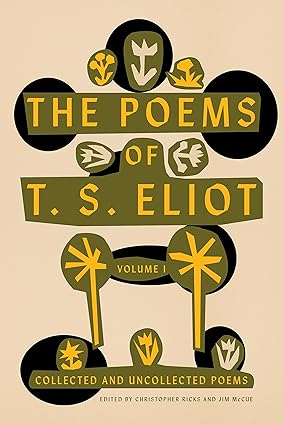
The Poems of T. S. Eliot: Volume I: Collected and Uncollected Poems. Edited by Christopher Ricks and Jim McCue. Farrar, Straus, and Giroux, 2018. ISBN: 978-0374235130. |
 |
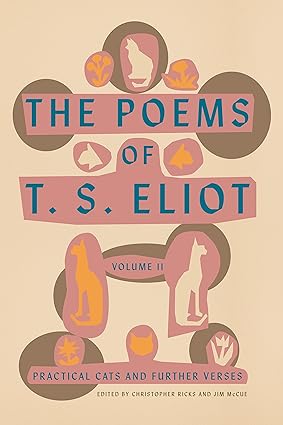
The Poems of T. S. Eliot: Volume II: Practical Cats and Further Verses. Edited by Christopher Ricks and Jim McCue. Farrar, Straus, and Giroux, 2018. ISBN: 978-0374235147. |
 |
I'll also be providing a few resources for you. I will pass you a blind URL where you can access the material. More information will follow in class.

COURSE STRUCTURE
Most of our class periods will follow this format:
▶ 1st half-hour or so: individual explanations/readings of your article précis. (more on these below).
▶ Remainder of class: discussion of the material at hand.
▶ End of class: You will have to tell me that class is at an end, or, worse, has gone over time.
Don't be shy about this; I will not be offended, and will usually apologize for losing track and monopolizing your time.
Here's an important note: during our discussions, I may stop and ask what a particular word means. I will begin these questions by just asking the group in general. But if only one of two of you consistently answer these questions, I'll go around the room, asking each of you individually.
I'm not doing this to embarrass you, but to impress upon you that poetry is fundamentally different than prose. You can take s swipe at what an unfamiliar word might mean in a novel, and if you miss, it probably won't kill your interpretation of that novel. But you can't even begin to understand what a poem is doing until you know what all the words mean.
I'll conclude this aside with your first assay into this exercise: in both arguments and definitions, there is no room for veronicas.
Ideally. my role in this seminar is to ask questions, to get readings and interpretations out of you. And as with all things in our discipline, you get what you can prove. There is no solid ground beneath your feet if your reasoning is that you just "feel" something to be true. Our goal is always a richer reading, a deeper understanding of the text, and that requires a consideration of the whole text, not just cherry-picking a line or two, and filling in the rest with what you feel. While this is problematic with most writers, it is especially so with Eliot, given that he is the wellspring of the objective correlative.
Ricks and McCue have given us the definitive apparatus to Eliot's poetry. Their notes are something to genuflect in front of. Your time with these texts should be split roughly 50/50 between the poems and the notes.
It's Eliot. If you're not excited to do a deep dive into his work, you might find peace in another vocation. As I said above, we're barely scratching the surface here.
Reading poetry is a lot quicker than reading prose. There are just fewer words on the page. But what you gain in reading time, you must commit to the most important time, RE-reading time. You're not going to understand these poems on your first reading, or your second, or even your tenth. I've taught "Prufrock" over 100 times, read it many more times than that, but I am still learning it. And "Prufrock" is Eliot with training wheels.
That's where the secondary material comes in. If the only critical works you read are the ones I've passed you, you're going to be at sea for most of the semester. You'll need to spend some time with secondary sources for many of these poems, just to figure out, for instance, who Mr. Apollinax is based on, and why.
Article Précis Engaging just as much with secondary material as with primary sources is one of the great distinctions between graduate and undergraduate work. So you'll be writing one-page preécis for a number of articles this semester. They'll all be housed in a shared folder, so that each individual can benefit from the work of the collective.
Seminar Paper This one is easy enough to explain. You'll be submitting a publication-ready, article length argument that adds to our understanding of some facet of Eliot's poetry. That's roughly 20 pages in MLA 9 format, with a closely-reasoned and well-supported argument that relies not just on the text under consideration, but on the critical heritage as well.
Both assignments are explained in detail below.
COURSE EXPECTATIONS
Since you're taking your initial steps in becoming a professional reader and explainer of literature, I'm not going to belabor the obvious, that reading takes time, and thinking takes more time, and writing takes the longest time of all. Also, since you're new to this, perhaps you haven't caught on to the fact that most of us don't really know what we think until we have to order our thoughts into a piece of writing. Good writers organize their thoughts well enough to construct something logical that readers can follow easily. Bad writers just dump out the contents of their brain in the order that those come to them.
As undergraduates, I know for a fact that your professors held your hands when it came to writing. Assignments were scaffolded for you, and maybe you even had multiple chances to revise what you thought was a polished piece of writing. The expectation in a seminar is that you have internalized all those processes, and now they're just a part of how you write. So there's no scaffolding, no bite-sized little graded assignments to mitigate the consequences of one or two poor performances on a writing assignment. Evaluation in a seminar is back-loaded; the overwhelming majority of it comes in the final quarter of the semester.
I don't want to rely on a litany of "back in my day" anecdotes to make you appreciate how different your academic life is right now than mine was when I was in your shoes, but in every single seminar I ever took, in multiple disciplines at multiple schools, there was one graded assignment, the seminar paper. And you had no idea how you were doing in the seminar until you got that paper back from the professor, after grades had already been posted. Those papers had a single terminal comment on them, maybe one sentence, maybe two, maybe even a paragraph, but that's it. No markings, no justifications, just a grade and a comment.
Was that the best way to run a seminar? I don't know. All I know is that I won't do it that way. Your evaluation will still be back-loaded; the grade you earn in this seminar is still heavily contingent on your seminar paper. But you'll also have some smaller assignments so that your entire grade doesn't hinge on just one assignment. Don't get me wrong; the seminar paper is still a high-stakes project, deserving, and even requiring, your best effort., but I've incentivized your participation in discussions and given you a leg up on your research as well.
I expect that you will conduct yourself within the guidelines of the Honor System. All academic work should be completed with the high level of honesty and integrity that this University demands.
I don't know of a person at this institution who tolerates academic dishonesty. Beyond the moral implications, as professors, we find it insulting. All instances of plagiarism will be reported to the Office of Student Conduct. Any instance will result in an F in the course and possible further sanctions. Plagiarism is presenting someone else's work as your own without giving them credit. Someone else is defined as anyone other than you: another student, a friend, a relative, a source on the Internet, articles or books. And work is defined as ideas as well as language. So taking someone else's ideas and putting them in your own words—or using someone else's words to express your ideas—is plagiarism. And, in the case of friends and family, it doesn't matter if they give you permission.
A note about group work: I encourage you to use an app like GroupMe amongst yourselves to discuss the texts we're covering, the assignments, and any other aspect of the class. If for no other reason, you need a space to complain about me, without me listening. This engagement, where you can share and improve each other's work, is, in many ways, the core of our endeavor, as we hone our own ideas about the material we're covering through discussions with others. You should also discuss your writing with your classmates, as hearing a number of ideas will help you create and polish your own. However, this does not mean that you should write your papers as a group. While discussion is obviously a group activity, writing is a solitary one, and should be treated as such. Any attempt to subvert this would be an instance of academic dishonesty.
LET ME JUST INTERRUPT MYSELF HERE TO STRESS A SIGNIFICANT POINT. You may have just passed right by that mention in the previous paragraph where I said that discussing your writing with other people is a good thing. But apart from devoting a sufficient amount of time to your writing and revising, having someone else read your work is the single most effective thing you can do to improve your writing. I'll have more about that later in this syllabus.
The University has an extensive definition of Academic Dishonesty (from the Student Conduct Code). It's what we use when we address matters of academic integrity:
CHEATING
Cheating is (a) the use or attempted use of unauthorized materials, information, or study aids in any academic exercise; or (b) actions taken to gain unfair or undue advantage over others. Examples of cheating include (but are not limited to):
- Receiving, providing, and/or using unauthorized assistance or materials on any work required to be submitted for any course to include (but not limited to) online services or social media.
- Alteration or insertion of any grade so as to obtain unearned academic credit.
- Fabricating information, research, and/or results such as taking, or attempting to take, an examination for another Student, alteration of legitimate research data, alteration or distortion of laboratory experiments, or deliberate distortion of another's work or results.
- Collaborating with others on assignments without the faculty’s consent.
- Impeding the ability of Students to have fair access to materials assigned or suggested by the Faculty Member (e.g., removal or destruction of library or other source materials).
- Demonstrating any other forms of dishonest behavior.
PLAGIARISM
Plagiarism is the offering of the words, ideas, computer data programs, or graphics of others as one’s own in any academic exercise. Examples of plagiarism include (but are not limited to):
- The offering of another's work, whether verbatim or paraphrased, as original material without identifying the source(s) in an academic paper, discussion post, exam, assignment or any other academic work.
- Directly quoting the words of others without using quotation marks or indented format to identify them.
- Self-plagiarism: re-submitting work previously submitted without appropriate or accurate citation or credit and/or without explicit approval from the instructor.
- Use of materials prepared by another person or agency to assist in the completion of coursework. This may include but is not limited to the selling of term papers or other academic materials, as well as the using of online platforms or websites to post/receive answers to coursework/exams.
- Demonstrating any other forms of dishonest behavior.
So let's say I think you might have copied and pasted some AI-generated material into your paper. I am obligated to complete an Incident Report about it, because this isn't just about your integrity, but mine as well. If it's your first report, you'll be able to request a hearing through the Office of Student Conduct. Both you and I will speak at your hearing, and I'll send a copy of this syllabus along with the documents in question to the Hearing Officer. That means that you won't be able to claim that you didn't know that what you were doing was wrong, since I'm telling you it is right here.
COURSE SCHEDULE
| DATE | READINGS |
| August 19 | Introduction / Syllabus / Modernism / "The Love Song of J. Alfred Prufrock" |
| August 26 | “Portrait of a Lady”; “Rhapsody on a Windy Night”; “Mr. Apollinax”; “La Figlia Che Piange” |
| September 2 | No class |
| September 9 | “Gerontion”; “Sweeney Erect”; “A Cooking Egg”; “The Hippopotamus”; “Whispers of Immortality”: “Sweeney Among the Nightingales” |
| September 16 | The Waste Land |
| September 23 | The Waste Land |
| September 30 | The Waste Land |
| October 7 | “The Hollow Men”; “Ash Wednesday”; The Ariel Poems |
| October 14 | “The Hollow Men”; “Ash Wednesday”; The Ariel Poems |
| By now you should have met with me at least once about your seminar paper. | |
| October 21 | Burnt Norton |
| November 4 | East Coker |
| November 11 | The Dry Salvages |
| November 18 | Little Gidding |
| By now you should have met with me with the first three pages from the second draft of your seminar paper. | |
| December 2 | Seminar paper presentations |
| December 4 | Seminar paper presentations |
| December 9 | Seminar paper presentations, PRN; Seminar papers due, as a physical copy |
INSTRUCTOR
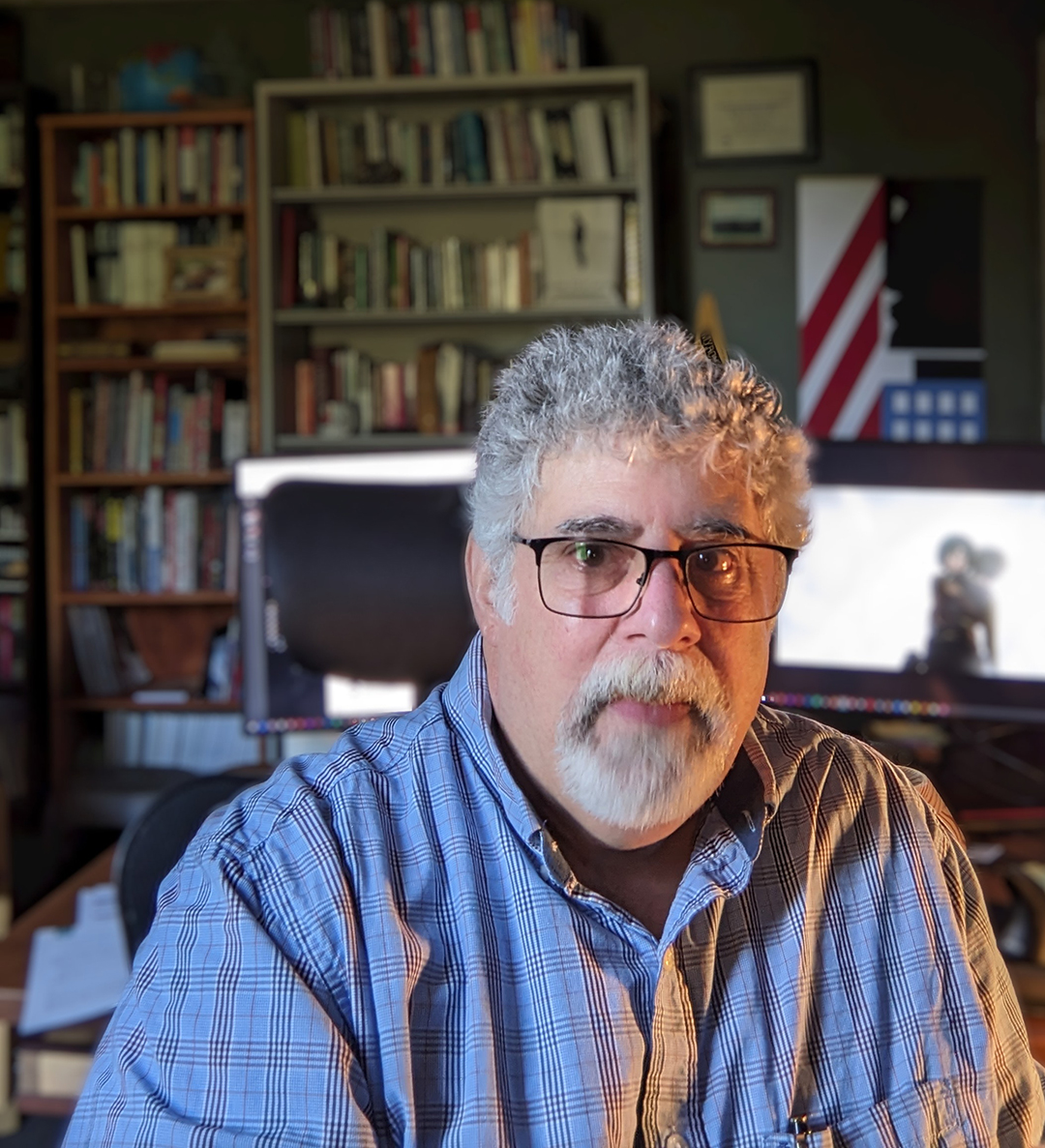
I'm Dr. Joe Pellegrino, an Associate Professor in the Department of English. I teach lots of different classes. My specialties are Irish literature and postcolonial literature, so I end up doing classes that don't fit into the standard Brit Lit/American Lit model, things like Irish lit, African lit, graphic novels, etc.
I went to school for a long time, and went to lots of different schools: Duquesne University, St. Louis University, Mannes College of Music, The New England Conservatory, and UNC-Chapel Hill, which is where I got my doctorate in English. I've also taught at a lot of schools: Duquesne, UNC, Eastern Kentucky University, Walden University, University of South Carolina-Upstate, Greenville Tech, Converse College, and here at Georgia Southern. I've had some experience in online education; while at EKU I was the University Director for the (short-lived) Kentucky Commonwealth Virtual University, and have taught online classes for over 20 years now.
Professionally, I edit a journal, The International Journal for the Scholarship of Teaching and Learning. I'm interested in a number of fields, but most of my publications are either on Irish studies, postcolonial lit, or teaching.
I also work on the British Commonwealth and Postcolonial Studies Conference, the oldest and longest-running annual meeting of its kind in the United States. Check out that web site; the design is one of my best.
I have only one item on my bucket list: to see the Northern Lights. One day I'll get there, but in the meantime I check in on the site linked here, from the Churchill Northern Studies Center in Churchill, Manitoba. I've got two daughters who are growing in wisdom, beauty, and grace. I make heirloom furniture (pretty much a middle-aged guy cliché), try to keep up with new technology, wish I could spend more time doing music, and constantly try to keep my head above water.

Office:
Room 3308B, Newton Building
Phone: 912.478.5953
Office Hours: M: 10:00-1:00, 3:00-5:00. W: 9:00-11:00; 1:00-4:00
Email: jpellegrino@georgiasouthern.edu
English Department in Statesboro:
Room 1118, Newton Building
622 COBA Drive
Statesboro, GA 30460
912.478.0141
OK, maybe two words: CONTENT and FORM
CONTENT
Please don't hesitate to post to me if you have a question about any of the readings, especially if you're struggling to figure them out. But please think twice about posting questions where the answer is in this syllabus. If you do, I have two options for a reply: I can copy and paste material from the syllabus or schedule just for you—because you didn't actually check it yourself—or I can reply with something like "check the syllabus" or "check the schedule." Both of these options are redundant, because you already have access to the answer to your question, and you should already know to check the syllabus. And both of these options reflect poorly on your abilities, either to understand what is required of you or to comprehend what you have read. Since I don't want to think less of your abilities, neither of these options are satisfactory. So if you ask a question that is already answered in the syllabus or in the schedule, I won't be replying at all.
FORM
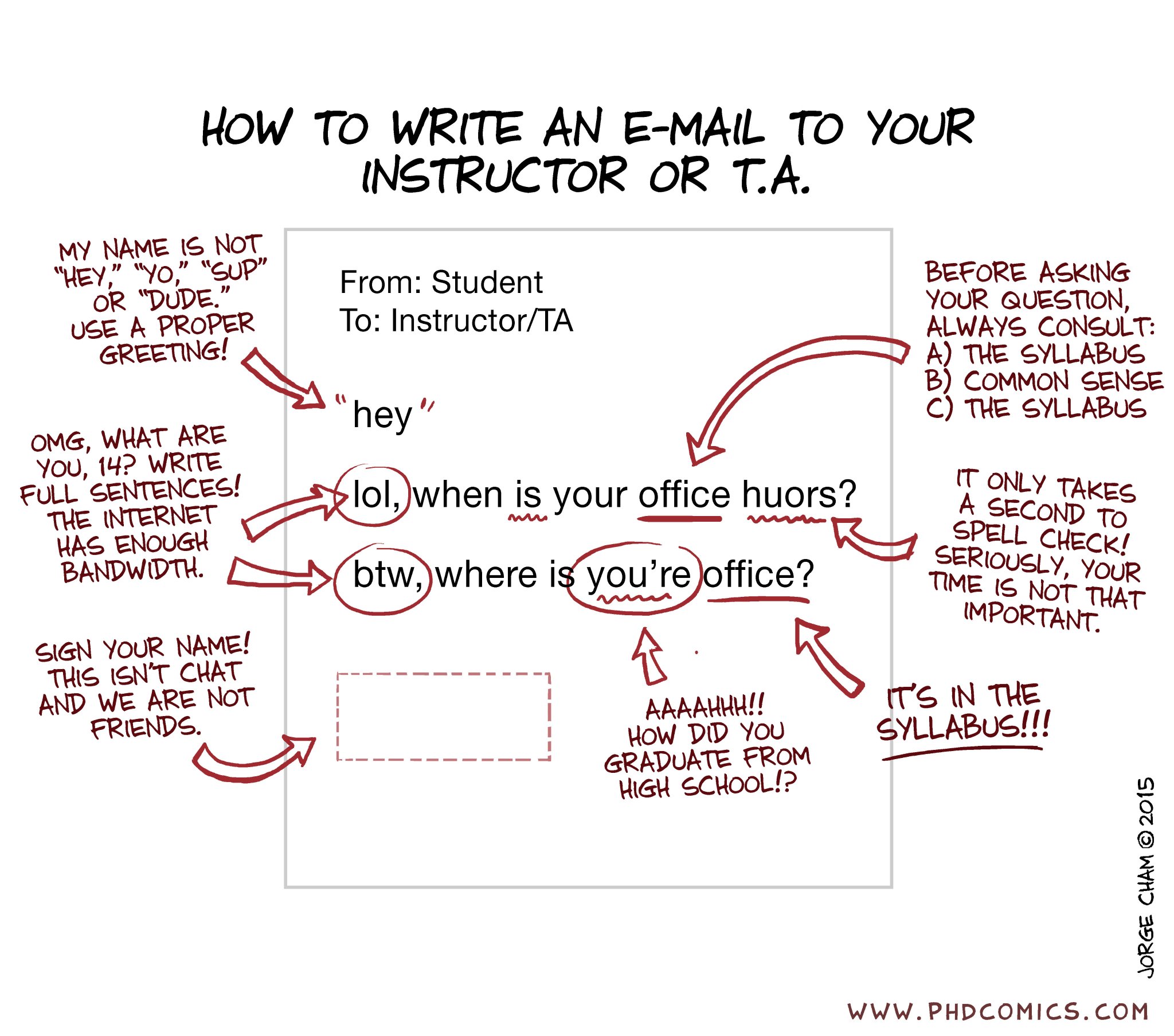
See that image there on the right? It's not just some funny advice about how to write an email to one of your instructors or teaching assistants; it's a set of guidelines that we expect you to follow. When you write anything, you change the form to suit the content. So you don't write an email to a professor like you're writing a DM to your friend. Look at the graphic, then follow the rules on it.
And as with the questions that have already been answered in this syllabus, I could embarrass you by reminding you of those rules when you don't follow them, or I could just not respond to you until you actually get it right. And just in case you can't parse what those rules are, I'll put them into a list:
- My name is not "Hey," "Yo," "'Sup," or "Dude" — use a proper greeting.
- Don't use acronyms or texting shorthand — write in full sentences. Use a grammar checker.
- Spell-check it before you send it. When you have tools available to you and you don't use them, you're not only demonstrating that you don't know how to communicate at anything beyond a middle-school level, you're also demonstrating your inability to use simple tools in order to make yourself look better.
- Check the syllabus before you make yourself look foolish (see the previous point).
- Sign your name.
So let me sum this all up:
if you don't hear back from me after you sent me an email, it's either because you can't write an email correctly for the audience you're trying to address, or you're asking a question that I've already answered in this document.
CLASS POLICIES

This is a graduate seminar. If I have to actually have an attendance policy, then your undergraduate institution has failed you miserably.
But life gets complicated. And as much as we try not to show it, we know that there are things more important than school. Every absence is the result of a choice; some of those choices are easy ("I got hit by a truck!") and others, not so much ("But my team is on Monday Night Football!"). I may not look like I notice if you're not in class, but believe me, I do.
On the other hand, if you show up unprepared, thinking you can just wing it through what we're covering for the week, your fellow students should be pissed, because you're wasting their time with your drivel. Me? Even if I didn't have to be in these classes on Monday nights, I'd want to be there, because I like the topic. So the only way you waste my time is when your talking with nothing to say gets in the way of a point someone who did the work would like to make.
If I make seminars sound a bit like Batoru rowaiaru (you might not know the novel, but you might have seen the film, Battle Royale), that's because, in a way, they are. It's a fight to get your ideas heard, honed, and validated. And in the marketplace of ideas, it doesn't pay to be the loudest, just the one with the most incontrovertible evidence It's how we get better at this, proving ourselves over and over again

Your goal in this class should be to walk out o here with something you can send out to a journal. That's the bar for writing proficiency. Impeccable grammar goes without saying. Judicious use of secondary sources is again a given (not just the usual move of cherry-picking something nebulous from the introduction to a book you haven't read, then jamming it into your paper somewhere it doesn't really help you). In fact, the only thing that's negotiable in an article is the construction of the argument. You can pick a fight (the easiest way to write, and the easiest to get published, if you're fighting with the right person); you can discover new territory (but Eliot has been pored over and written about for a hundred years now, so this is a tough slog); or you can say, "Yeah, but . . . " and then add some little nuance or tweak or soupçon of difference to the pile of what has been written before. While this may be the easiest way to write a paper, it is most certainly not the easiest way to get that paper published. As an editor, I'm not interested in shifts of 1/100th of a degree; I'm interested in seismic shifts.
I realize that the grand academic dance of submitting your work, having it evaluated, then responding to that evaluation (either through improving your work in your next paper, or by coming to see me in my office) is essentially a negotiation between us. You want to demonstrate your abilities with X amount of work, an amount that you think deserves a certain grade. You submit your work without knowing how others will see it, and only become aware of their perceptions when your work is returned to you with my comments. But this puts you at a disadvantage, because, as in any negotition, the party that makes the first move does so blindly, and so gives up any hope of advantage.
So in the spirit of openness, let me make the first move, and try to level the playing field by revealing a few things:
- I'll begin with a personal comment:
I know my reputation precedes me, and I know what it is: I'm one of the closest and cruelest readers of student work in the department. I mark every little error. I ask condescending questions. I expect too much from you. My classroom demeanor and my grading don't match, which makes it all the more unfair. I could go on and on and on with this . . .
While I don't revel in that description, it's pretty accurate. I don't believe it's too much to ask that your subjects agree with your verbs, your tenses are consistent, and you write like you know what you're doing. Expecting anything less from you is an insult to your intelligence, not mine. - This is academic writing, where clarity and concision are essential. If your work isn't clear, if every sentence doesn't hang together, you're losing the negotiation. What you have written may make sense to you, but it needs to make sense to your readers as well.
- At the post-secondary level, your writing isn't evaluated in terms of the amount of work you put into it. Just like any other skill, the amount of effort necessary to master academic writing varies from person to person. I am sure that it would take me far more effort than most of you to get back to playing football. But even if I did ten times the work you did, when we both showed up on the field we'd be evaluated on our skills, not on the time it took us to gain them.
- If you pay attention to what the prompt is asking you to write about, and keep that in mind as you think about your paper, you're making a good start.
- If you look at the rubric, especially the distinctions between the levels of performance in content and form, you should get a good idea of how successful your paper will be.
- If you're wondering if your "X amount of work" is enough, it isn't.
- And one last personal comment:
Before we had things like TurnItIn and other automatic checkers on academic integrity, I was the guy other faculty members went to to track down cases of suspected plagiarism. When Google was just getting off the ground, I was a beta tester for them (one of 25 in the country). I've also been teaching English for over 40 years now. So if you're thinking that you've changed enough of that material that you've copied and pasted to make it look like your own work, think again. If writing and evaluating papers is a negotiation, then presenting someone else's work as your own is a gamble, and you're betting your academic career that you can get away with it. I've just told you what I bring to the table, so if you really think you can get away with it, my only advice is to do it as early as possible, so you can spare yourself the work for the rest of semester, because you'll have already failed this class.
I've done enough preaching in the other places where I shouldn't have to say anything to you. So I'll let this one pass in silence..
In compliance with the Americans with Disabilities Act (ADA), I will honor requests for reasonable accommodations made by individuals with disabilities or demonstrating appropriate need for learning environment adjustments. If you wish to avail yourself of any accommodations, you must disclose your disability to the Student Accessibility Resource Center (SARC) before I can implement any academic accommodations. That office will furnish you with a list of accommodations and a cover letter that you'll give to me. It's informally known as "a green sheet." Without that green sheet from the SARC, I can't offer you any accommodations.
For additional information, please call the SARC office at (912) 478-1566 on the Statesboro campus, or at (912) 344-2572 on the Armstrong and Liberty campuses.
If for any reason we might have a break in the continuity of instruction, I've got a couple of plans in place:
- If the institution shuts down:
We will move completely to Zoom sessions for our classes. Class discussions may be a bit more forced, but we'll muddle through. - If you are under quarantine:
I'll need a report from the GS CARES Team about your status. (That's the U talking, not me.) You can't just email me to say that you think you might have a virus and are self-isolating in order to minimize the chance of infecting others. That means that if you think you might have been exposed, or if you have tested positive, you must complete a COVID-19 Health Reporting Form, which can be found in the COVID-19 Information & Resources section of your MyGeorgiaSouthern page.
If you do have a CARES report and must self-isolate, it'll be like this class did not exist for you during your period of isolation. If you have to miss more than two weeks, we'll work out something like an "Incomplete," because you won't be able to catch up. All of that will happen on a case-by-case basis.
ASSIGNMENTS
You find something for you at this URL: https://jpellegrino.com/teaching/ENGL6634/Fall2024/ENGL6634.zip. Download it, unzip it into the folder of your choice, and you'll have 17 books and 55 articles on Eliot. The articles are arranged according to areas (mind you, many of these articles bleed into several areas):
- Allusions
- Gender and Sexuality
- Music
- Religion
- The Four Quartets
- The Waste land
- Miscellaneous
- Eliot's criticism/essays
You'll pick one article each week, read it, then prepare a précis of it, writing at least 250 but no more than 300 words. This isn't just a summary or an abstract of the article, the WHAT of the article, although that's part of it. This should also be a short analysis of HOW the work is structured. I don't mean something broad like, "The author starts with a lit review, then moves on to do a close reading of the text." I mean something specific like, "The author refers to a number of other critics; many of the articles he cites seem to only tangentially address what he's trying to prove, so his argument suffers a bit. He even misrepresents one or two of those articles so that he can twist them to be of use for him. But he really saves his ire for author XXX, which is the fight he's really picking here." In short, you should address not merely the content of the article, but its form (and look at that, an allusion to the email section above).
There's a checklist for those articles in a shared google workspace that you all have rights to. That's also where you'll place your completed précis after you have presented it each week. You can claim an article each Tuesday, but only for that week. That is, you can't select 10 articles tomorrow.
Since I've already explained most of this assignment, and the sheer variety of what you can produce makes it impossible to be more specific, I'll add here that you should look at something like the MLA Bibliography to see what's trending now in Eliot Studies. Or check to see what type of journal publishes work on him. His letters are huge (eight volumes, I think), and he's a hell of a letter writer. And then there's the Princeton collection of correspondence with Emily Hale, some of which is online now (it'll become PD in 2035). As an editor, he was an incredible taste-maker. He championed lots of great writers, and created some breakout stars, like Djuna Barnes.
Before midterm
While I'm not adding it here as a requirement, you should show up at least once, early in your process, to run your plan for your SP by me. You should be able to tell me what the state of the criticism on your topic is, how you plan to react to that criticism, and when you'll bring me the first three pages of the SECOND draft of your paper.
After midterm You should be paying me a second visit, with those promised first three pages. Screw your courage to the sticking place, gird your loins, swallow hard, and sit there while you and I go through them. Ask around: students will tell you that this process is painful, because I will ask questions that stem from the level of clarity in your writing. But, believe it or not, I know what I'm doing when it comes to this, so I can guarantee that my advice will help improve your work.
EVALUATION
| Précis | 20% |
| Paper presentation | 10% |
| Seminar Paper | 60% |
| Engagement | 10% |
| TOTAL | 100% |