Seamus Heaney - Poetry
Digging
Between my finger and my thumb
The squat pen rests; snug as a gun.
Under my window, a clean rasping sound
When the spade sinks into gravelly ground.
My father, digging. I look down
Till his straining rump among the flowerbeds
Bends low, comes up twenty years away
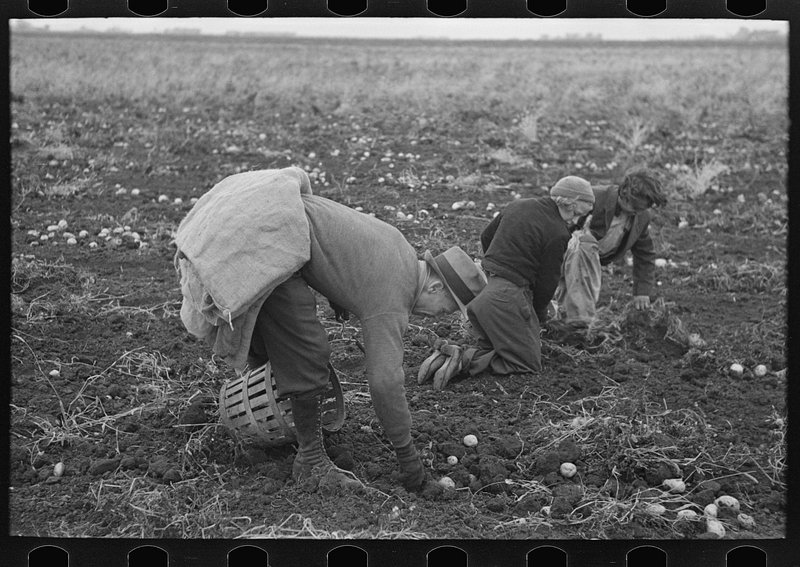
Stooping in rhythm through potato drills
Where he was digging.
The coarse boot nestled on the lug, the shaft
Against the inside knee was levered firmly.
He rooted out tall tops, buried the bright edge deep
To scatter new potatoes that we picked
Loving their cool hardness in our hands.
By God, the old man could handle a spade.
Just like his old man.
My grandfather cut more turf in a day
Than any other man on Toner’s bog.
Once I carried him milk in a bottle
Corked sloppily with paper. He straightened up
To drink it, then fell to right away
Nicking and slicing neatly, heaving sods
Over his shoulder, going down and down
For the good turf. Digging.
The cold smell of potato mold, the squelch and slap
Of soggy peat, the curt cuts of an edge
Through living roots awaken in my head.
But I’ve no spade to follow men like them.
Between my finger and my thumb
The squat pen rests.
I’ll dig with it.
Mid-Term Break

I sat all morning in the college sick bay
Counting bells knelling classes to a close.
At two o’clock our neighbors drove me home.
In the porch I met my father crying —
He had always taken funerals in his stride —
And Big Jim Evans saying it was a hard blow.
The baby cooed and laughed and rocked the pram
When I came in, and I was embarrassed
By old men standing up to shake my hand
And tell me they were “sorry for my trouble,”
Whispers informed strangers I was the eldest,
Away at school, as my mother held my hand
In hers and coughed out angry tearless sighs.
At ten o’clock the ambulance arrived
With the corpse, stanched and bandaged by the nurses.
Next morning I went up into the room. Snowdrops
And candles soothed the bedside; I saw him
For the first time in six weeks. Paler now,
Wearing a poppy bruise on his left temple,
He lay in the four foot box as in his cot.
No gaudy scars, the bumper knocked him clear.
A four foot box, a foot for every year.
Requiem for the Croppies
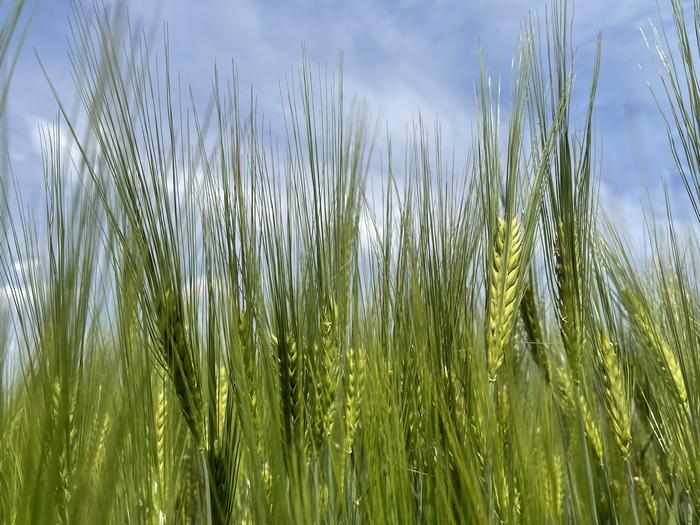
The pockets of our greatcoats full of barley —
No kitchens on the run, no striking camp —
We moved quick and sudden in our own country.
The priest lay behind ditches with the tramp.
A people hardly marching — on the hike —
We found new tactics happening each day:
We’d cut through reins and rider with the pike
And stampede cattle into infantry,
Then retreat through hedges where cavalry must be thrown.
Until, on Vinegar Hill, the final conclave.
Terraced thousands died, shaking scythes at cannon.
The hillside blushed, soaked in our broken wave.
They buried us without shroud or coffin
And in August the barley grew up out of our grave.
The Tollund Man
I
Some day I will go to Aarhus
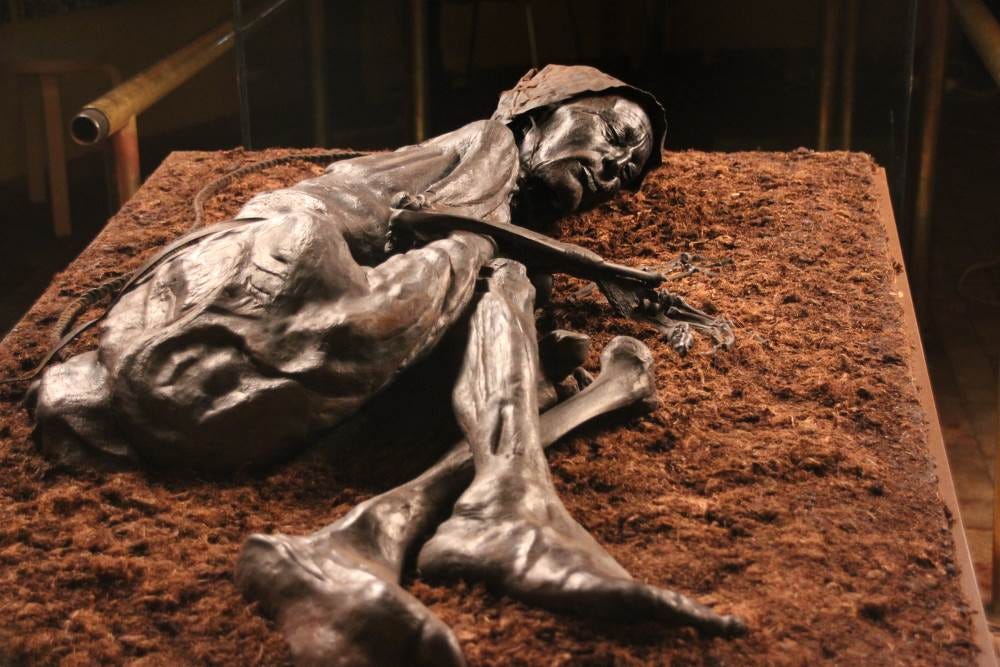
To see his peat-brown head,
The mild pods of his eye-lids,
His pointed skin cap.
In the flat country near by
Where they dug him out,
His last gruel of winter seeds
Caked in his stomach,
Naked except for
The cap, noose and girdle,
I will stand a long time.
Bridegroom to the goddess,
She tightened her torc on him
And opened her fen,
Those dark juices working
Him to a saint’s kept body,
Trove of the turfcutters’
Honeycombed workings.
Now his stained face
Reposes at Aarhus.
II
I could risk blasphemy,
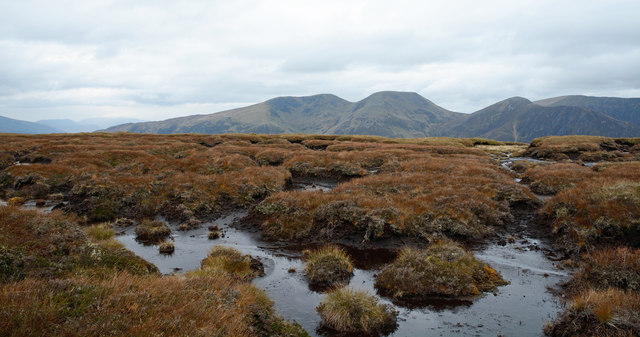
Consecrate the cauldron bog
Our holy ground and pray
Him to make germinate
The scattered, ambushed
Flesh of laborers,
Stockinged corpses
Laid out in the farmyards,
Tell-tale skin and teeth
Flecking the sleepers
Of four young brothers, trailed
For miles along the lines.
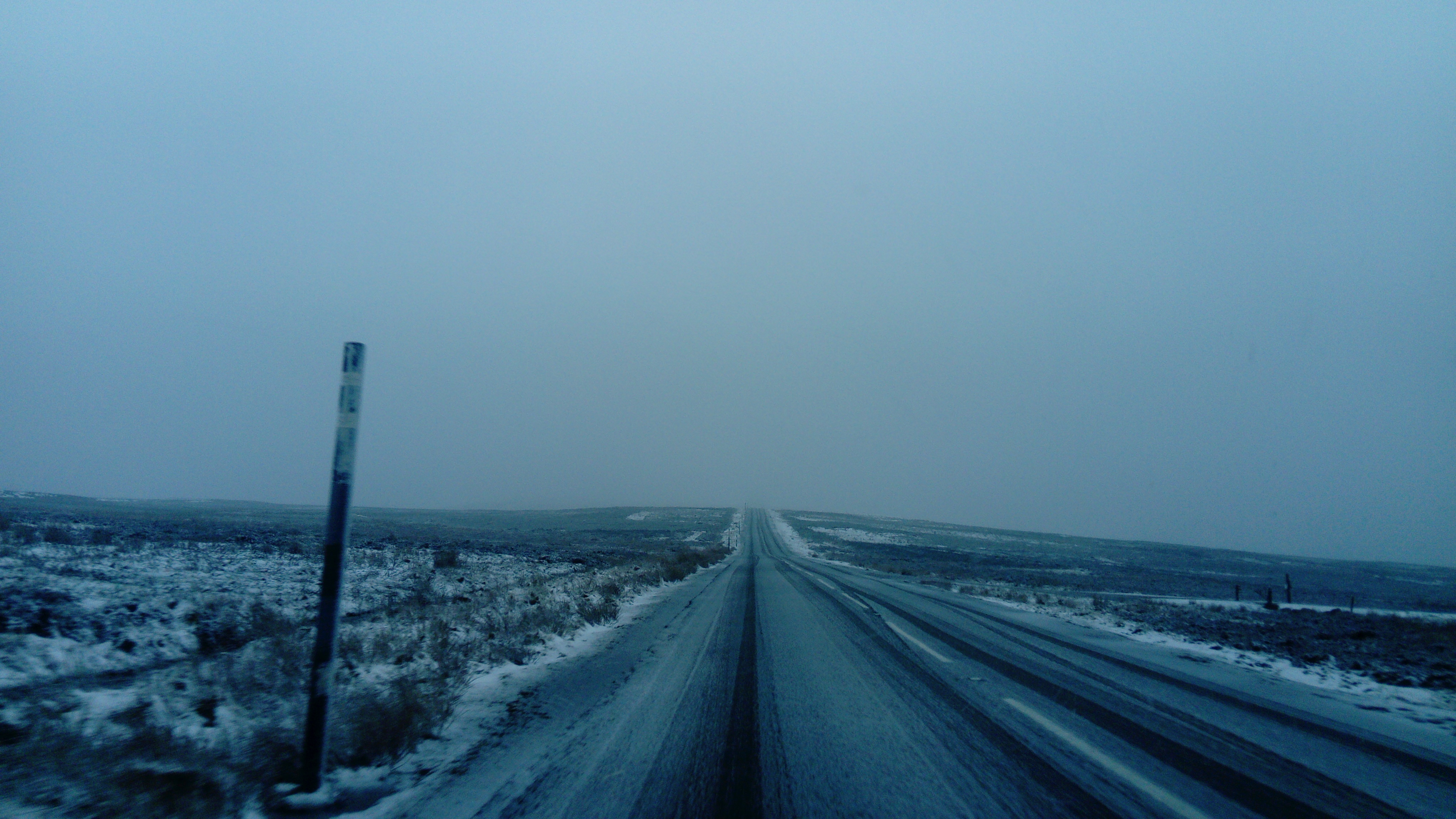
Should come to me, driving
III
Something of his sad freedom
As he rode the tumbril
Should come to me, driving,
Saying the names
Tollund, Grauballe, Nebelgard,
Watching the pointing hands
Of country people,
Not knowing their tongue.
Out here in Jutland
In the old man-killing parishes
I will feel lost,
Unhappy and at home.
Limbo
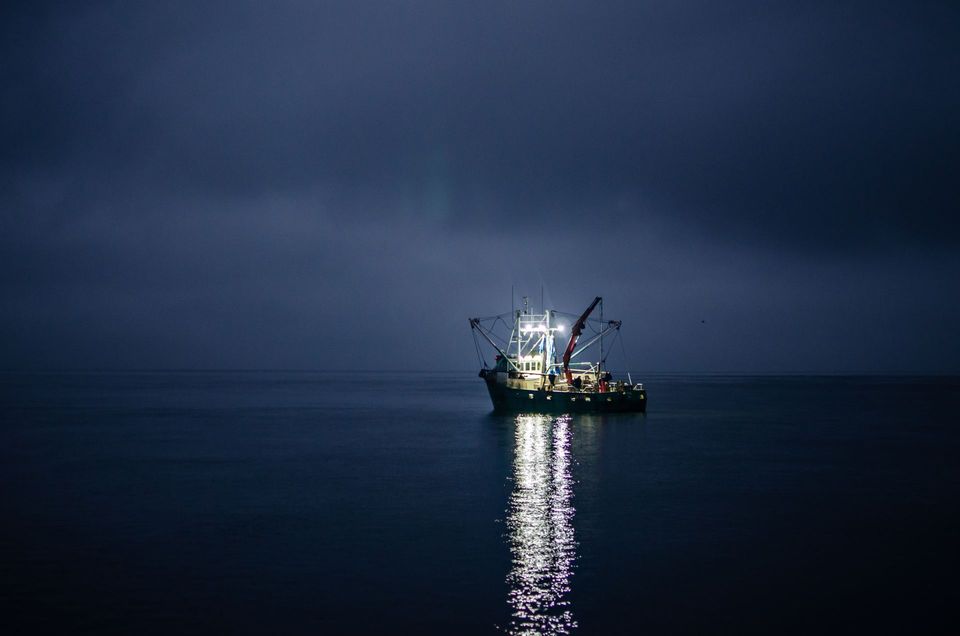
Fishermen at Ballyshannon
Netted an infant last night
Along with the salmon.
An illegitimate spawning.
A small one thrown back
To the waters. But I’m sure
As she stood in the shallows
Ducking him tenderly
Till the frozen knobs of her wrists
Were dead as the gravel,
He was a minnow with hooks
Tearing her open.
She waded in under
The sign of her cross.
He was hauled in with the fish.
Now limbo will be
A cold glitter of souls
Through some far briny zone.
Even Christ’s palms, unhealed,
Smart and cannot fish there.
Punishment
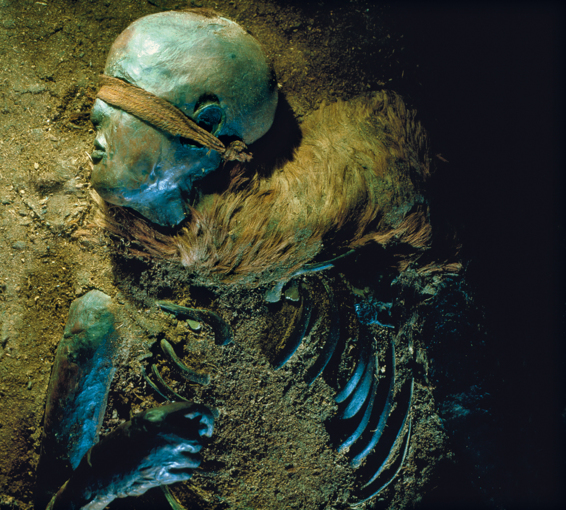
I can feel the tug
of the halter at the nape
of her neck, the wind
on her naked front.
It blows her nipples
to amber beads,
it shakes the frail rigging
of her ribs.
I can see her drowned
body in the bog,
the weighing stone,
the floating rods and boughs.
Under which at first
she was a barked sapling
that is dug up
oak-bone, brain-firkin:
her shaved head
like a stubble of black corn,
her blindfold a soiled bandage,
her noose a ring
to store
the memories of love.
Little adulteress,
before they punished you
you were flaxen-haired,
undernourished, and your
tar-black face was beautiful.
My poor scapegoat,
I almost love you
but would have cast, I know,
the stones of silence.
I am the artful voyeur
of your brain’s exposed
and darkening combs,
your muscles’ webbing
and all your numbered bones:
I who have stood dumb
when your betraying sisters,
cauled in tar,
wept by the railings,
who would connive
in civilized outrage
yet understand the exact
and tribal, intimate revenge.
from Singing School
2. A Constable Calls
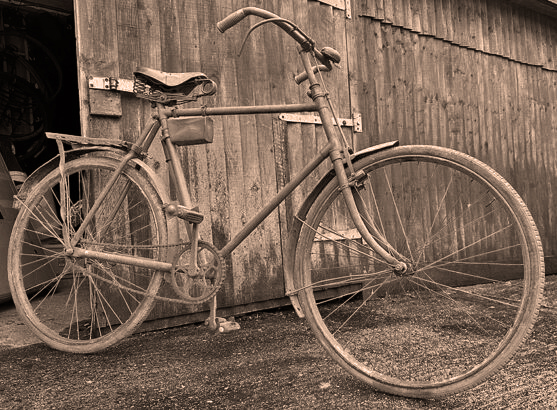
His bicycle stood at the window-sill,
The rubber cowl of a mud-splasher
Skirting the front mudguard,
Its fat black handlegrips
Heating in sunlight, the “spud”
Of the dynamo gleaming and cocked back,
The pedal treads hanging relieved
Of the boot of the law.
His cap was upside down
On the floor, next his chair.
The line of its pressure ran like a bevel
In his slightly sweating hair.
He had unstrapped
The heavy ledger, and my father
Was making tillage returns
In acres, roods, and perches.
Arithmetic and fear.
I sat staring at the polished holster
With its buttoned flap, the braid cord
Looped into the revolver butt.
“Any other root crops?
Mangolds? Marrowstems? Anything like that?”
“No.” But was there not a line
Of turnips where the seed ran out
In the potato field? I assumed
Small guilts and sat
Imagining the black hole in the barracks.
He stood up, shifted the baton-case
Further round on his belt,
Closed the domesday book,
Fitted his cap back with two hands,
And looked at me as he said goodbye.
A shadow bobbed in the window.
He was snapping the carrier spring
Over the ledger. His boot pushed off
And the bicycle ticked, ticked, ticked.
The Strand at Lough Beg
In memory of Colum McCartney
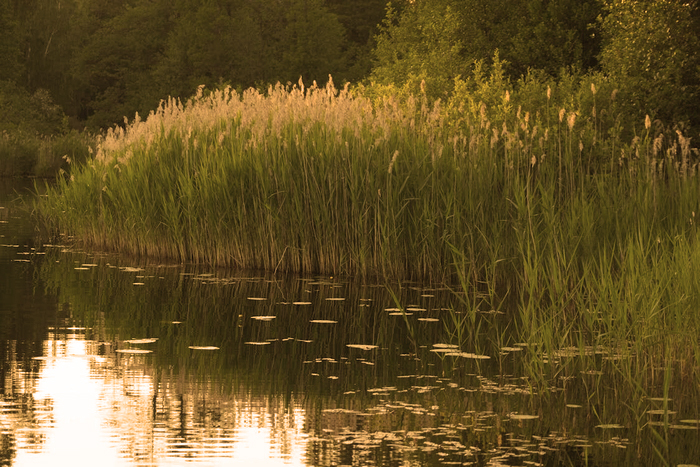
All round this little island, on the strand
Far down below there, where the breakers strive,
Grow the tall rushes from the oozy sand.
Dante, Purgatorio, I, 100-103
Leaving the white glow of filling stations
And a few lonely streetlamps among fields
You climbed the hills toward Newtownhamilton
Past the Few Forest, out beneath the stars —
Along the road, a high, bare pilgrim’s track
Where Sweeney fled before the bloodied heads,
Goat-beards and dogs’ eyes in a demon pack
Blazing out of the ground, snapping and squealing.
What blazed ahead of you? A faked road block?
The red lamp swung, the sudden brakes and stalling
Engine, voices, heads hooded and the cold-nosed gun?
Or in your driving mirror, tailing headlights
That pulled out suddenly and flagged you down
Where you weren’t known and far from what you knew:
The lowland clays and waters of Lough Beg,
Church Island’s spire, its soft treeline of yew.
There you used hear guns fired behind the house
Long before rising time, when duck shooters
Haunted the marigolds and bulrushes,
But still were scared to find spent cartridges,
Acrid, brassy, genital, ejected,
On your way across the strand to fetch the cows.
For you and yours and yours and mine fought shy,
Spoke an old language of conspirators
And could not crack the whip or seize the day:
Big-voiced scullions, herders, talkers in byres,
Slow arbitrators of the burial ground.
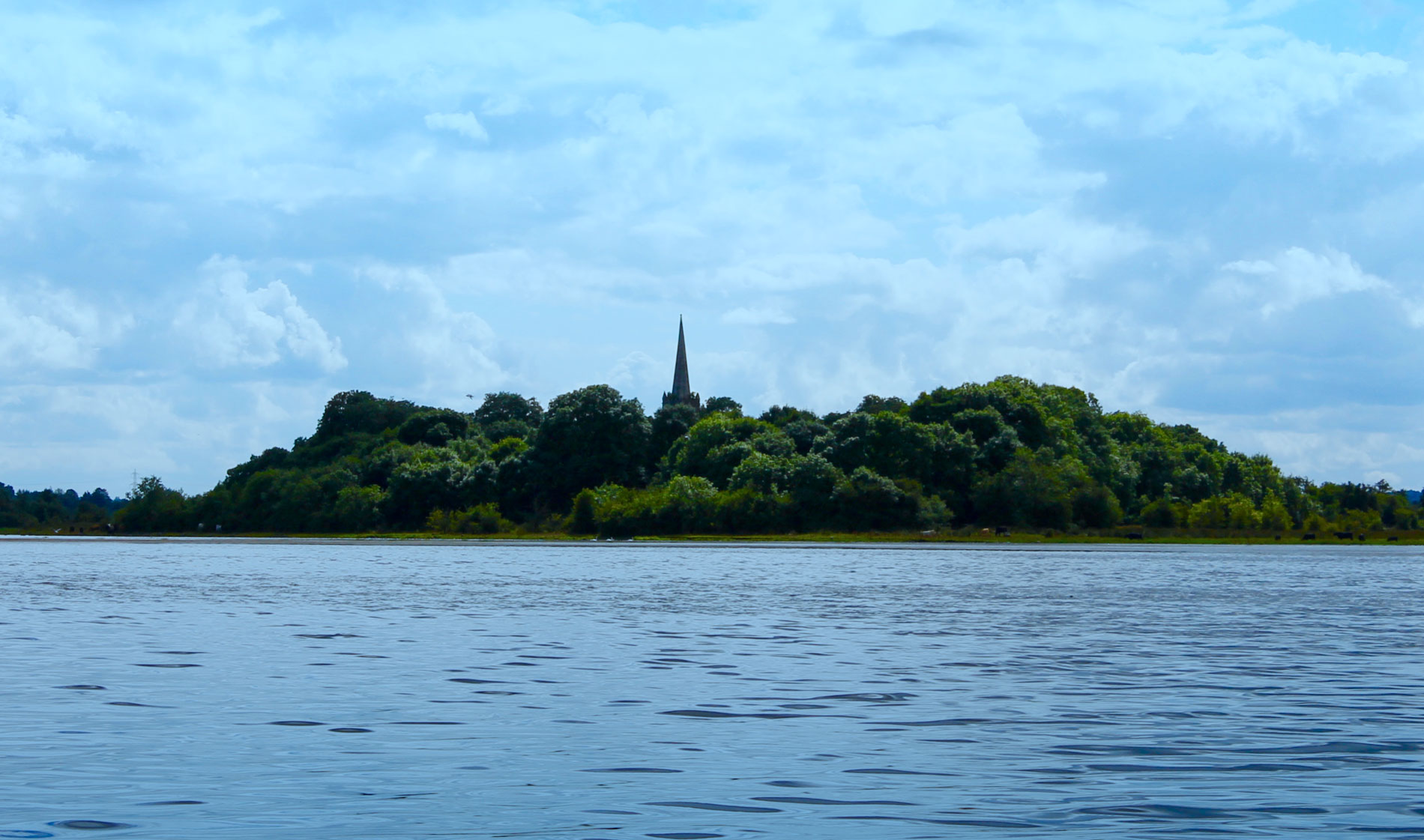
Across that strand of ours the cattle graze
Up to their bellies in an early mist
And now they turn their unbewildered gaze
To where we work our way through squeaking sedge
Drowning in dew. Like a dull blade with its edge
Honed bright, Lough Beg half shines under the haze.
I turn because the sweeping of your feet
has stopped behind me, to find you on your knees
With blood and roadside muck in your hair and eyes,
Then kneel in front of you in brimming grass
And gather up cold handfuls of the dew
To wash you, cousin. I dab you clean with moss
Fine as the drizzle out of a low cloud.
I lift you under the arms and lay you flat.
With rushes that shoot green again, I plait
Green scapulars to wear over your shroud.
Casualty
I
He would drink by himself
And raise a weathered thumb
Towards the high shelf,
Calling another rum
And blackcurrant, without
Having to raise his voice,
Or order a quick stout
By a lifting of the eyes
And a discreet dumb-show
Of pulling off the top;
At closing time would go
In waders and peaked cap
Into the showery dark,
A dole-kept breadwinner
But a natural for work.
I loved his whole manner,
Sure-footed but too sly,
His deadpan sidling tact,
His fisherman’s quick eye
And turned observant back.
Incomprehensible
To him, my other life.
Sometimes on the high stool,
Too busy with his knife
At a tobacco plug
And not meeting my eye,
In the pause after a slug
He mentioned poetry.
We would be on our own
And, always politic
And shy of condescension,
I would manage by some trick
To switch the talk to eels
Or lore of the horse and cart
Or the Provisionals.
But my tentative art
His turned back watches too:
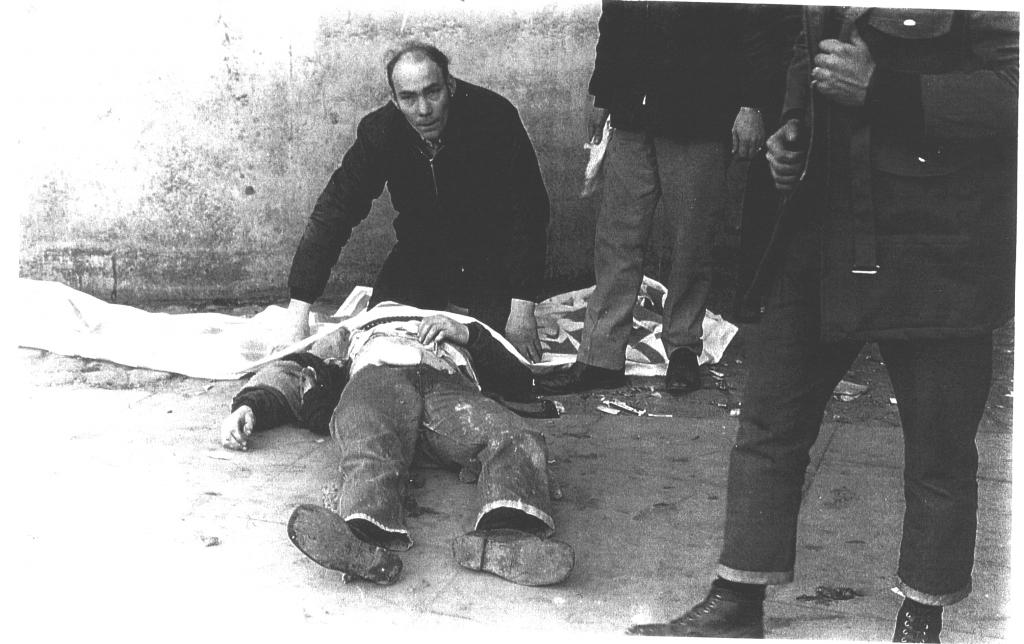
He was blown to bits
Out drinking in a curfew
Others obeyed, three nights
After they shot dead
The thirteen men in Derry.
PARAS THIRTEEN, the walls said,
BOGSIDE NIL. That Wednesday
Everyone held
His breath and trembled.
II
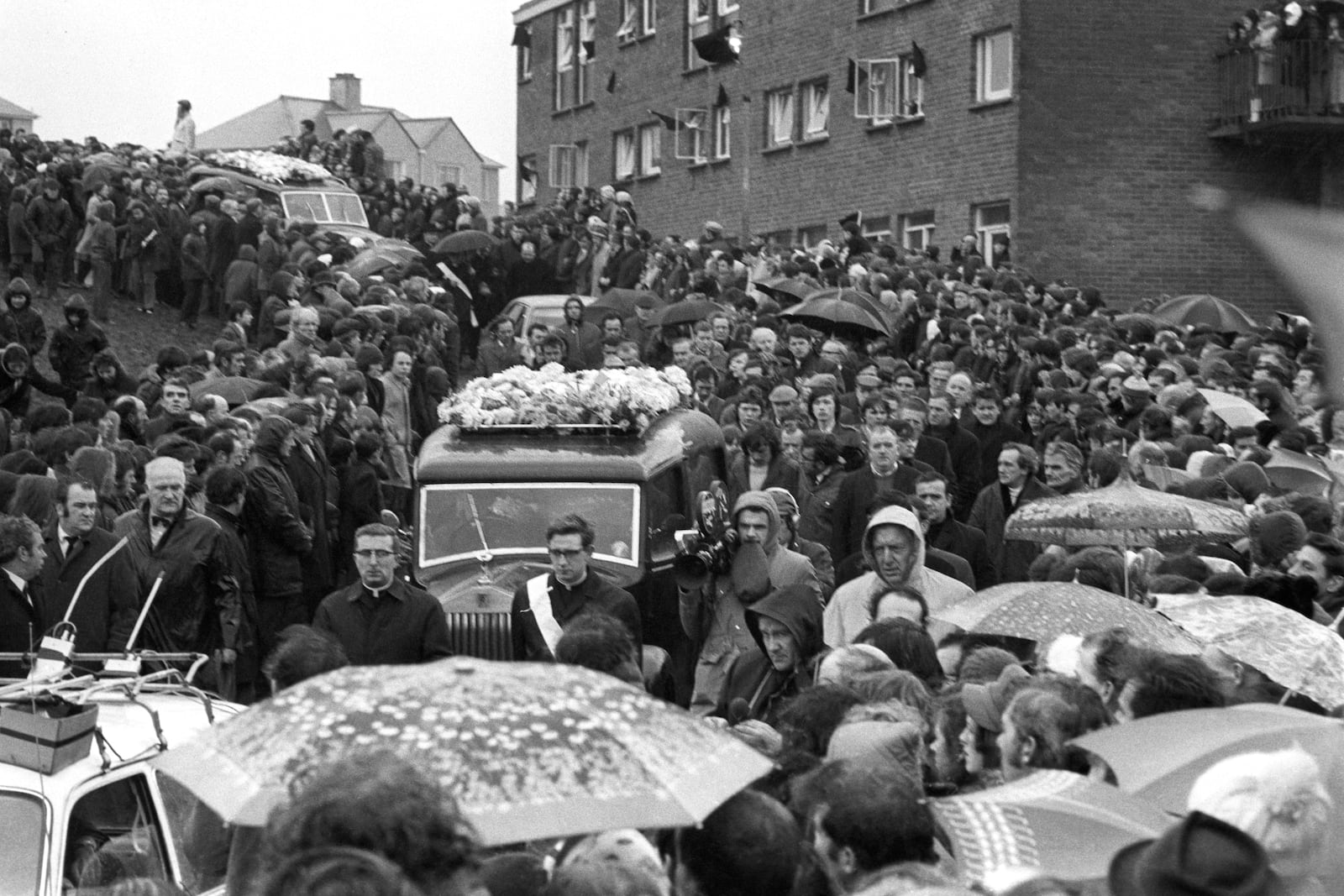
It was a day of cold
Raw silence, wind-blown
Surplice and soutane:
Rained-on, flower-laden
Coffin after coffin
Seemed to float from the door
Of the packed cathedral
Like blossoms on slow water.
The common funeral
Unrolled its swaddling band,
Lapping, tightening
Till we were braced and bound
Like brothers in a ring.
But he would not be held
At home by his own crowd
Whatever threats were phoned,
Whatever black flags waved.
I see him as he turned
In that bombed offending place,
Remorse fused with terror
In his still knowable face,
His cornered outfaced stare
Blinding in the flash.
He had gone miles away
For he drank like a fish
Nightly, naturally
Swimming towards the lure
Of warm lit-up places,
The blurred mesh and murmur
Drifting among glasses
In the gregarious smoke.
How culpable was he
That last night when he broke
Our tribe’s complicity?
“Now, you’re supposed to be
An educated man,”
I hear him say. “Puzzle me
The right answer to that one.”
III
I missed his funeral,
Those quiet walkers
And sideways talkers
Shoaling out of his lane
To the respectable
Purring of the hearse...
They move in equal pace
With the habitual
Slow consolation
Of a dawdling engine,
The line lifted, hand
Over fist, cold sunshine
On the water, the land
Banked under fog: that morning
I was taken in his boat,
The screw purling, turning
Indolent fathoms white,
I tasted freedom with him.
To get out early, haul
Steadily off the bottom,
Dispraise the catch, and smile
As you find a rhythm
Working you, slow mile by mile,
Into your proper haunt
Somewhere, well out, beyond . . .
Dawn-sniffing revenant,
Plodder through midnight rain,
Question me again.
The Harvest Bow
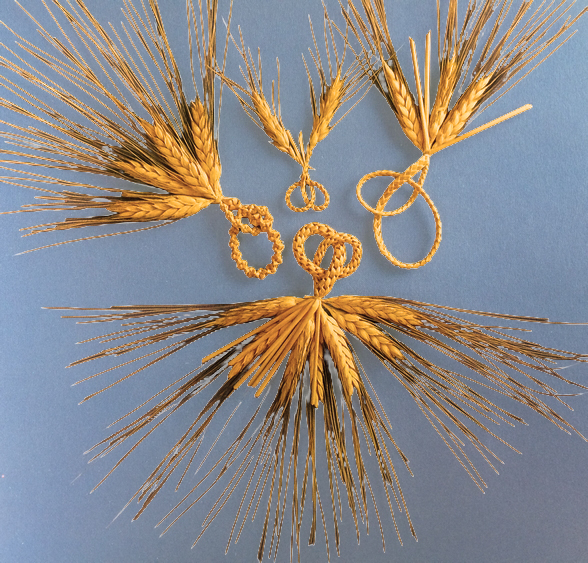
As you plaited the harvest bow
You implicated the mellowed silence in you
In wheat that does not rust
But brightens as it tightens twist by twist
Into a knowable corona,
A throwaway love-knot of straw.
Hands that aged round ashplants and cane sticks
And lapped the spurs on a lifetime of game cocks
Harked to their gift and worked with fine intent
Until your fingers moved somnambulant:
I tell and finger it like braille,
Gleaning the unsaid off the palpable,
And if I spy into its golden loops
I see us walk between the railway slopes
Into an evening of long grass and midges,
Blue smoke straight up, old beds and ploughs in hedges,
An auction notice on an outhouse wall —
You with a harvest bow in your lapel,
Me with the fishing rod, already homesick
For the big lift of these evenings, as your stick
Whacking the tips off weeds and bushes
Beats out of time, and beats, but flushes
Nothing: that original townland
Still tongue-tied in the straw tied by your hand.
The end of art is peace
Could be the motto of this frail device
That I have pinned up on our deal dresser —
Like a drawn snare
Slipped lately by the spirit of the corn
Yet burnished by its passage, and still warm.
Clearances
In Memoriam M.K.H., 1911-1984
She taught me what her uncle once taught her:
How easily the biggest coal block split
If you got the grain and the hammer angled right.
The sound of that relaxed alluring blow
Its co-opted and obliterated echo,
Taught me to hit, taught me to loosen,
Taught me between the hammer and the block
To face the music. Teach me now to listen,
To strike it rich behind the linear black.
I
A cobble thrown a hundred years ago
Keeps coming at me, the first stone
Aimed at a great-grandmother’s turncoat brow.
The pony jerks and the riot’s on.
She’s couched low in the trap
Running the gauntlet that first Sunday
Down the brae to Mass at a panicked gallop.
He whips on through the town to cries of “Lundy!”
Call her “The Convert.” “The Exogamous Bride.”
Anyhow, it is a genre piece
Inherited on my mother’s side
And mine to dispose with now she’s gone.
Instead of silver and Victorian lace
the exonerating, exonerated stone.

II
Polished linoleum shone there. Brass taps shone.
The china cups were very white and big —
An unchipped set with sugar bowl and jug.
The kettle whistled. Sandwich and tea scone
Were present and correct. In case it run,
The butter must be kept out of the sun.
And don’t be dropping crumbs. Don’t tilt your chair.
Don’t reach. Don’t point. Don’t make noise when you stir.
It is Number 5, New Row, Land of the Dead,
Where grandfather is rising from his place
With spectacles pushed back on a clean bald head
To welcome a bewildered homing daughter
Before she even knocks. “What’s this? What’s this?”
And they sit down in the shining room together.
III
When all the others were away at Mass
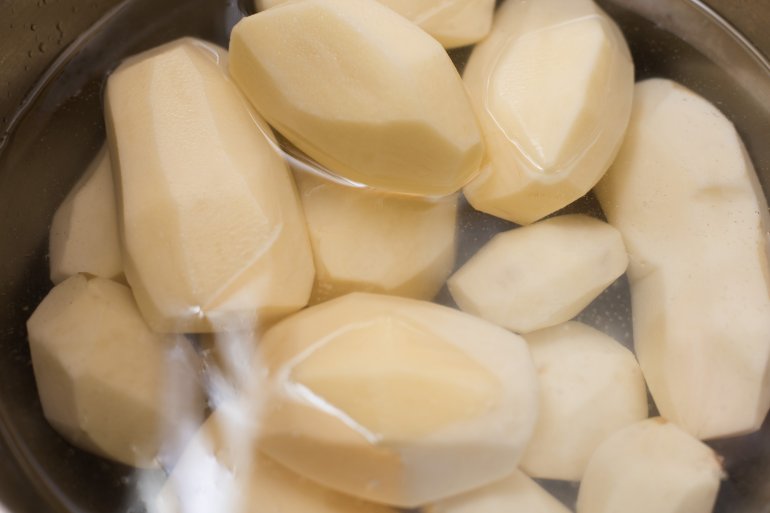
I was all hers as we peeled potatoes.
They broke the silence, let fall one by one
Like solder weeping off the soldering iron:
Cold comforts set between us, things to share
Gleaming in a bucket of clean water.
And again let fall. Little pleasant splashes
From each other’s work would bring us to our senses.
So while the parish priest at her bedside
Went hammer and tongs at prayers for the dying
And some were responding and some crying
I remembered her head bent towards my head,
Her breath in mine, our fluent dipping knives —
Never closer the whole rest of our lives.
IV
Fear of affectation made her affect
Inadequacy whenever it came to
Pronouncing words “beyond her.” Bertold Brek.
She’d manage something hampered and askew
Every time, as if she might betray
The hampered and inadequate by too
Well-adjusted a vocabulary.
With more challenge than pride, she’d tell me, “You
Know all them things.” So I governed my tongue
In front of her, a genuinely well-
Adjusted adequate betrayal
Of what I knew better. I’d naw and aye
And decently relapse into the wrong
Grammar which kept us allied and at bay.
V
The cool that came off sheets just off the line
Made me think the damp must still be in them
But when I took my corners of the linen
And pulled against her, first straight down the hem
And then diagonally, then flapped and shook
The fabric like a sail in a cross-wind,
They’d make a dried-out undulating thwack.
So we’d stretch and fold and end up hand to hand
For a split second as if nothing had happened
For nothing had that had not always happened
Beforehand, day by day, just touch and go,
Coming close again by holding back
In moves where I was X and she was O
Inscribed in sheets she’d sewn from ripped-out flour sacks.
VI
In the first flush of the Easter holidays
The ceremonies during Holy Week
Were highpoints of our Sons and Lovers phase.
The midnight fire. The paschal candlestick.
Elbow to elbow, glad to be kneeling next
To each other up there near the front
Of the packed church, we would follow the text
And rubrics for the blessing of the font.
As the hind longs for the streams, so my soul . . .
Dippings. Towellings. The water breathed on.
The water mixed with chrism and oil.
Cruet tinkle. Formal incensation
And the psalmist’s outcry taken up with pride:
Day and night my tears have been my bread.
VII
In the last minutes he said more to her
Almost than in their whole life together.
“You’ll be in New Row on Monday night
And I’ll come up for you and you’ll be glad
When I walk in the door . . . Isn’t that right?”
His head was bent down to her propped-up head.
She could not hear but we were overjoyed.
He called her good and girl. Then she was dead,
The searching for a pulsebeat was abandoned
And we all knew one thing by being there.
The space we stood around had been emptied
Into us to keep, it penetrated
Clearances that suddenly stood open.
High cries were felled and a pure change happened.
VIII
I thought of walking round and round a space
Utterly empty, utterly a source
Where the decked chestnut tree had lost its place
In our front hedge above the wallflowers.
The white chips jumped and jumped and skited high.
I heard the hatchet’s differentiated
Accurate cut, the crack, the sigh
And collapse of what luxuriated
Through the shocked tips and wreckage of it all.
Deep-planted and long gone, my coeval
Chestnut from a jam jar in a hole,
Its heft and hush became a bright nowhere,
A soul ramifying and forever
Silent, beyond silence listened for.
Keeping Going
for Hugh
The piper coming from far away is you
With a whitewash brush for a sporran
Wobbling round you, a kitchen chair
Upside down on your shoulder, your right arm
Pretending to tuck the bag beneath your elbow,
Your pop-eyes and big cheeks nearly bursting
With laughter, but keeping the drone going
Interminably, between catches of breath.
*
The whitewash brush. An old blanched skirted thing
On the back of the byre door, biding its time
Until spring airs spelled lime in a work-bucket
And a potstick to mix it in with water.
Those smells brought tears to the eyes, we inhaled
A kind of greeny burning and thought of brimstone.
But the slop of the actual job
Of brushing walls, the watery grey
Being lashed on in broad swatches, then drying out
Whiter and whiter, all that worked like magic.
Where had we come from, what was this kingdom
We knew we’d been restored to? Our shadows
Moved on the wall and a tar border glittered
The full length of the house, a black divide
Like a freshly-opened, pungent, reeking trench.
*
Piss at the gable, the dead will congregate.
But separately. The women after dark,
Hunkering there a moment before bedtime,
The only time the soul was let alone,
The only time that face and body calmed
In the eye of heaven.
Buttermilk and urine,
The pantry, the housed beasts, the listening bedroom.
We were all together there in a foretime,
In a knowledge that might not translate beyond
Those wind-heaved midnights we still cannot be sure
Happened or not. It smelled of hill-fort clay
And cattle dung. When the thorn tree was cut down
You broke your arm. I shared the dread
When a strange bird perched for days on the byre roof.
*
That scene, with Macbeth helpless and desperate
In his nightmare—when he meets the hags again
And sees the apparitions in the pot—
I felt at home with that one, all right. Hearth,
Steam and ululation, the smoky hair
Curtaining a cheek. “Don’t go near bad boys
In that college that you’re bound for. Do you hear me?
Do you hear me speaking to you? Don’t forget!”
And then the potstick quickening the gruel,
The steam crown swirled, everything intimate
And fear-swathed brightening for a moment,
Then going dull and fatal and away.
*
Grey matter like gruel flecked with blood
In spatters on the whitewash. A clean spot
Where his head had been. Other stains subsumed
In the parched wall he leant his back against.
That morning, like any other morning,
Part-time reservist, toting his lunch-box.
A car came slow down Castle Street, made the halt,
Crossed the Diamond, slowed again and stopped
Level with him, although it was not his lift.
And then he saw an ordinary face
For what it was and a gun in his own face.
His right leg was hooked back, his sole and heel
Against the wall, his right knee propped up steady,
So he never moved, just pushed with all his might
Against himself, then fell past the tarred strip,
Feeding the gutter with his copious blood.
*
My dear brother, you have good stamina.
You stay on where it happens. Your big tractor
Pulls up at the Diamond, you wave at people,
You shout and laugh above the revs, you keep
Old roads open by driving on the new ones.
You called the piper’s sporrans whitewash brushes
And then dressed up and marched us through the kitchen,
But you cannot make the dead walk or right wrong.
I see you at the end of your tether sometimes,
In the milking parlor, holding yourself up
Between two cows until your turn goes past,
Then coming to in the smell of dung again
And wondering, is this all? As it was
In the beginning is now and shall be?
Then, rubbing your eyes and seeing our old brush
Up on the byre door, and keeping going.