James Joyce - "Araby"
Growing up is . . .
. . . coming to your senses
. . . learning how to make good decisions
. . . growing in good judgment
. . . seeing yourself more clearly
. . . seeing the world as it is
but mainly, growing up is . . . painful.
What we're seeing here is a boy growing up, painfully. There are a number of stories about this process, so many that they have their own name: bildungsroman. Their subject is the moral, psychological, and intellectual development of a young character.
And how do we develop?
How do we become different than what we are now?
Joyce's stories focus on significant events that reveal something to a character. He called these epiphanies. And, just like the Epiphany (the story of the Three Wise Men in the Bible) revealed Jesus to the world, these visionary moments are when a character has a sudden insight or realization that changes their understanding of themselves or their comprehension of the world.
All About the Ocular
Joyce develops this story through the use of imagery that concerns the eyes or eyesight. The overarching idea is that coming to maturity means seeing the world more clearly. We can see that in a famous passage from Paul (1 Corinthians 13:11-12):
When I was a child, I spake as a child, I understood as a child, I thought as a child: but when I became a man, I put away childish things.
For now we see through a glass, darkly; but then face to face: now I know in part; but then shall I know even as also I am known.
Growing in faith, or literally growing old and dying, as Paul has it here, is a matter of seeing things as they really are.
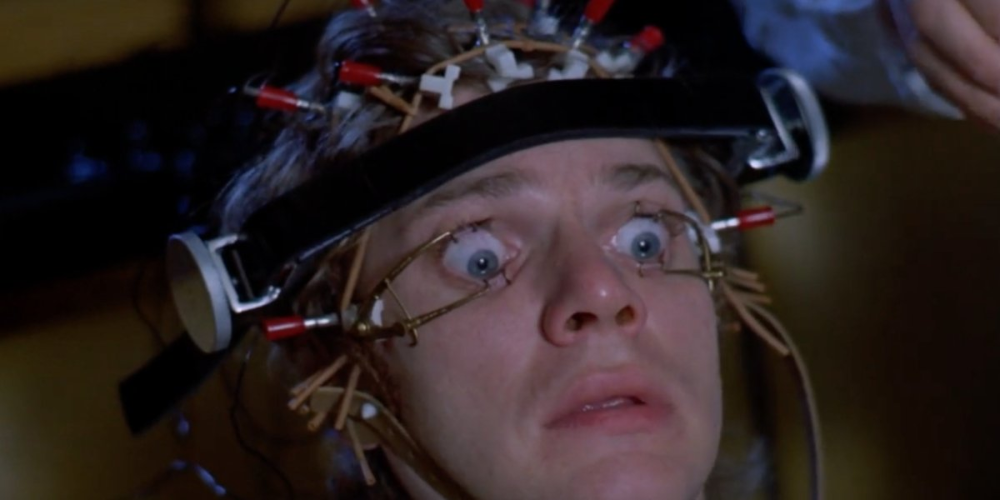
Sometimes we need to be forced to see what's right in front of us.
Look at the opening sentence of the story. It begins with a complete lack of sight:
North Richmond Street being blind . . .
"Blind" here means that it's a dead end. But it's the word that matters for Joyce, and for us.
Now let's look at the closing of the story:
Gazing up into the darkness I saw myself as a creature driven and derided by vanity; and my eyes burned with anguish and anger.
In this epiphantic moment, our narrator is not just looking, but gazing. What is he gazing at? The darkness, like the darkness that opened the story and covers most of it. What he sees in that darkness is himself, far more realistically than he ever has. And his reaction to this is pain, agonizing pain, or anguish. Then anger. Anger at the world, at the Brits, at the flirting shopgirl, at his uncle and aunt, at Mangan's sister, but mostly, and most crushingly, at himself. This is what epiphanies do; they wreck us.
When Realism Crushes Romance
“Araby” is a romantic term for the Middle East, but there is no such country. The word was popular throughout the 19th century; it was used to express the romantic view of the east that had been popular for at least a hundred years. It represented something foreign, something exotic, something alluring, something that, most importantly, wasn't Europe. Was it accurate? Nope. It considered over half the globe as one big mass that was just "other." Countries as disparate as India and Egypt, Japan and China, were all pushed into an abstract idea that had no basis in reality.
This Romantic vision extends even to the narrator's view of himself:
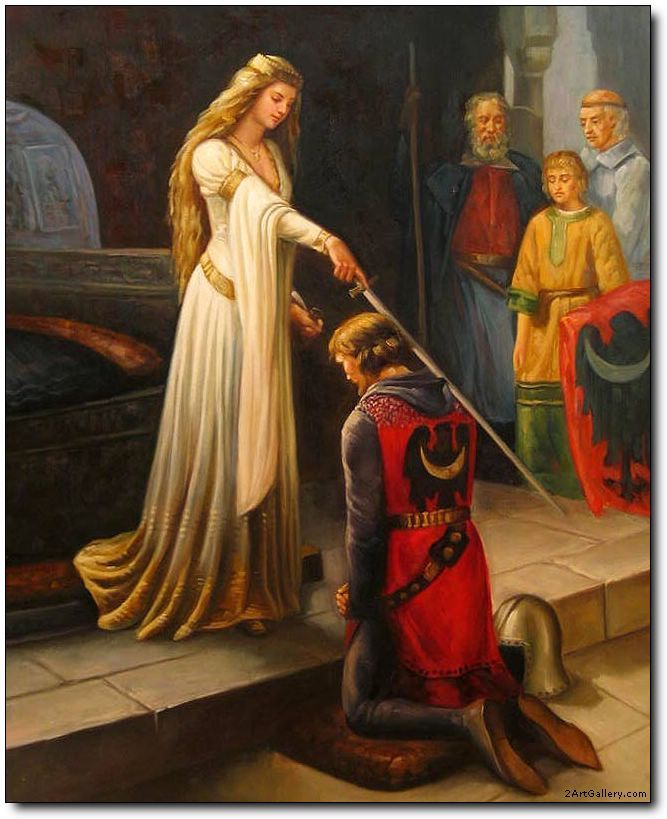 |
| How our narrator sees himself throughout the story . . .
|
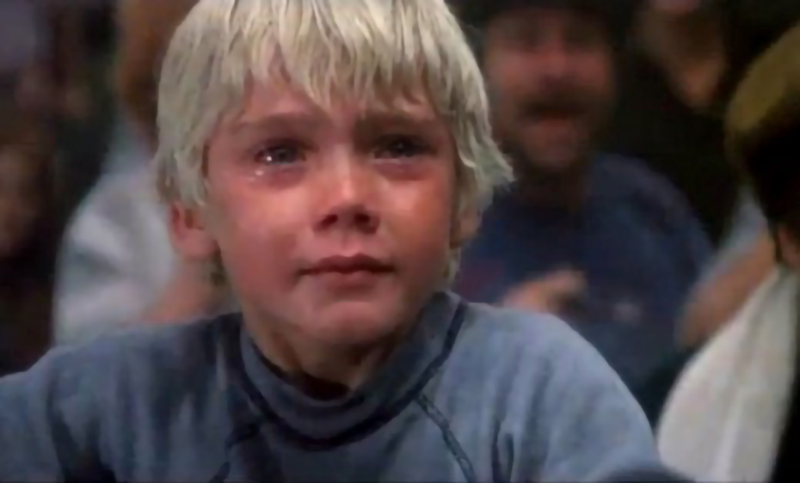 |
| His epiphany is the recognition of who he really is. |
This story is full of Romantic irony. Our unnamed narrator has an incredibly romantic view of the world. He doesn't see the world—or himself—as it is, but as he wants it to be. He sees himself as a hero on a journey. He's a knight, traveling to exotic places on a quest for an idealized woman. He ignores the reality of his bleak, winter surroundings and allows the word "araby" to suggest the exciting summer world of Romance. At the end of his journey, however, he learns a hard but valuable lesson about the world and himself.
Those hard lessons, those moments when we can suddenly see more clearly, are all part of growing up, of coming to maturity. You could say this story is about orientation. We derive that word from the Orient, from the East. To orient yourself means that you know in which direction the sun rises, which is the East. This idea was so important that the earliest maps of the world placed the East at the top of the map, and North to the side.
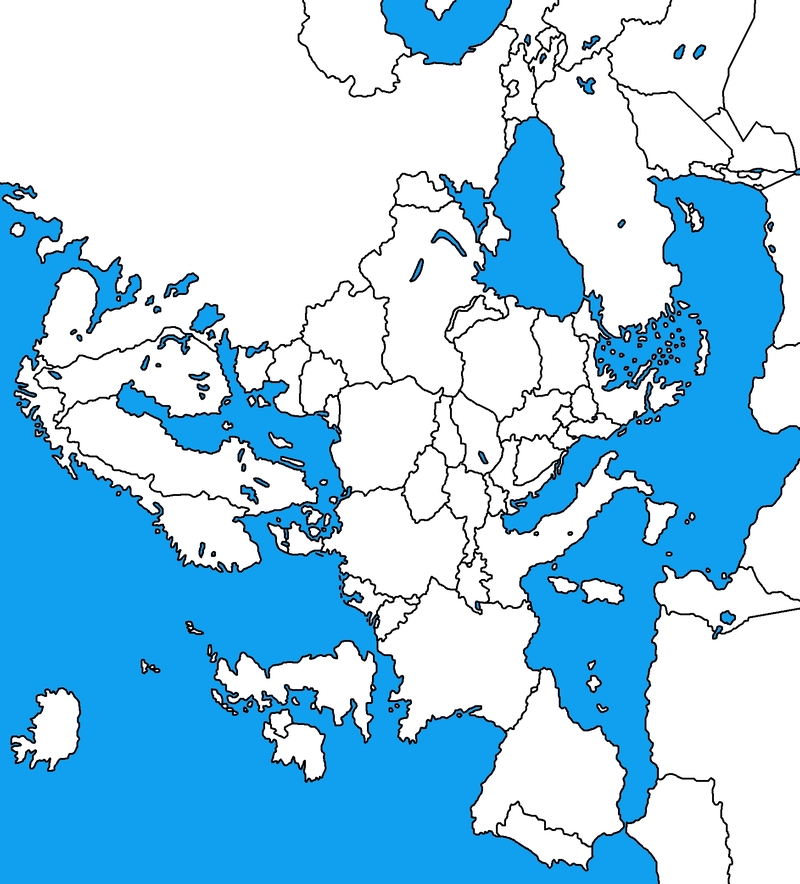
This map is a bit dis-orienting, even though it's oriented with East to the top.
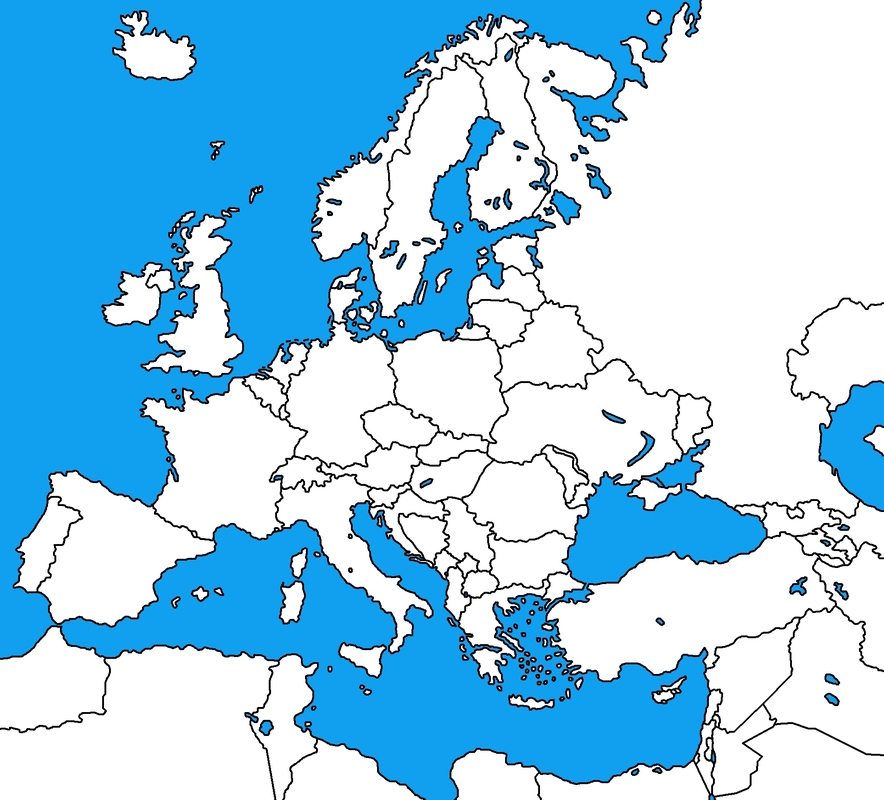
But if I turn it sideways, it becomes more familiar. We see the world more clearly. We are oriented.
For Europeans, "Araby" is the gateway to the East, to orienting yourself. At the beginning of the story our narrator is dis-oriented, but will come to know more about the nature of the world at the end of his journey.
But the Romance Is Real . . .
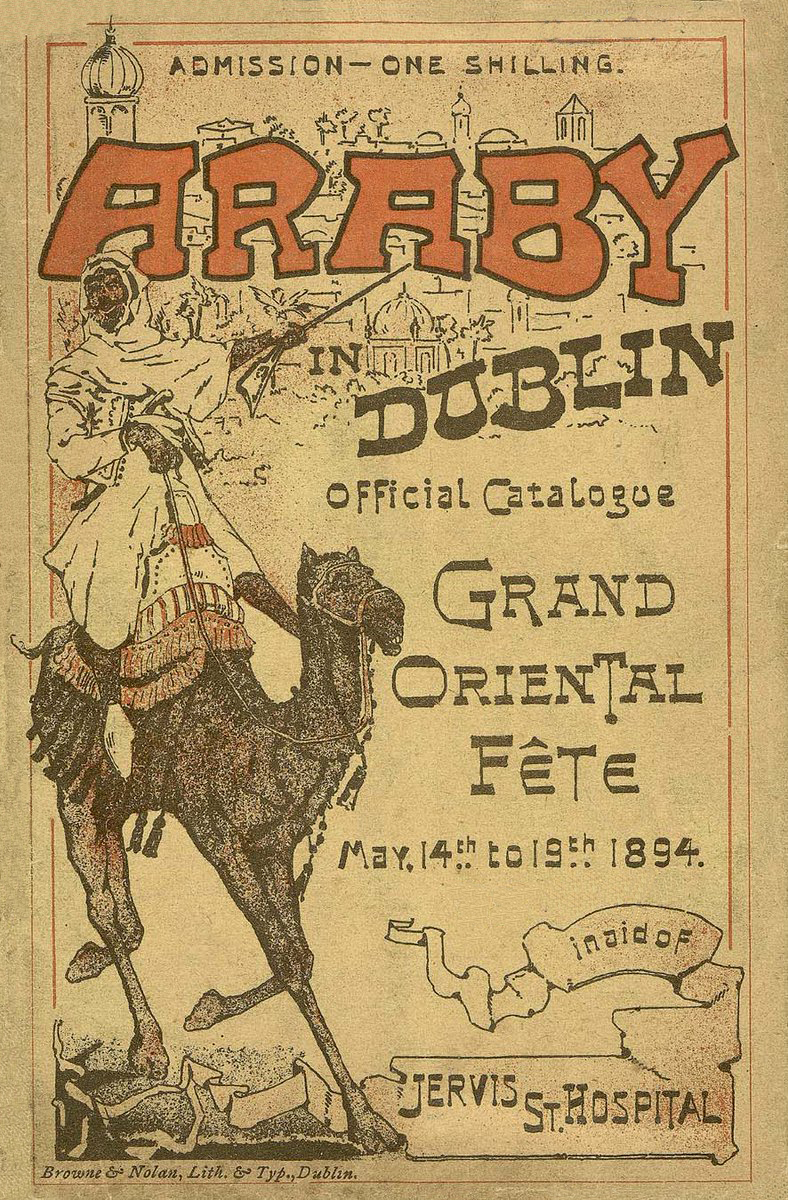
Although there is no explicit mention of it, we know that the climax of the story—the boy's visit to the fair—takes place on May 19, 1894, and the boy is 12 years old. In 1894 little Jimmy Joyce was 12, and lived at 17 North Richmond Street. FAnd as the poster advertising it shows, there was a “Grand Oriental Fête” in Dublin running from May 14-19, 1894.
The theme song of the actual fair illustrates the romantic view of the Orient held by many Europeans at the time. It is from the Prologue of the cantata Lalla Rookh, which was itself based on the romantic epic Lalla Rookh, by Thomas Moore, the ultimate Irish Romantic. (words by W.G. Wills; music by Frederick Clay):
|
I'll sing thee songs of Araby And tales of fair Cashmere, Wild tales to cheat thee of a sigh Or charm thee to a tear. And dreams of delight shall on thee break And rainbow visions rise, And all my soul shall strive to wake Sweet wonder in thine eyes... And all my soul shall strive to wake Sweet wonder in thine eyes. |
Through those twin lakes where wonder wakes My raptured song shall sink And, as the diver dives for pearls, Bring tears, bright tears, to their brink. And dreams of delight shall on thee break And rainbow visions rise, And all my soul shall strive to wake Sweet wonder in thine eyes... And all my soul shall strive to wake Sweet wonder in thine eyes. |
Our Hero's Journey
As long as we're looking at maps, here's a map of Dublin at the end of the 19thcentury, with our narrator's travels laid out.
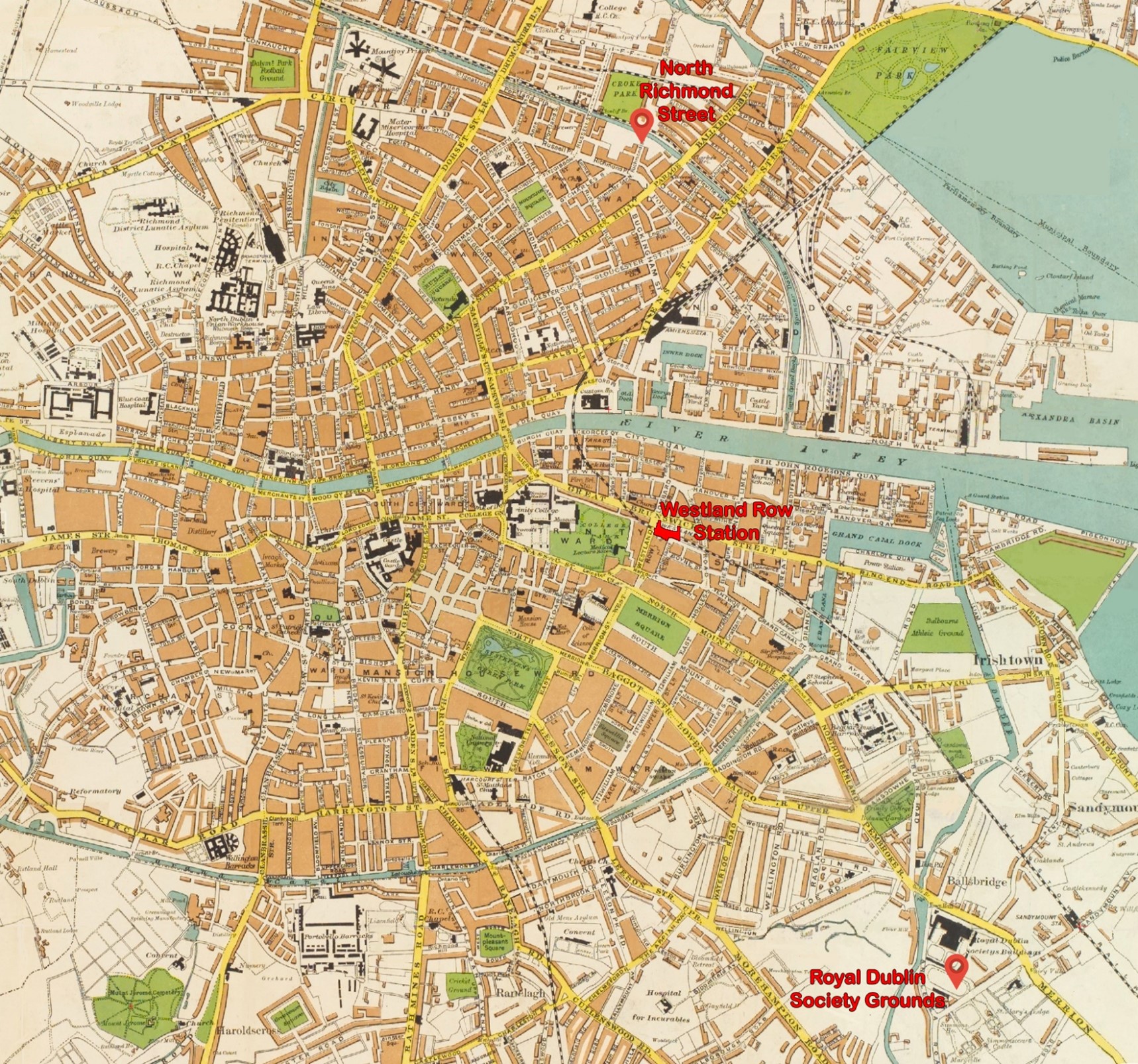
The boy traverses the largest city in the country, Dublin, late at night, by walking and by using public transportation. It's a journey of about six miles, a pretty long affair for a 12-year-old.
Of Course He's Unreliable
We don’t know how long the timeline is for “Araby” is, because it's aa story being told to us by a 12-year-old. Or is it? This narrator presents the romantic world of the boy, full of chivalric gestures and absurd flights of fancy, but would a pre-teen be that self-aware? It seems like this is a story told by someone older, looking back on one of his mements of painful growth.
The “unreliable” or “unknowing” narrator is a common literary device, especially in 20th-century fiction. As readers we quickly realize we know more about what is going on than the narrator does.
Oh, the Love of His Life!
One thing's for sure, though, he loves Mangan'sister, right? So he obviously describes her in great detail, right? Hmmm....... OK, what does she look like? Or, better yet, what's her name? Is our narrator really in love, or in lust, or obsessed, or worshipping her?
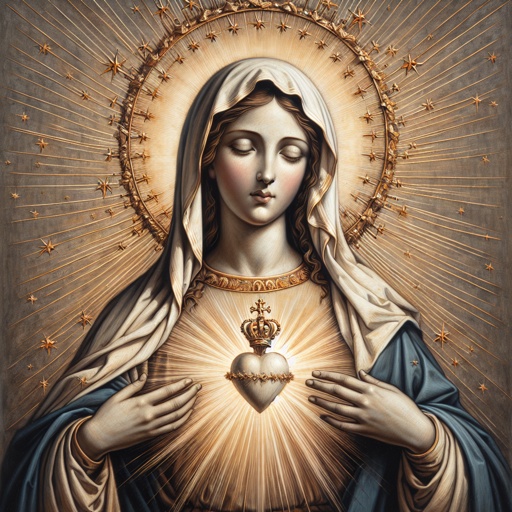
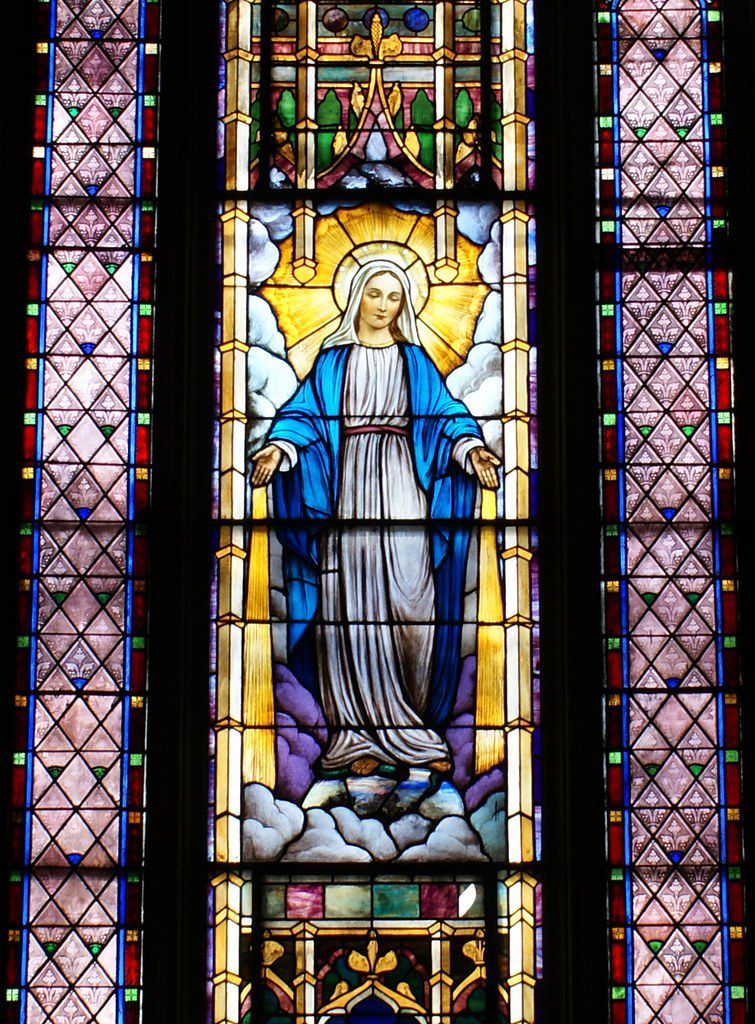
Look at the passages where he describes her. She's always presented with some sort of light or halo around her, some backlight that makes her look sanctified. This poor kid is so befuddled by puberty, and sex, and desire, and religion, that he's created some sort of vision of Mangan's sister, an amalgamation of things like this:
 |
 |
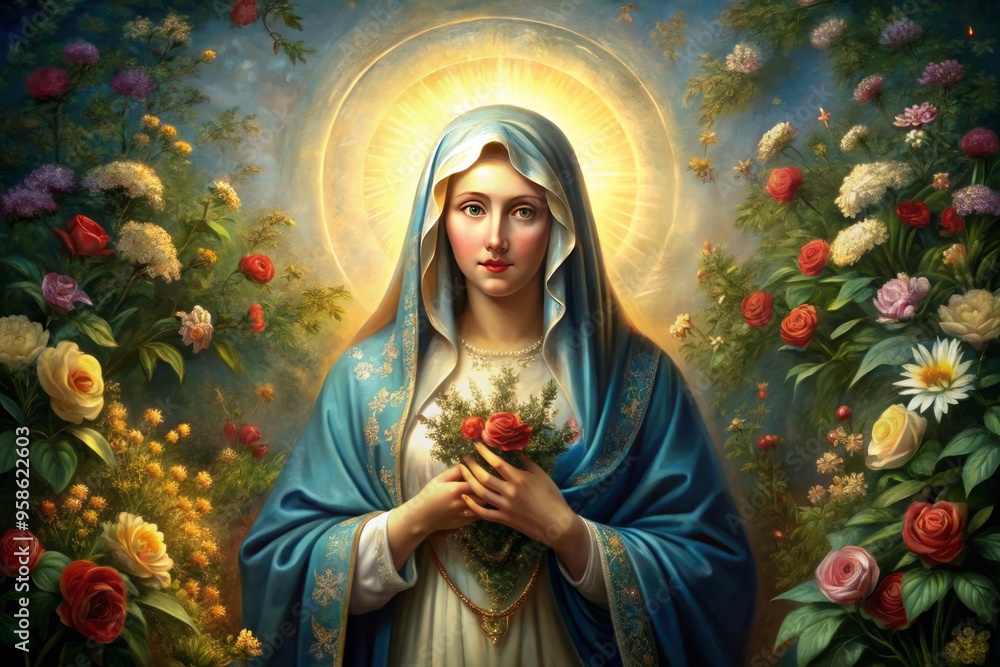 |
| Mary with a halo | Mary in stained glass | A 19th-century painting of Mary |
Oh love! Oh love!
Look at the scene where the boy has the house to himself. On a dark, rainy evening he goes into the roomm where the priest died, and
All my senses seemed to desire to veil themselves and, feeling that I was about to slip from them, I pressed the palms of my hands together until they trembled, murmuring: “O love! O love!” many times.
What do you think is going on here? He's alone, in the dark, in the room where this religous man, or religion itself, died. And he's thinking of Mangan's sister, mummuring what looks like a prayer, "Oh love! Oh love!" over and over.
Those prayers that spring unbidden to the lips, those spontaneous cries that are sometimes repeated over and over again? Do you know what they're called? Ejaculations. Maybe you recognize this confusion of religious fervor mixed with sexual desire, raging hormones, crushing guilt, absolute wonder, good feelings, and hiding in the dark. Most of us just call it puberty.
Connections With Modern Ireland - From Priest-ridden to Secular
Joyce was one of the first writers to recognize the stranglehold that the Catholic Church had on Irish society and culture in the early 20th century. He saw that religious identity was too closely tied to Irish national identity, as it shaped the lives and values of the people in oppressive and limiting ways. In Dubliners, the collection that "Araby is taken from, he railed against the expectations of piety and strict observance, the stifling moral codes, and the stay-in-your-lane gender roles that the church pushed from the pulpit. There was even a clause in the 1937 Irish Constitution acknowledging the special position of the Roman Catholic Church.
And he was angry with the Irish people themselves, for their submissiveness, their willingness to give in to these stifling conditions. His most-quoted line about this is that
We are an unfortunate priest-ridden race and always were and always will be tell the end of the chapter.... A priest-ridden Godforsaken race.
Joyce the Prophet?
Maybe Joyce was a man before his time, because the Catholic Church still held significant sway throughout the 1950s. But the 1960s and ’70s saw a collapse in vocations to the priesthood and a decline in attendance at mass. That clause in the Constitution was removed in 1972, and the waning influence of the church continued into the 1980s and ’90s.
- In 1992 the church was rocked by the first of a series of scandals when the bishop of Galway, Eamon Casey, resigned after it was discovered that he was the father of a teenage son.
- In 1995 controversy over the extradition to Northern Ireland of a pedophile priest, Brendan Smyth, brought down the Irish government.
- In 1999 the government announced the establishment of a commission to investigate the abuse that had been widespread until the 1970s in industrial and reformatory schools.
- In 2009 the Murphy Report was reloeased, revealing widespread concealment of priestly pedophilia in the Dublin archdiocese.
- In 2010, the Pope wrotee an open letter apologizing to all victims of Catholic clerical sex abuse in Ireland and announcing a formal Vatican investigation of Irish dioceses, seminaries, and religious orders affected by the scandal.
- In 2014, a mass grave of infants and children who had died in a former mother and baby home was discovered. (These were institutions run by Catholic nuns where unwed pregnant women lived and worked until their babies were born) This led the Irish government to launch investigations into both those homes and Ireland’s former Magdalene laundries (institutions in which women and girls were made to perform manual labour without pay as penitence for moral transgressions). Many of these investigations and discoveries spurred the government to issue formal apologies to abuse survivors.
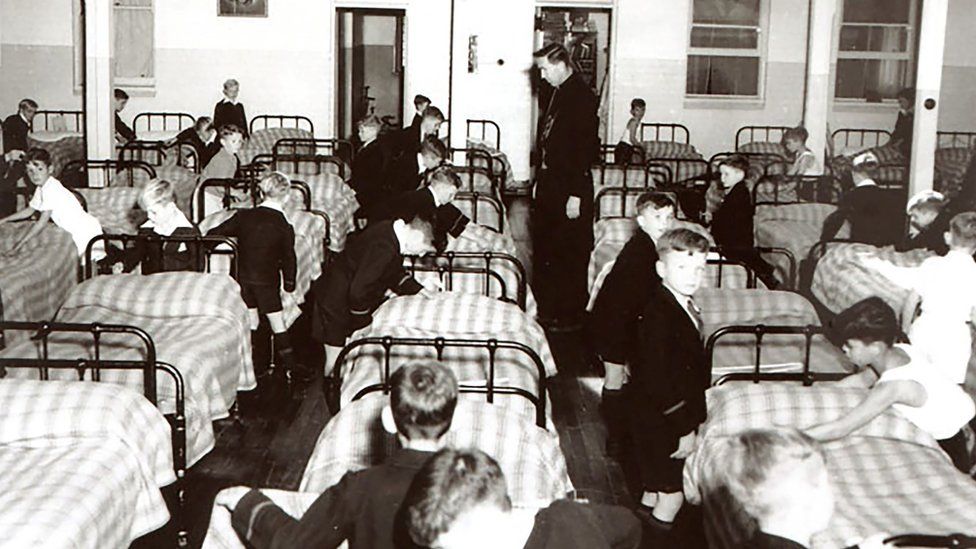
A Mother and Baby Home
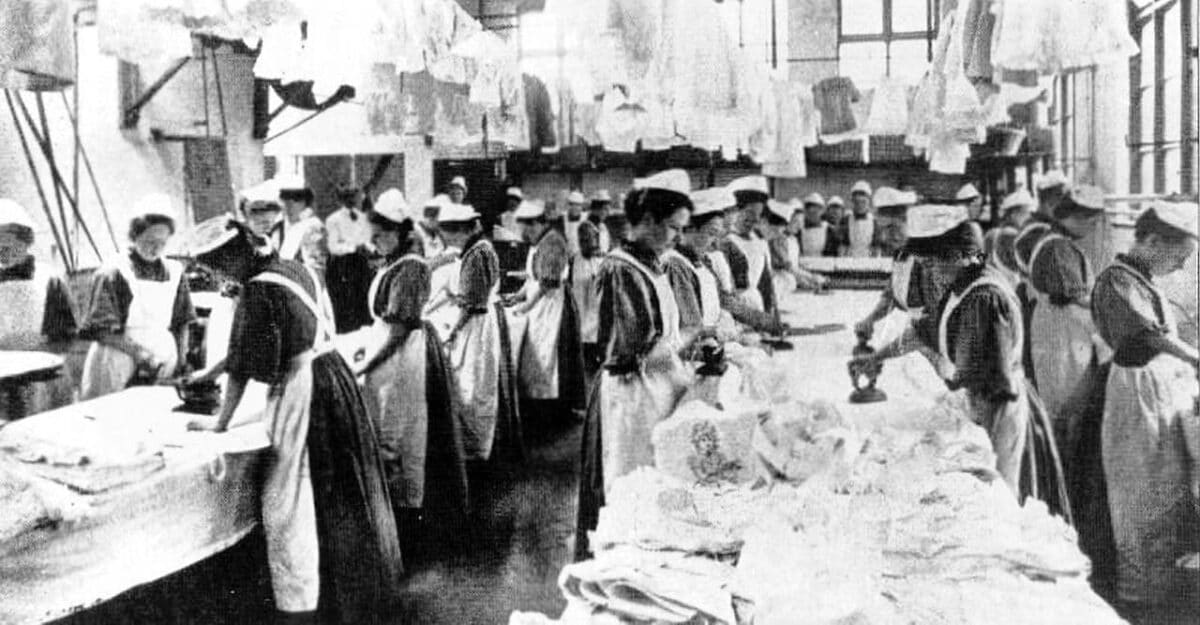
A Magdalen Laundry